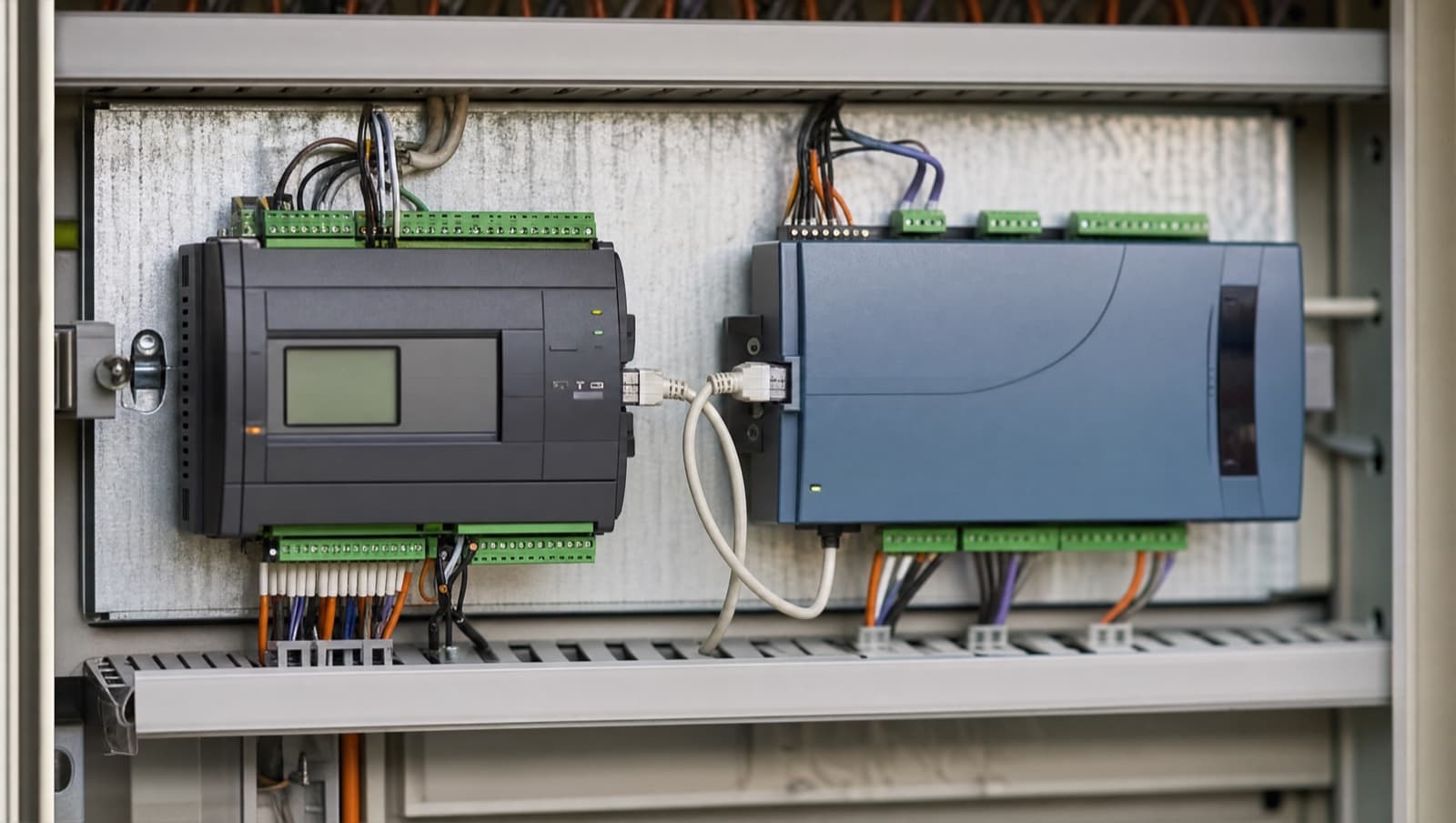

To choose a BMS installer in London, pick a controls-engineering specialist rather than a general M&E contractor. Confirm they produce a documented control strategy before wiring, work across platforms like Trend and Distech, support BACnet, follow CIBSE Commissioning Code M, and offer a 12-month aftercare period through a full seasonal cycle.
Finding a BMS installer in London shouldn't be difficult — the city has hundreds of M&E contractors, controls specialists, and system integrators. The problem is that "BMS installer" covers everything from a multinational with 500 engineers to a two-person outfit working out of a van, and the quality spread is enormous. A poor BMS installation doesn't just mean an uncomfortable building. It means a control system that fights the plant instead of optimising it, energy bills that never come down, a maintenance contractor who can't fix problems because they don't understand the original programming, and a client who ends up paying twice to get it done properly.
Choosing the right BMS contractor in London — whether you're fitting out a new office, upgrading a legacy system, or replacing a provider who isn't delivering — comes down to asking the right questions before you sign anything.
What Does a BMS Installer Actually Do?
A BMS installation isn't just wiring up controllers and sticking sensors on pipework. It's a controls engineering project that involves understanding the mechanical systems, designing the control strategy, selecting and installing hardware, writing the software, commissioning the system, and handing over a working building to the FM team.
The best BMS contractors in London are controls engineers first and electricians second. They understand what a heating curve is, why a chiller needs flow proving before it starts, how to sequence multiple boilers without short-cycling, and what happens when an AHU economiser damper is commissioned to the wrong authority. This matters because the programming is where the value is — anyone can mount a controller on a panel, but writing control strategies that actually deliver comfortable, energy-efficient buildings is a specialist skill.
CIBSE Guide H: Building Control Systems sets out the design and specification framework for building control systems. Guide H makes clear that BMS design should be led by someone with controls engineering competence, not treated as a secondary task for the electrical contractor. The control strategy — the logic that determines how plant operates under all conditions — should be documented, reviewed, and approved before hardware installation begins. If your prospective installer can't show you a documented control strategy before they start wiring, they're making it up as they go along.
Should a BMS Installer Specialise, or Is It Fine as a Side Job?
Many M&E contractors in London offer BMS as part of a wider package — they'll install your electrical distribution, your lighting controls, your fire alarm, and your BMS. The problem is that BMS is the most complex system in the building, and a contractor whose primary expertise is power distribution or lighting will typically subcontract the controls work to whoever is cheapest — not whoever is best.
Ask directly: what percentage of your revenue comes from BMS work? How many dedicated controls engineers do you employ? Can you show me three completed BMS projects with references from the FM team that inherited the system? The FM reference is crucial — the installing contractor's client is usually the M&E consultant or main contractor, but the people who live with the system are the building managers and facilities teams. Their opinion of the installation tells you what matters.
Which BMS Platforms Should a London Installer Work With?
London's commercial building stock runs on a mix of Trend, Siemens, Schneider, Distech, Honeywell, and a growing number of open-protocol platforms. Each has different hardware, different programming environments, different licensing models, and different strengths. A contractor who only works with one manufacturer will recommend that platform regardless of whether it's the best fit for your building.
Look for a BMS contractor who works across at least two or three major platforms and can articulate why they'd recommend one over another for your specific project. For example, Trend's IQ4 range is deeply established in the UK market with a strong parts supply chain and a large base of trained engineers — it's a sensible choice for buildings that need long-term local support. Distech's ECLYPSE series offers native BACnet/IP with IT-friendly web interfaces — better suited to buildings with strong IT teams who want direct system access. A good installer will make this recommendation based on the building's needs, not their own commercial preference.
For a detailed comparison of the major platforms available in London, see our guide to Trend vs Distech vs Siemens BMS systems.
Get a Free BMS Survey
We'll assess your controls and provide a detailed quotation.
What Should a BMS Commissioning Process Include?
Commissioning is where BMS installations succeed or fail, and it's the phase most commonly compressed when programmes run late — which, in London construction, is practically always. A good BMS contractor will have a documented commissioning procedure that includes point-to-point testing of every sensor, actuator, and controller; functional performance testing of every control sequence under realistic conditions; witnessed testing with the M&E consultant or client; and a formal commissioning report with test results, as-built drawings, and a documented snagging process.
BSRIA BG 11/2010 — the Soft Landings framework — specifically addresses the post-commissioning period, recommending a minimum 12-month aftercare period where the installing contractor remains available to tune and optimise the system through a full seasonal cycle. Ask whether your prospective installer offers this. If they consider their job done on practical completion day, the FM team will spend the next year discovering that the heating doesn't work properly in January because the system was commissioned in July and nobody tested the winter sequences.
CIBSE Commissioning Code M sets out the management framework for commissioning building services — including the requirement for a commissioning plan, method statements, and documented results. A BMS contractor who isn't familiar with Code M, or who doesn't produce commissioning documentation to this standard, is a risk.
What Are the Red Flags When Choosing a BMS Installer?
No written control strategy before installation. If the contractor can't show you a controls description document — explaining in plain English what every piece of plant does, what the setpoints are, what the sequences are, and what the failure modes are — before they start installing hardware, they're winging it. This is the single biggest predictor of a problematic installation.
Proprietary lock-in with no escape route. Some BMS contractors install systems using proprietary protocols that only they can service, proprietary software that requires annual licence fees, or proprietary hardware that can't be sourced from anyone else. Ask explicitly: can another competent contractor take over this system's maintenance if we choose to change provider? If the answer is no, or involves significant cost to migrate, factor that into your evaluation.
No BACnet or open protocol support. BS EN ISO 16484-5 defines the BACnet standard for building automation. Any modern BMS installation in a commercial building should support BACnet/IP as a minimum, enabling integration with third-party systems, future expansion, and provider independence. A contractor who proposes a fully proprietary system with no BACnet interface is building a closed ecosystem that limits your options for the life of the building.
Vague handover documentation. The handover package should include as-built drawings, controller schedules, network architecture diagrams, a full points list with every sensor and actuator documented, the controls description, commissioning test results, software backups, and user training records. If the contractor's handover package is a USB stick with some PDFs and a promise to come back if there are problems, you'll be paying for that missing documentation for years.
What Does a Good BMS Installation in London Look Like?
On a recent project — the Pinsent Masons building in London, a 16-floor commercial office — we replaced an aging Trend IQ3 system with new IQ4 controllers, integrated LightFi wireless environmental sensors, and delivered the entire installation during weekend-only access windows because the building remained fully occupied throughout. The key to making this work was a detailed control strategy agreed before installation, phased floor-by-floor commissioning so the FM team always had control of the completed floors, and a 12-month aftercare programme that included seasonal optimisation through the first full heating and cooling cycle.
That project succeeded because the controls engineering came first — understanding the existing mechanical systems, designing a control strategy that improved on the original, and commissioning it properly under real operating conditions. The hardware installation, while obviously important, was the straightforward part.
How Much Does BMS Installation Cost in London?
BMS installation costs in London vary significantly depending on the scale, complexity, and platform. As a rough guide for commercial office buildings: a simple BMS upgrade replacing controllers and sensors on existing infrastructure runs £15–£25 per square metre. A full new BMS installation on a fit-out project, including panels, controllers, field devices, programming, graphics, and commissioning, typically falls between £30–£60 per square metre depending on system density and platform choice. Large complex projects — data centres, hospitals, multi-building campuses — can exceed £80 per square metre.
These figures include hardware, software, installation, commissioning, and handover. They don't include the mechanical installation of actuators, valves, and dampers, which is usually part of the M&E package rather than the BMS contract.
Get at least three quotes from specialist BMS contractors, not general M&E firms. Compare them on scope (what's included in commissioning and aftercare), platform recommendation (and the reasoning behind it), and team — who will actually be on site programming and commissioning your system.
Where Can You Find a BMS Installer in London and the South East?
Alpha Controls delivers BMS installation, commissioning, and maintenance across London, Kent, Essex, Surrey, Sussex, Hampshire, Berkshire, Buckinghamshire, Hertfordshire, and Oxfordshire. We work with Trend, Distech, Schneider, and open-protocol BACnet systems on commercial offices, mixed-use developments, education buildings, and healthcare facilities. Our London work, project examples and borough coverage are set out in full on our BMS installers London page.
If you're planning a BMS installation, upgrading an existing system, or looking to change your controls contractor, get in touch or request a quote. We're happy to review your existing system and give you an honest assessment before you commit to anything.
Alpha Controls Team
Specialist BMS installation, commissioning, and maintenance across London and the South East. SafeContractor Approved, BCIA Member.