

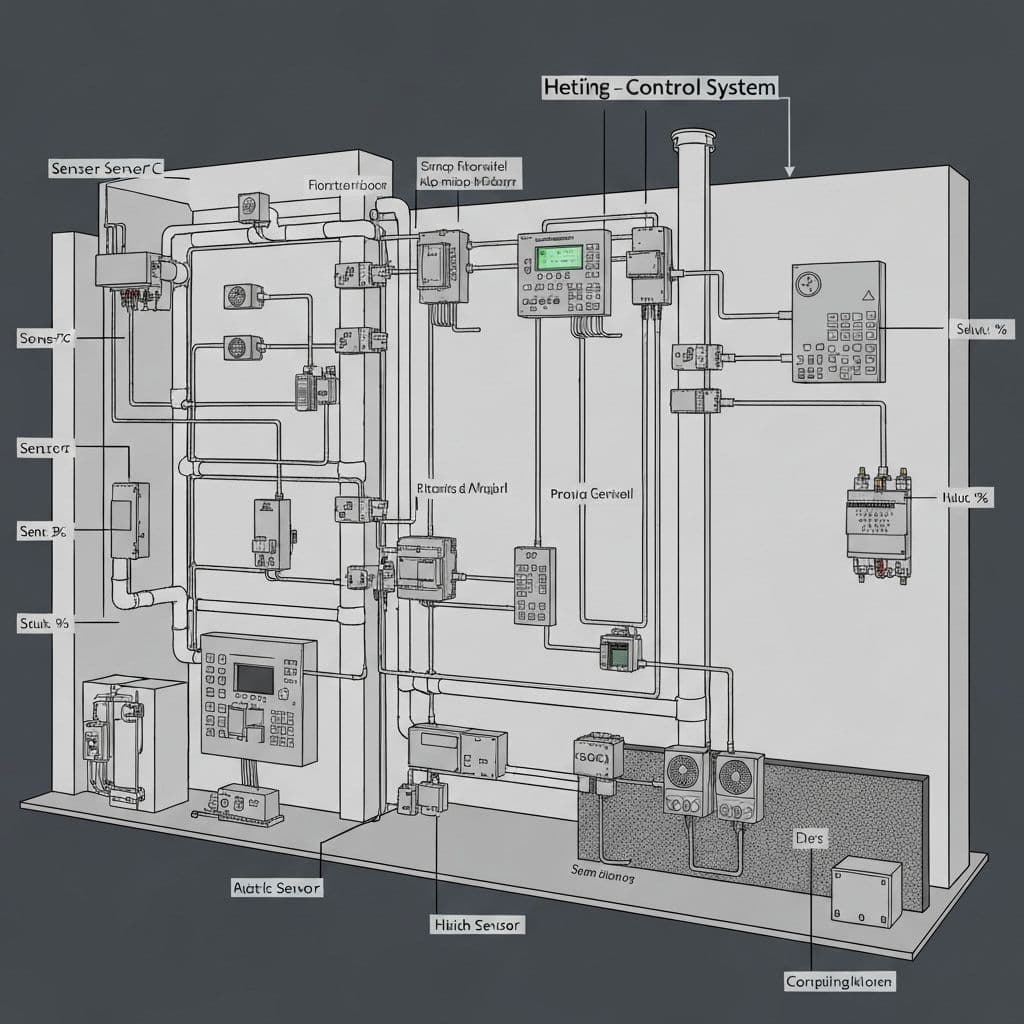
HVAC Controls Integration Services
Seamless integration of heating, ventilation, and air conditioning systems with building management platforms. Centralised control, real-time monitoring, and energy optimisation for commercial buildings across London, Kent and the South East.
Why HVAC Controls Integration Matters
HVAC systems account for 40-60% of energy consumption in commercial buildings. Without proper BMS integration, individual systems operate in isolation — chillers and boilers can run simultaneously, fans operate at full speed regardless of demand, and unoccupied zones are heated or cooled around the clock.
Our HVAC controls integration brings all mechanical plant under centralised BMS management, enabling coordinated control strategies that typically reduce HVAC energy consumption by 20-35%.
- Eliminate simultaneous heating and cooling
- Demand-based ventilation using CO₂ and occupancy sensors
- Optimum start/stop based on thermal mass and weather data
- Weather compensation for heating and cooling setpoints
- Automated scheduling with holiday and exception calendars
- Real-time fault detection and energy monitoring
HVAC Systems We Integrate
From individual fan coil units to complex multi-chiller plant rooms, we integrate all HVAC systems with your building management platform.
Our Integration Approach
Every HVAC integration project follows a structured process to ensure commissioning is right first time.
Site Survey & Audit
We assess existing HVAC plant, control interfaces, and BMS infrastructure. This identifies integration points, protocol requirements, and any equipment that needs upgrading.
Control Strategy Design
Bespoke control strategies are designed for each system — sequencing logic, setpoint schedules, alarm thresholds, and energy metering points are all specified before installation begins.
Installation & Wiring
Our engineers install controllers, sensors, actuators, and network cabling. All field wiring is tested point-to-point before commissioning.
Commissioning & Optimisation
Each system is commissioned under real operating conditions. Control loops are tuned, alarms validated, and seasonal strategies tested. We provide full commissioning records and as-built documentation.
Further Reading
- Optimising HVAC Controls for Maximum Efficiency
- AHUs vs FCUs: Why Modern Buildings Need Both
- How Long Does a Ceiling-Mounted FCU Last? Retrofit vs Replacement Guide
Case Studies
- University of Arts London — 100+ Cabinet Unit Heater Retrofit
After-hours retrofit of over 100 cabinet unit heaters and Trend IQECO controllers across six teaching floors with zero disruption.
- Pinsent Masons — 16-Floor FCU HVAC Upgrade
FCU controllers, fresh air and return air sensors upgraded across 16 floors with weekend-only access within a live law firm.
Frequently Asked Questions
How much can HVAC controls integration save on energy bills?
Commercial buildings typically waste 20-35% of HVAC energy through poor control strategies, simultaneous heating and cooling, and out-of-hours operation. A properly integrated BMS with optimised HVAC controls can recover most of this waste, with payback periods of 2-4 years depending on building size and current energy spend.
Can you integrate our existing HVAC equipment with a new BMS?
Yes. We regularly integrate existing chillers, boilers, AHUs, and FCUs with new BMS platforms using BACnet, Modbus, or 0-10V analog connections. In most cases the existing HVAC equipment does not need replacing — we connect to the control interfaces already present on the plant.
What HVAC brands do you work with?
We integrate equipment from all major HVAC manufacturers including Daikin, Mitsubishi, Toshiba, Carrier, Trane, Viessmann, Hoval, Swegon, and Fläkt Group. Our engineers are experienced with the BACnet and Modbus gateways specific to each manufacturer.
How long does an HVAC controls integration project take?
A straightforward FCU integration project covering one floor (20-30 units) typically takes 1-2 weeks. A full building HVAC integration including AHUs, chillers, boilers, and metering can take 4-12 weeks depending on the number of systems and the complexity of the control strategies required.
Do you provide HVAC controls maintenance after installation?
Yes. We offer flexible maintenance contracts covering all HVAC controls and BMS infrastructure. This includes seasonal recommissioning, control strategy adjustments, sensor calibration, software updates, and 24/7 emergency callout for critical plant failures.
Optimise Your HVAC Systems
Contact us to discuss how integrated HVAC controls can reduce your energy costs and improve building comfort.
Request a Quote