
BACnet — Building Automation and Control Networks — is an open communication protocol that defines how building services devices exchange data. Developed by ASHRAE and ratified internationally as ASHRAE Standard 135 / BS EN ISO 16484-5, it is not owned by any single manufacturer, so any BACnet-compliant device can communicate with any other, regardless of who made it. It is the dominant open protocol in commercial building controls globally, supported by every major manufacturer including Trend, Siemens, Distech, Automated Logic and Johnson Controls.
Every time a facilities manager inherits a BMS that can't talk to the fire alarm, the lighting controls or the energy meters, the same question comes up: why can't these systems just communicate with each other? In most cases it's because they were installed using different proprietary protocols, each manufacturer's systems speaking their own language with no common ground. BACnet exists to solve exactly that. If you're specifying, commissioning or managing commercial building controls, understanding how it works — and where it goes wrong — is as important as knowing your plant.

What is BACnet and how does it work?
The key word in the definition is open. Before BACnet, every BMS manufacturer used proprietary protocols — Trend controllers talked to Trend controllers, Siemens talked to Siemens, Honeywell talked to Honeywell. Integrating systems from different manufacturers, or replacing one manufacturer's controllers while keeping another's field devices, meant protocol translation gateways costing £800–£2,000 each and adding another layer of maintenance complexity. BACnet removes that by providing a common language every compliant device can use, regardless of brand.
BACnet organises everything around objects and properties. Every sensor, actuator, setpoint, schedule and alarm in the BMS is represented as a BACnet object with defined properties. A room temperature sensor, for example, is an Analog Input object with properties including Present Value (the current reading), Object Name, Status Flags (in alarm, overridden, or out of service) and Units. When a controller from one manufacturer needs to read a value from a device made by another, it simply reads the Present Value property of the relevant object — it doesn't need to know the brand, the internal programming, or the native protocol of the device it's talking to. As long as both implement BACnet correctly, the data exchange works, with no bespoke drivers or vendor middleware.
BACnet doesn't control plant directly — it's a communications layer. It defines the data model (how a reading or status is represented), the addressing scheme (how devices find each other) and the transport mechanism (how messages travel between devices). The controls logic lives in the controllers; BACnet makes sure they can all have the same conversation.
What is the difference between BACnet/IP, MS/TP and BACnet/SC?
In practice, most commercial buildings run BACnet across two or three different physical layers, and understanding the distinction matters for both design and fault-finding.
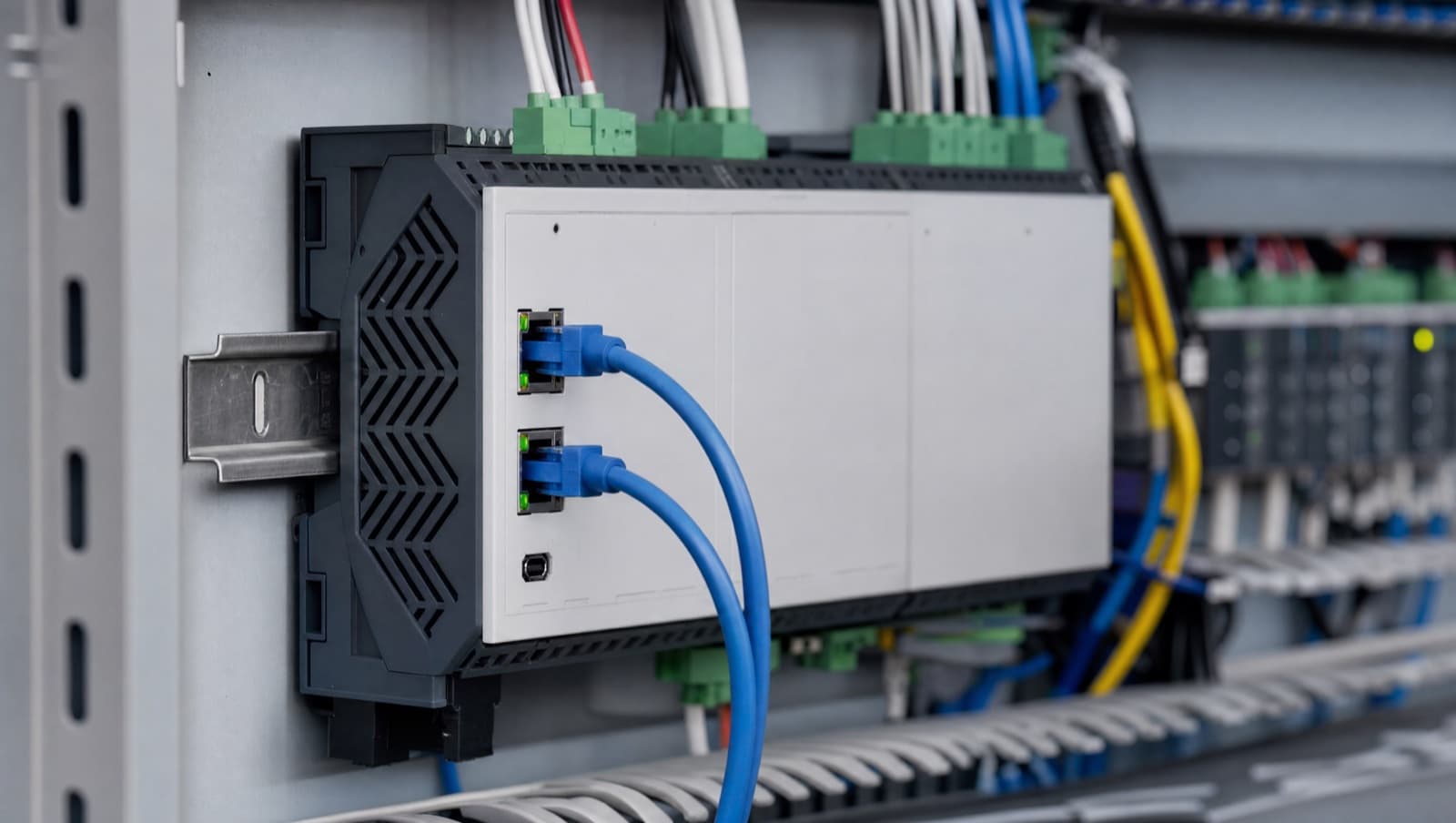
BACnet/IP runs over standard Ethernet and Cat5e/Cat6 cabling — the same infrastructure as the building's IT network — using UDP on port 47808 (0xBAC0). It's the default choice for new-build projects and larger retrofits where IP infrastructure already exists, scaling comfortably from a single floor to a multi-building campus with no inherent distance limit beyond the network design itself. The main consideration is IT coordination: BACnet/IP devices need a dedicated VLAN separate from corporate systems, and firewall rules need agreeing before commissioning starts — getting IT involved late is one of the most common causes of programme slippage on BMS projects. Broadcasts don't cross router boundaries without a BACnet Broadcast Management Device (BBMD) or Foreign Device Registration configured on each subnet, which is often overlooked during design and rushed through at commissioning.
BACnet MS/TP (Master-Slave/Token Passing) runs over RS-485 twisted pair — the traditional BMS field-wiring standard for decades. It's slower than IP (typically 76,800 baud on a Trend network, with a practical limit of around 1,200 metres per trunk) and supports up to 127 devices per segment. It's reliable, cheap to install, and works well for FCU networks, plant room trunks and retrofits where running Cat6 to every controller isn't feasible. Most real buildings use both: BACnet/IP for the backbone, MS/TP for the field device network.
BACnet/SC (Secure Connect), introduced in ASHRAE Addendum bj to Standard 135, is the newest addition, adding TLS encryption and certificate-based authentication over standard IT network infrastructure — the same security layer used by HTTPS. It's suited to connections across WANs, VPNs and cloud-based building management platforms, and is increasingly specified where the BMS shares infrastructure with IT systems or connects to cloud BEMS platforms, though adoption is still early.
Why does BACnet matter for a real building's lifecycle?
The single most important commercial benefit of BACnet is that it prevents vendor lock-in. A BACnet-native BMS can be maintained and expanded by any competent accredited contractor — not just the one who installed it — which enables competitive tendering for maintenance contracts and means you can change contractors without replacing hardware. A building fitted with open-protocol controls in 2015 can add a new energy metering system, integrate a heat pump, connect an occupancy platform, or swap its front-end without replacing the entire controls network. Proprietary systems tend to age badly: once the original vendor raises gateway costs, withdraws support or gets acquired, the building owner is stuck paying integration tax indefinitely or facing a full rip-and-replace.
BACnet also lets systems that would otherwise need bespoke gateways talk to each other directly. A fire alarm system can send a BACnet signal to the BMS to shut down AHUs and switch to smoke extract mode; lighting controls can share occupancy data with the BMS to enable demand-controlled ventilation; energy meters can feed consumption data into the BMS for trending and alarm generation. And it future-proofs the installation: when a building owner later decides to add solar PV monitoring, connect EV chargers, or integrate a smart building analytics platform, BACnet-compliant systems provide the data access layer without custom development.
From an energy and compliance perspective, BACnet enables the sub-metering granularity that ESOS Phase 3 and MEES obligations increasingly demand. If your meters can't communicate with your BMS, you're manually reading figures and losing the ability to correlate energy consumption with occupancy, plant operation or weather data — open-protocol integration is what makes that correlation possible.
Get a Free BMS Survey
We'll assess your controls and provide a detailed quotation with energy savings estimates.
Does BACnet mean any device can talk to any other device?
In theory, yes — but in practice, interoperability depends on both devices implementing the same BACnet services and object types. BACnet defines conformance classes called BIBBs (BACnet Interoperability Building Blocks) that specify which capabilities a device supports; two devices sharing the same BIBBs will interoperate correctly. The BTL (BACnet Testing Laboratories) certification programme tests devices against the standard and publishes a list of certified products — specifying BTL-listed products reduces integration risk, and it's the closest thing the industry has to a guarantee of interoperability.
Can you integrate a non-BACnet system with a BACnet BMS?
Yes, using protocol translation gateways. The most common scenario is integrating Modbus devices — energy meters, VFDs, generator controllers — with a BACnet BMS using a Modbus-to-BACnet gateway, which maps Modbus registers to BACnet objects so the device appears as a native BACnet device to the BMS. The gateway adds cost and a potential point of failure, but it's a mature, well-understood approach. For the fuller comparison between the two protocols and when each fits, see our guide to BACnet vs Modbus.
What are the most common BACnet faults on site?
BACnet is mature and well-tested, but poor implementation causes real problems. The most common fault is duplicate Device Instance IDs — every device on a BACnet network needs a unique identifier, and when two controllers are commissioned with the same ID (usually because someone copied a configuration file without updating it), you get sporadic comms losses that are extremely difficult to diagnose without the right tools. We've traced this fault on sites where it had been logged as an "intermittent network fault" for over a year.
On MS/TP networks, wiring quality is the most frequent source of trouble. RS-485 requires 120Ω end-of-line termination resistors at both physical ends of the trunk, and nowhere else — missing or incorrectly placed resistors cause bus collisions and token-passing failures that don't show up during testing with a small device count but emerge once the trunk is fully populated: devices dropping off the network for seconds at a time, alarms that can't be cleared, setpoints that don't write reliably. The spec is straightforward: 120Ω termination at each end, screen earthed at one end only, solid-core comms cable, daisy-chain topology only — never star wiring — and correct, consistent conductor orientation throughout the trunk. For a detailed guide on EOL resistors in BMS networks, see our article on end-of-line resistors and VAV termination.
On BACnet/IP networks, the equivalent issue is VLAN routing and subnet configuration, covered above. It's often discovered during commissioning and then rushed through in a way that either doesn't work properly or leaves the BMS network without adequate IT security boundaries.
Which standards and profiles define BACnet?
BACnet is formally defined under ASHRAE Standard 135, revised periodically to add new data types, transport options and security capabilities, and adopted internationally as BS EN ISO 16484-5 — making it a mandatory reference in many European public-sector and healthcare specifications. When a contract document calls for "BACnet compliance," it should specify the profile level: BACnet defines conformance classes and application-specific profiles (B-AAC, B-SA, B-BC) that determine which features a device must support. A device claiming BACnet compatibility without a stated profile may not support the features you actually need — which is exactly what BTL listing (above) exists to verify.
Is BACnet secure, and what is BACnet/SC?
Security is an area where the standard has evolved significantly. Traditional BACnet/IP has no authentication or encryption — any device on the network segment can read and write to any other device, and traffic is sent in clear text. This was acceptable when BMS networks were completely air-gapped, but as buildings connect to cloud platforms, remote access VPNs and corporate IT networks, it's a meaningful risk. NCSC (the UK's National Cyber Security Centre) guidance for operational technology recommends network segregation as the primary defence for building automation systems, with encrypted protocols as an additional layer where available.
BACnet/SC (Secure Connect), introduced in ASHRAE Addendum bj to Standard 135, adds TLS encryption and certificate-based authentication to BACnet/IP, and is increasingly specified on new commercial projects, particularly where the BMS shares infrastructure with IT systems or connects to cloud BEMS platforms. For existing networks, the practical security baseline is a dedicated VLAN with firewall rules preventing direct internet access, VPN for remote connections, and role-based access control on the front-end software. For a wider look at BMS network threats and mitigations, see our article on BMS cybersecurity.
Is BACnet now the standard specification for UK BMS installations?
On a practical level, yes. Most current specifications from M&E consultants require BACnet/IP as the primary communication protocol, with BTL certification required for all major system components — a direct result of the vendor lock-in problems that plagued earlier generations of building controls. Consultants and building owners have learned, often through expensive experience, that proprietary systems create long-term cost and flexibility problems that open-protocol systems avoid.
The shift to BACnet also enables a new generation of building analytics platforms that sit on top of the BMS network and provide automated fault detection, energy analytics and performance benchmarking, reading BACnet data directly from the controllers without requiring any modification to the BMS programming. That kind of integration is only possible because BACnet provides a standardised data access layer any authorised system can read.
How does Alpha Controls design and commission BACnet networks?
On projects like Pinsent Masons — where we carried out a full 16-floor FCU upgrade using Trend controllers integrated with the existing BMS infrastructure — BACnet/IP provided the backbone that made the integration clean and commissioning straightforward. Each floor's Trend IQ controllers were addressed with unique device IDs before going on the network, labelled consistently, and commissioned against a point schedule that matched the front-end naming conventions. That discipline — which takes time upfront but eliminates the call-out cycle later — is what separates a network that runs quietly for ten years from one that generates fault calls every few weeks.
On retrofit projects in older buildings, MS/TP trunks are often the right answer for the field network even when BACnet/IP is used at the supervisory level. It's cheaper to cable, more tolerant of plant room conditions, and — when wired correctly — completely reliable for the device counts typically involved in an FCU or VAV rollout. Trunk design, baud rate, termination and device addressing are all specified before cable goes in the tray, not figured out during commissioning. For a platform-level look at how one BACnet-native manufacturer builds on it, see our Distech ECLYPSE and EC-Net guide.
Should you specify BACnet for a new or existing building?
If you're specifying a new BMS or planning a retrofit, BACnet/IP should be the default unless there's a specific reason otherwise. The total cost of proprietary integration — gateways, driver licences, consultant time, and the long-term cost of vendor dependency — consistently exceeds the marginal cost of proper open-protocol design from the start. On large estates and multi-tenanted commercial buildings, where the controls infrastructure will outlast any single contractor relationship, this matters even more.
If you're managing an existing building and finding that your systems can't talk to each other, it's worth getting a controls contractor to audit what protocols your devices actually support before assuming gateways are the only answer. Many devices that appear proprietary have BACnet or Modbus capability that simply hasn't been configured. We've integrated plant on sites where the building owner had been paying for proprietary middleware for years, when the underlying devices were perfectly capable of speaking BACnet natively.
The bottom line on BACnet
BACnet has been the dominant open protocol in commercial building controls for a good reason — it solves a real problem that affects every building owner who has ever had to integrate equipment from different manufacturers. Done properly, it gives you a controls network that scales cleanly, supports future upgrades without vendor lock-in, and provides the data visibility that energy compliance increasingly demands. Done poorly, it produces intermittent faults and commissioning headaches that take experienced engineers to untangle.
If you're specifying, designing or troubleshooting a BACnet network and want a second opinion, get in touch with the Alpha Controls team. We design and commission BACnet/IP and MS/TP networks across London and the South East, and we're happy to review existing network documentation or talk through a new project before you commit to a design.
Alpha Controls Team
Specialist BMS installation, commissioning, and maintenance across London and the South East. SafeContractor Approved, BCIA Member.