
A BMS and HVAC maintenance contract is worth it when it is scoped against standards like SFG20, delivers documented planned preventative maintenance, includes the controls as well as the plant, and prices reactive work transparently. It is not worth it when the scope is vague, the BMS is excluded, and reactive callouts are uncapped.
Every FM manager in the UK has had the same internal debate at some point: is this maintenance contract actually delivering value, or am I paying a monthly retainer for someone to turn up twice a year, tick some boxes, and leave without fixing anything? The answer depends entirely on what the contract includes, how it is structured, and whether the contractor is maintaining the system proactively or just responding to breakdowns with a service agreement wrapper around it.
The honest answer is that most BMS and HVAC maintenance contracts in the UK are not worth what the building owner is paying for them — not because maintenance itself is unnecessary, but because the contract scope is vague, the deliverables are undefined, the visit frequency is disconnected from the actual maintenance need, and the reactive callout charges that sit on top of the retainer mean you are paying twice for coverage you thought you already had. A good maintenance contract, by contrast, is one of the most commercially valuable things a building can have: it extends plant life, reduces energy waste, prevents tenant complaints, protects compliance, and costs a fraction of the emergency repairs it prevents.
What does a BMS and HVAC maintenance contract actually cover?
A maintenance contract for BMS and HVAC systems typically covers two things: planned preventative maintenance (PPM) and reactive maintenance. The split between these two — and how each is defined — is where the difference between a good contract and a bad one lives.
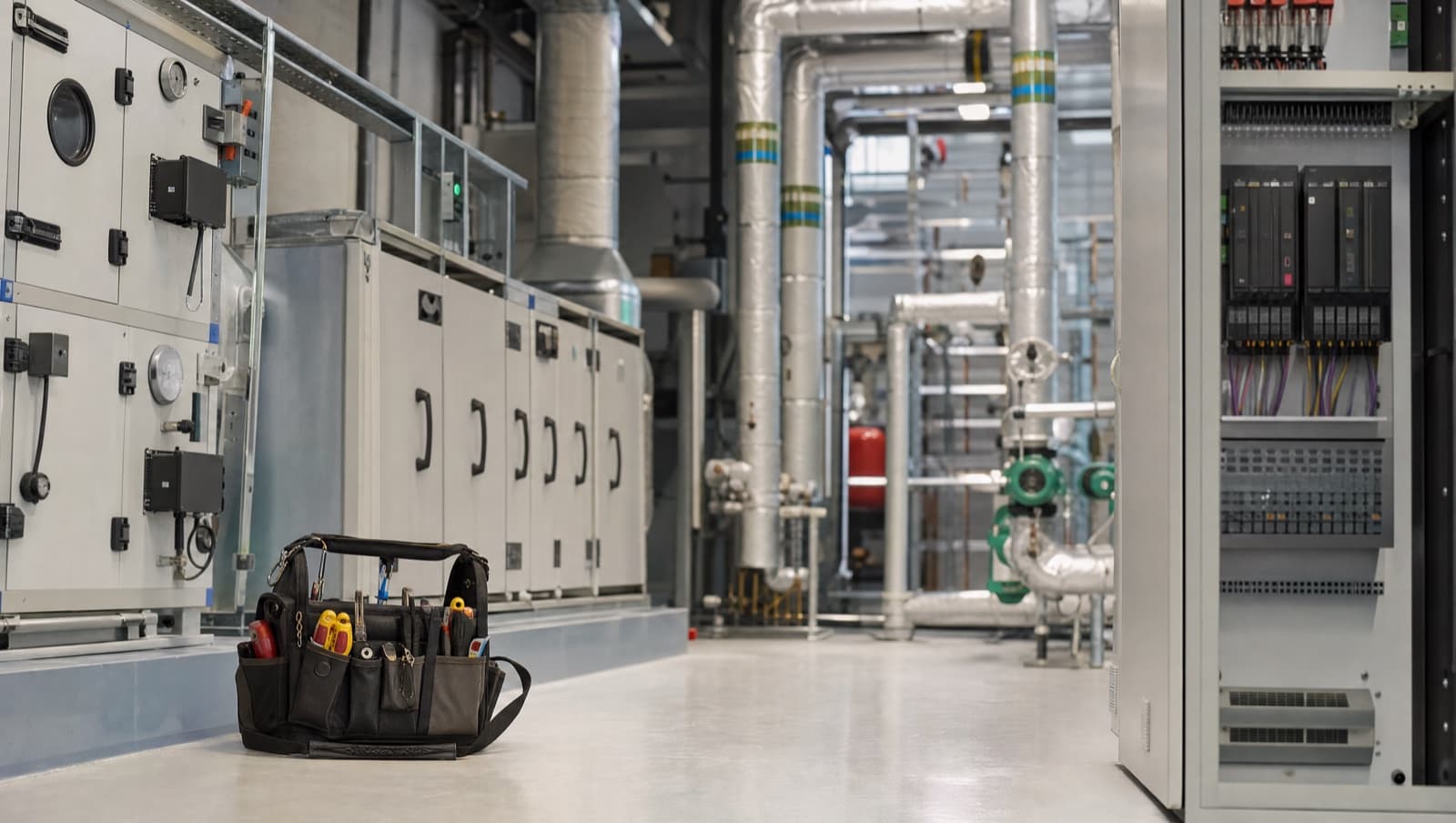
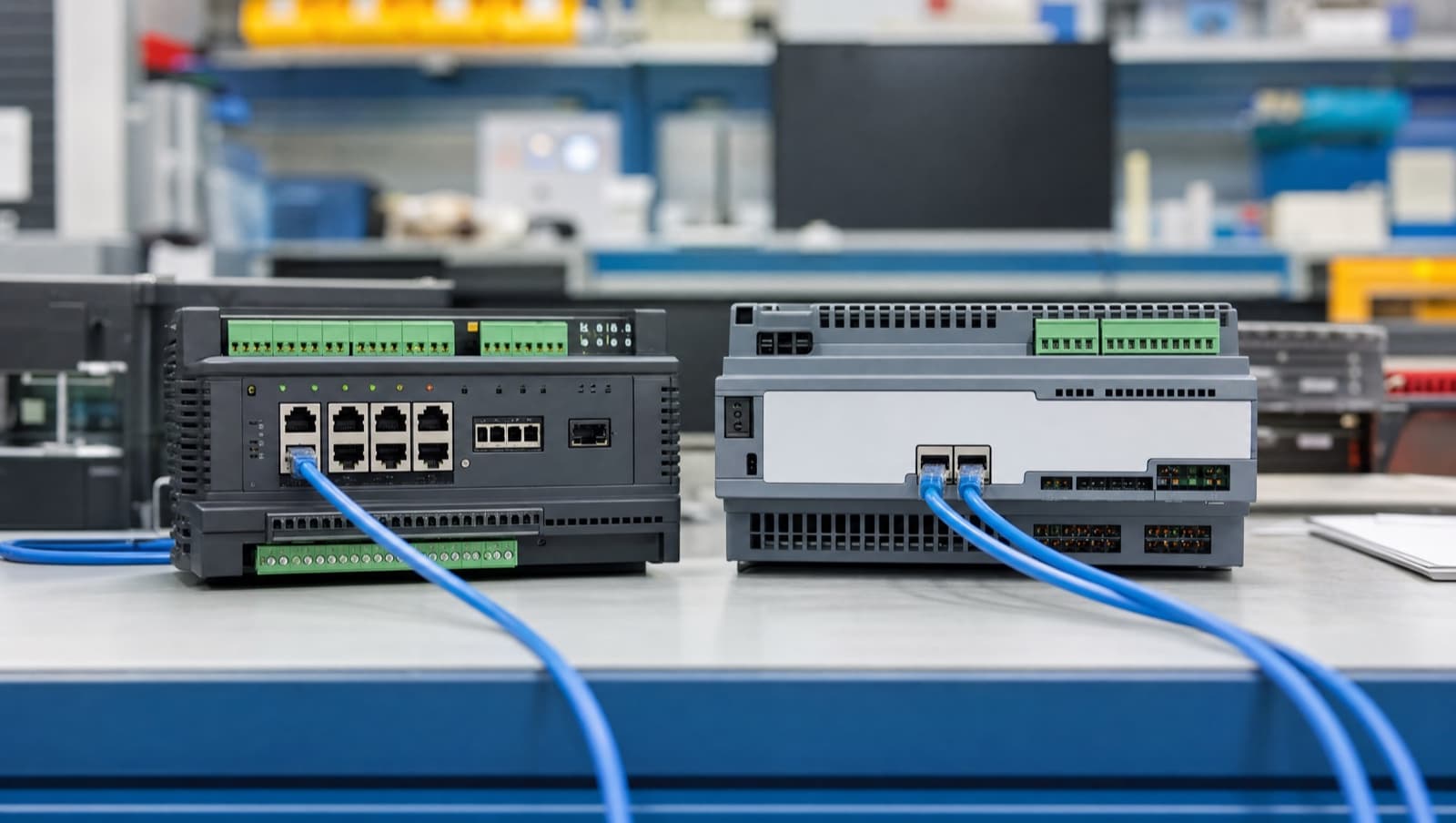
Planned preventative maintenance is the scheduled work: the quarterly or biannual visits where an engineer inspects, tests, cleans, calibrates, and adjusts the HVAC plant and the BMS controllers. For HVAC plant, this means filter changes on AHUs, belt checks and replacement on fans, visual inspection of heat exchangers, checking refrigerant pressures on DX systems, testing safety devices, checking pump seals and bearings, verifying valve operation, and flushing condensate drains. For the BMS, it means checking controller operation, verifying sensor calibration, reviewing time schedules, checking for overrides that have been left in place, reviewing alarm logs, updating firmware where required, backing up controller programmes, and checking the network communication for errors.
Reactive maintenance is the unplanned work: callouts for breakdowns, fault diagnosis, and emergency repairs. This is where contracts diverge significantly. Some contracts include all reactive callouts within the retainer — a fully inclusive agreement where the contractor absorbs the risk of breakdowns. Others include a defined number of callout hours or a reduced callout rate, with additional hours charged at a premium. And some contracts are PPM-only, with reactive work charged entirely on a time-and-materials basis — which means the retainer covers only the planned visits, and everything else is extra.
The contract you need depends on the age and condition of the plant, the criticality of the building, and the FM team's internal capability. A new building with modern plant under warranty may need only a PPM contract with reactive cover handled through the original installer. A fifteen-year-old office with ageing AHUs, legacy BMS controllers, and no internal engineering resource needs fully inclusive cover because the reactive demand will be significant and unpredictable.
Why does maintenance matter in real buildings?
The commercial case for proper BMS and HVAC maintenance is not abstract — it shows up in the energy bill, the tenant satisfaction scores, and the unplanned capital expenditure budget.
On energy performance, a poorly maintained HVAC system wastes energy in ways that are invisible until someone measures them. Dirty filters increase fan energy consumption by forcing the fan to work harder against higher resistance — a filter that has not been changed for six months can increase fan power draw by fifteen to twenty percent. A BMS time schedule that has not been reviewed in two years will be heating or cooling spaces that do not need it, at times when they are unoccupied, because nobody has updated the schedule to reflect changes in tenant occupancy patterns. Overrides that were applied to fix a short-term comfort issue — 'the third floor is too cold, increase the flow temperature' — accumulate silently, and each one adds energy consumption that nobody is monitoring.
On plant longevity, the relationship between maintenance quality and plant life is direct and documented. SFG20 — the Standard Maintenance Specification for Building Services — provides the benchmark maintenance schedules for every category of building services plant, from boilers and chillers to AHUs, pumps, and BMS controllers. SFG20 specifies the maintenance tasks, the frequency, and the competency requirements for each asset type, and is referenced in most FM procurement specifications as the minimum standard. A building maintained to SFG20 standards will typically achieve a plant life twenty to thirty percent longer than one maintained on a reactive-only basis — which translates directly into deferred capital expenditure.
On compliance, maintenance is not optional for several categories of building services. F-gas regulations require annual leak checks on refrigeration and air conditioning systems containing specified quantities of fluorinated greenhouse gases. BS 7671:2018 — the IET Wiring Regulations (18th Edition) requires periodic inspection and testing of electrical installations, including BMS control panels and their associated wiring. Legionella risk assessments under HSE L8 require documented maintenance of hot and cold water systems, including temperature monitoring that the BMS facilitates. Failure to maintain these records — or to carry out the maintenance itself — is a compliance breach that creates legal liability for the building owner and the FM company.
What usually goes wrong with a maintenance contract?
The first and most common failure is the contract that looks comprehensive on paper but delivers nothing of substance on site. The PPM visit checklist has fifty items, the engineer ticks all fifty, and the report says 'all satisfactory.' But nobody checked whether the BMS time schedules match the actual occupancy, nobody tested whether the weather compensation curve is working, nobody reviewed the alarm log to identify recurring faults, and nobody cleared the overrides that have been in place since last winter. The visit happened. The maintenance did not.
The second failure is the contract that includes PPM but excludes the BMS entirely. The HVAC contractor maintains the plant — the boilers, the chillers, the AHUs, the FCUs — but the BMS is either excluded from the contract or included as a line item that covers 'visual inspection of controller operation' and nothing more. The BMS is the brain of the HVAC system. If nobody is maintaining the controls — reviewing setpoints, checking sensor accuracy, clearing overrides, updating schedules, backing up programmes — the physical plant will underperform regardless of how well it is maintained mechanically. The best-maintained boiler in London is worthless if the BMS is sending it the wrong demand signal.
The third failure is the reactive pricing trap. The contract has a low annual retainer — attractively priced, competitive in the tender — but the reactive callout charges are high: eighty to one hundred and twenty pounds per hour with a four-hour minimum, materials at list price plus thirty percent, and out-of-hours rates at time and a half or double time. The building owner thinks they are getting good value on the retainer, but the total annual spend — retainer plus reactives — is higher than a fully inclusive contract would have been. And the contractor has no incentive to reduce the reactive demand because every callout is additional revenue.
The fourth failure is the contractor who is maintaining plant they do not fully understand. A general HVAC maintenance company may be competent at filter changes, belt replacements, and pump servicing — but if they do not understand BMS controls, they cannot diagnose the root cause of comfort complaints, energy waste, or intermittent plant failures. They replace parts. They reset faults. They do not investigate why the fault occurred, whether the controls strategy contributed to it, or whether a BMS programming change would prevent it recurring. The symptoms get treated. The causes persist.
Get a Free BMS Survey
We'll assess your controls and provide a detailed quotation.
Which standards and benchmarks should a maintenance contract meet?
Two standards provide the framework for assessing whether a maintenance contract delivers genuine value.
SFG20 — Standard Maintenance Specification for Building Services is the UK benchmark for planned maintenance schedules across all categories of building services. SFG20 is maintained by BSRIA and provides detailed task-level specifications: what to inspect, what to test, what to clean, what to replace, how often, and to what standard. For BMS controllers, SFG20 specifies quarterly software checks including programme backup, alarm log review, and sensor calibration verification. For AHUs, it specifies quarterly filter inspection with replacement when the pressure differential across the filter bank exceeds the manufacturer's recommended maximum — typically 150-250 Pa depending on filter grade. For boilers, it specifies annual combustion analysis, burner inspection, heat exchanger cleaning, and safety device testing. If your maintenance contract does not align with SFG20 schedules and task lists, you are either undermaintaining the plant or paying for a scope that does not match the industry standard.
CIBSE Guide M — Maintenance Engineering and Management provides the strategic framework for building services maintenance: the different maintenance strategies (planned preventative, condition-based, reactive, reliability-centred), how to select the right strategy for each asset type, and how to measure maintenance performance through KPIs including planned-to-reactive ratio, first-time fix rate, mean time between failures, and energy performance trends. Guide M recommends a planned-to-reactive maintenance ratio of at least 70:30 — meaning that seventy percent of maintenance activity should be planned and proactive, with no more than thirty percent reactive. If your maintenance provider's work breakdown shows the opposite — mostly reactive callouts with minimal planned activity — the maintenance programme is not working, regardless of what the contract says.
What does Alpha Controls include in a BMS maintenance contract?
Alpha Controls structures BMS maintenance contracts differently from most providers because we maintain the controls as a controls system, not as a collection of hardware. Every contract includes the following.
Quarterly PPM visits that include controller programme backup, sensor calibration checks against reference instruments, time schedule review against actual occupancy data, override audit with a report of all active overrides and their duration, alarm log review with root cause analysis of recurring alarms, weather compensation curve verification, optimum start performance check, and network communication diagnostics. Every visit produces a written report with findings, recommendations, and any actions taken.
Remote monitoring between visits — where the BMS has internet connectivity, Alpha Controls monitors the system remotely for critical alarms, communication faults, and abnormal operating patterns. A controller that goes offline at 3am on a Saturday does not wait until Monday for someone to notice. Remote monitoring catches problems between PPM visits and reduces reactive callouts by enabling early intervention.
Annual controls strategy review — once a year, we sit down with the FM team and review the entire controls strategy against the building's current operating requirements. Have occupancy patterns changed? Has plant been replaced or modified? Are energy targets being met? Are there tenant comfort complaints that indicate a controls issue? This review often identifies optimisation opportunities that reduce energy consumption and improve comfort — changes that a standard PPM contract would never capture because they require controls engineering, not maintenance engineering.
Controller programme backups held by the client — after every programming change, the complete controller backup is provided to the building owner. This ensures continuity if the maintenance provider changes and eliminates the lock-in risk described in our post on BMS vendor lock-in.
What does a good maintenance contract look like versus a bad one?
A good BMS and HVAC maintenance contract has clear, measurable deliverables. The PPM task list references SFG20 or an equivalent standard. The visit frequency matches the asset criticality and the manufacturer's recommendations. The reactive response times are defined — not 'as soon as possible' but 'within four hours for critical, within eight hours for urgent, next working day for routine.' The pricing is transparent: the retainer covers defined PPM work, and reactive work is either inclusive or charged at agreed rates with no hidden extras. Materials are charged at cost plus a defined margin, not at 'list price plus whatever we feel like.'
A bad contract is vague on deliverables, light on PPM scope, and heavy on exclusions. Watch for contracts that exclude the BMS from the HVAC maintenance scope, that define PPM as 'inspection' rather than 'maintenance,' that do not include sensor calibration or controls review, that charge a low retainer but have uncapped reactive pricing, or that do not specify response times in the SLA. A contract that costs less but delivers less is not cheaper — it is a deferred cost that arrives as emergency repairs, energy waste, compliance gaps, and tenant complaints.
For a broader view of what BMS systems are and what maintaining them involves, our guide to what a building management system is provides the foundation. And for the cost picture on upgrading a system that has been undermaintained to the point where replacement is more cost-effective than repair, our BMS retrofit cost guide covers the numbers.
When should you review or change a maintenance contract?
If your current maintenance contract is up for renewal, request the maintenance records from the past twelve months before you renew. How many PPM visits were completed? What was actually done on each visit? What is the planned-to-reactive ratio? If the records are thin — or unavailable — the contract is not delivering what you are paying for.
If your BMS is not included in your HVAC maintenance contract, add it. The BMS is the single most impactful system in the building for energy performance, comfort control, and compliance — and it is the one that degrades most silently without regular attention. A BMS-specific maintenance contract is typically five to fifteen thousand pounds per year depending on system size, and it pays for itself in energy savings alone within the first twelve months.
If you are going out to tender for a new maintenance contract, write the specification against SFG20 and require the tenderers to submit their PPM task lists, visit frequencies, and reactive response commitments in a comparable format. This makes the tenders genuinely comparable on scope, not just on price. Alpha Controls bids on this basis and welcomes the comparison — contact us or request a quote to include us in your tender.
Are BMS and HVAC maintenance contracts worth it overall?
BMS and HVAC maintenance contracts are worth it when they are structured properly, scoped against industry standards, and delivered by a contractor who understands both the mechanical plant and the controls that drive it. They are not worth it when they are vague, reactive-heavy, BMS-excluded, and priced to look cheap while delivering nothing of substance. The difference is measurable in energy bills, plant life, compliance records, and tenant satisfaction.
Alpha Controls provides BMS maintenance contracts that include quarterly PPM with controls strategy review, remote monitoring, annual optimisation reviews, and full programme backups held by the client. We maintain Trend, Siemens, Schneider, and Distech systems across commercial offices, schools, healthcare facilities, and mixed-use buildings. Contact us or request a quote to discuss your maintenance requirements.
Alpha Controls
Specialist BMS installation, commissioning, and maintenance across London and the South East. SafeContractor Approved, BCIA Member.