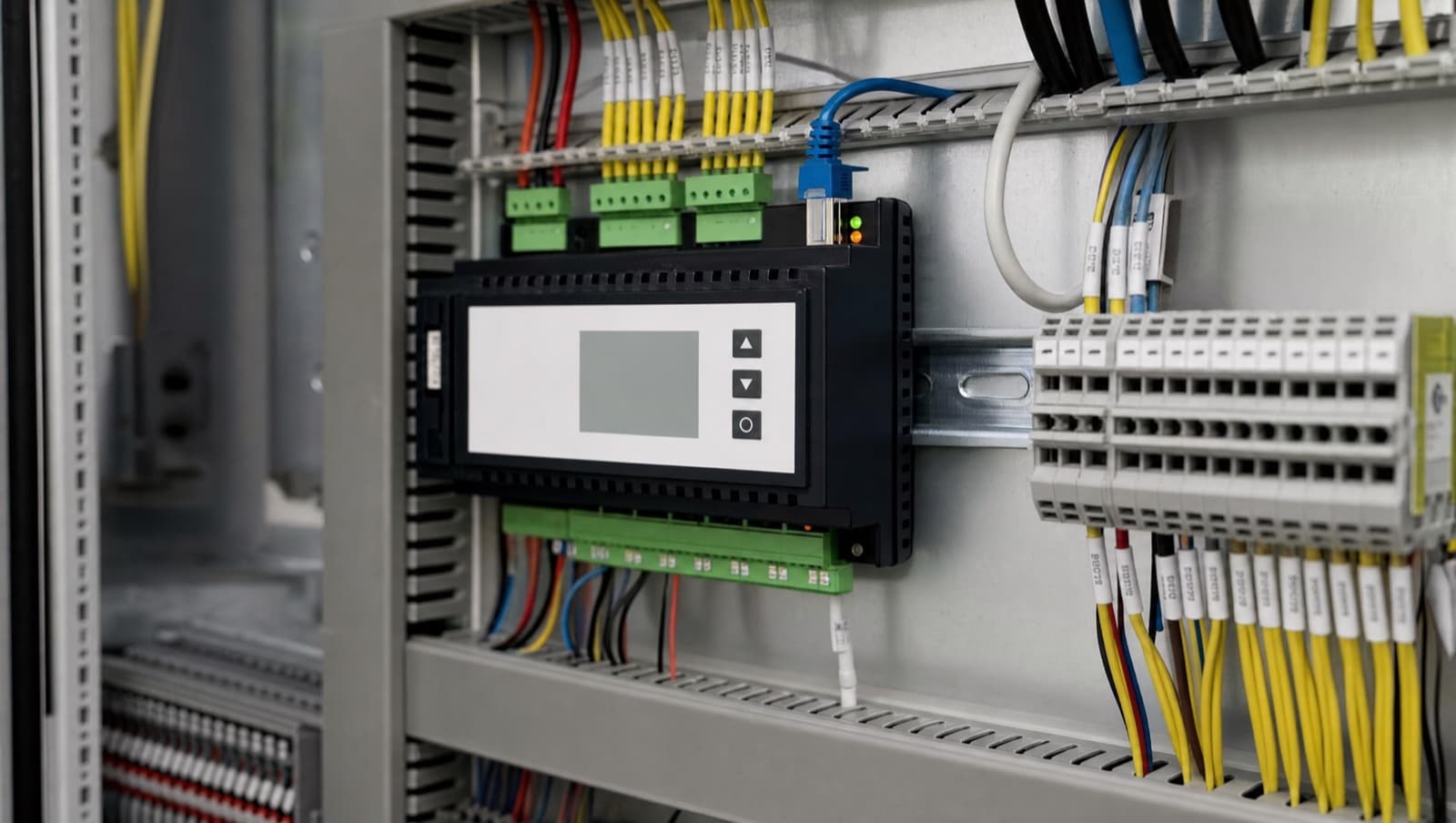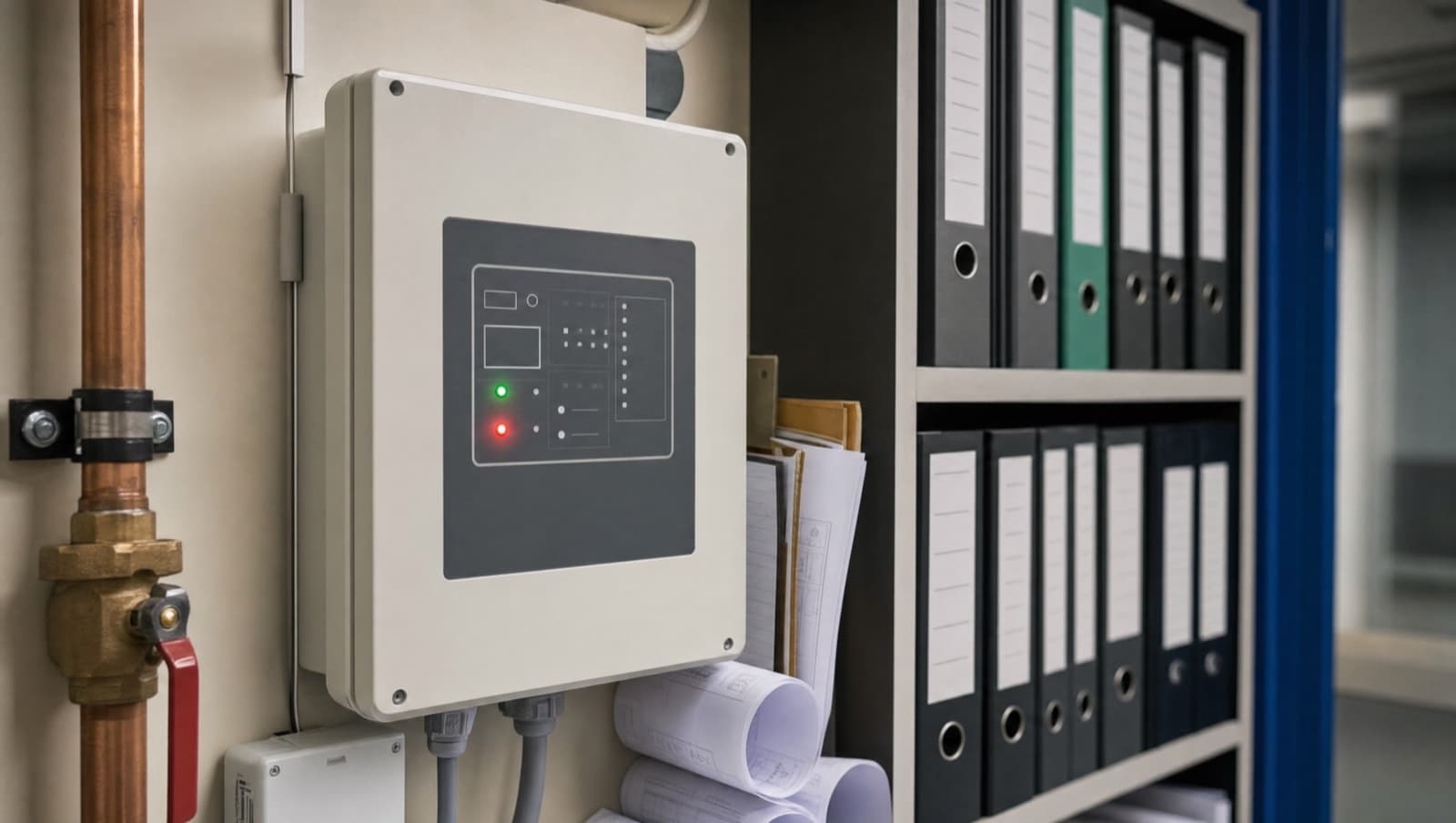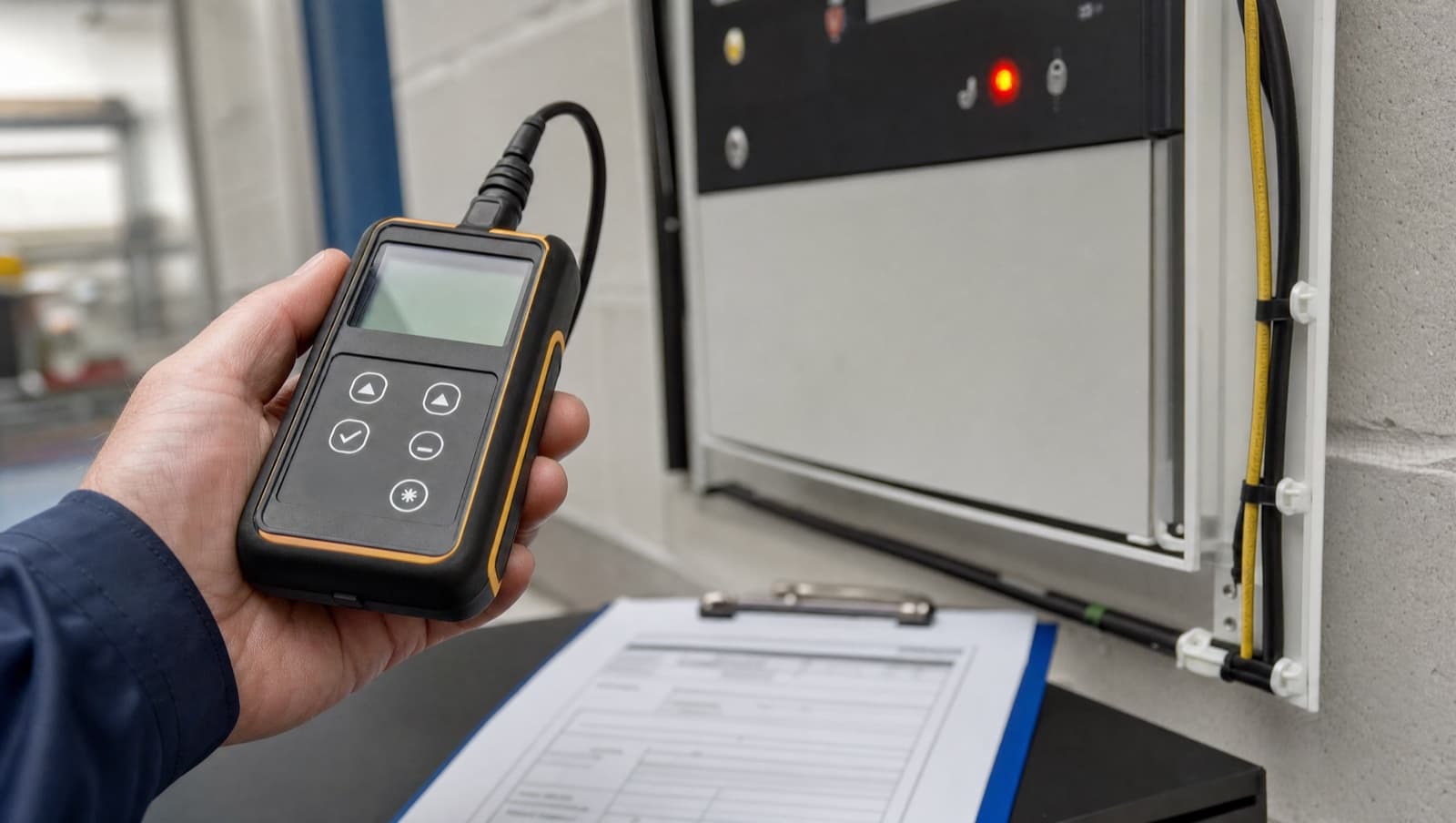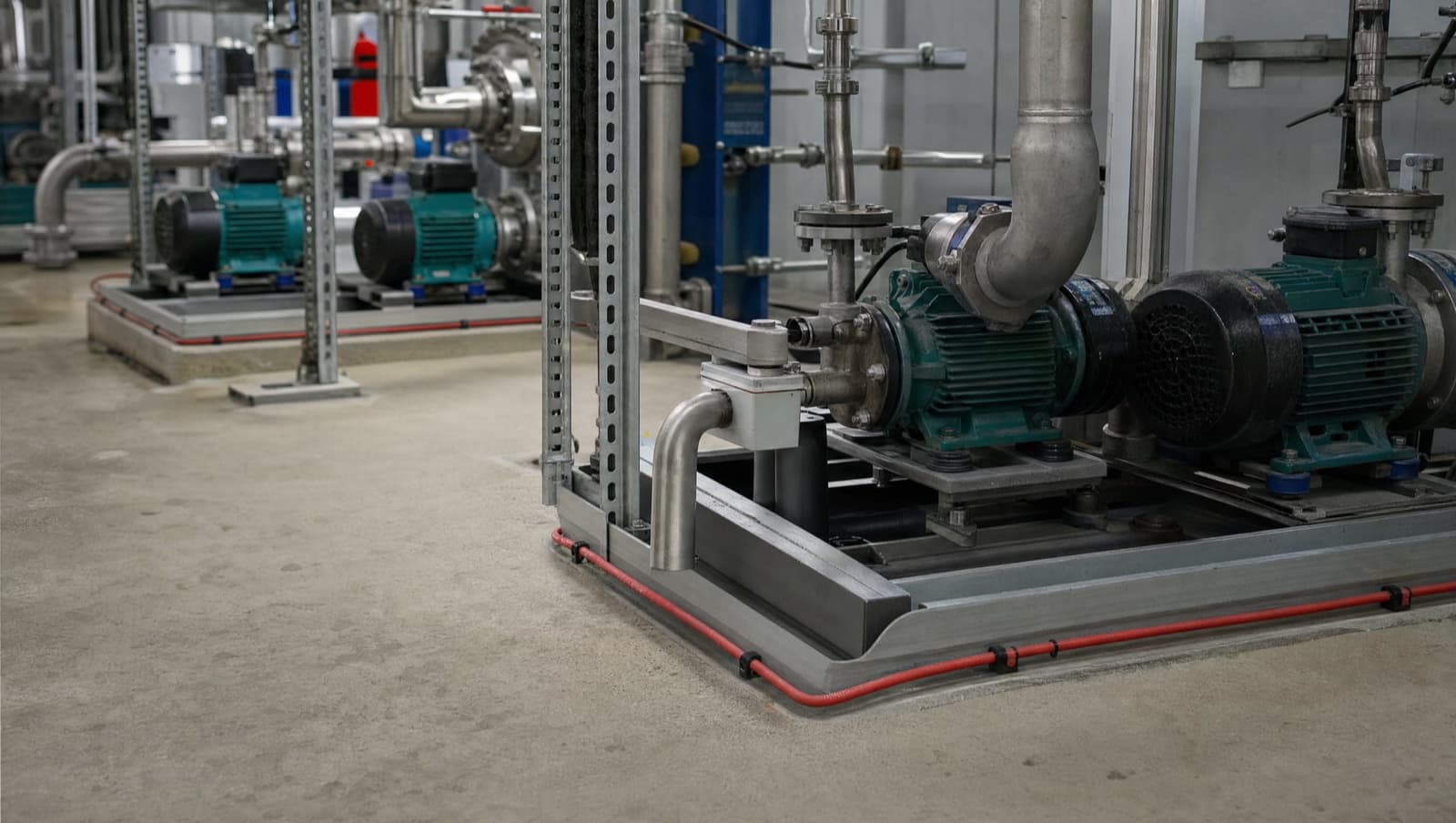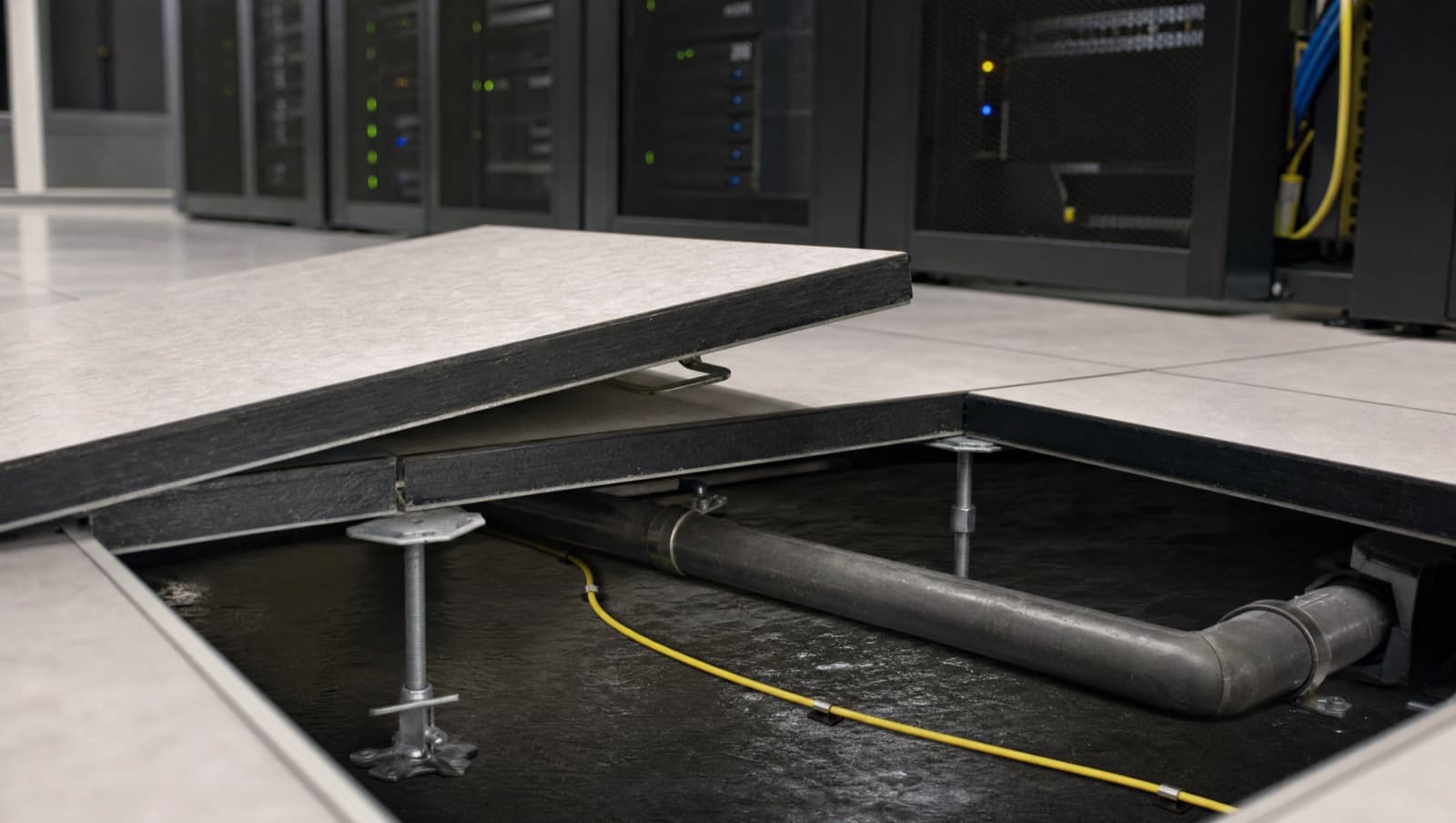

Commissioning a leak detection system means physically testing every component in the detection and response chain — from the sensing cable in the floor through to the alarm on the BMS screen and the closure of the automatic isolation valve. It is a wet test of every zone, not a visual inspection.
What does commissioning a leak detection system actually involve?
Commissioning verifies — through physical testing — that every component in the detection and response chain functions correctly, from the sensing cable in the floor through to the alarm on the BMS screen and the closure of the automatic isolation valve. It is not a visual inspection. It is a wet test of every zone, a verification of every alarm path, and a confirmation that the system responds exactly as designed. An uncommissioned system shows up at the worst moment: a pressurisation unit fails at 11pm on a Friday, water pools under the header pipework, and nothing happens — no alarm, no BMS notification, no automatic valve closure.
Why does commissioning matter more than you think?
A leak detection system that isn't commissioned properly sits silently on the wall looking entirely functional, and nobody discovers the problem until the day it's needed and it fails. That makes commissioning the only reliable point at which the system is proven to work. Until it is wet-tested zone by zone, no one knows whether it will actually respond when water arrives.
What usually goes wrong with leak detection commissioning?
The most common failure is the system that was never wet-tested. A continuity check tells you the cable isn't broken — it doesn't tell you whether the cable will actually detect water. BMS integration left for later is the second most common failure. No handover documentation is the third. Automatic shut-off valves that were never tested represent the fourth category. Each leaves a system that looks finished but cannot be proven to work.
Get a Free BMS Survey
We'll assess your controls and provide a detailed quotation.
What standards and guidance apply to leak detection commissioning?
BSRIA BG 11/2010 — Soft Landings Framework establishes that commissioning is not a standalone event but a managed process from design through occupation. CIBSE Commissioning Code M provides the procedural framework requiring a commissioning programme before installation begins. BS 7671:2018 requires all electrical circuits associated with leak detection to be tested and certified.
How does Alpha Controls commission a leak detection system?
Our commissioning process follows the BSRIA and CIBSE framework. Pre-commissioning checks cover every physical aspect. Then comes wet testing — every zone tested individually using the damp cloth method. Automatic shut-off valves get their own test sequence. Every test result is recorded against the zone schedule, so the system is proven rather than assumed to work.
What should be in a leak detection handover package?
A properly commissioned system should come with as-built drawings, zone identification schedules, panel configuration records, BMS point schedules, maintenance schedules, and emergency response procedures. If those documents are missing, the system has not been handed over properly.
When should you commission or recommission a leak detection system?
For new builds, commissioning requirements should be in the specification from day one. For retrofits, the commissioning scope should be identical. For FM companies inheriting existing systems, establish whether the system has ever been properly commissioned. The cost of recommissioning is typically £1,500 to £4,000. If you need a leak detection system commissioned, contact us or request a quote.
FAQ
What is the damp cloth method for testing leak detection?
A cloth dampened with clean water is placed across the sensing cable, creating a conductive bridge. This simulates a leak and should trigger an alarm within 30-60 seconds.
How often should leak detection systems be wet-tested?
At least one zone per six-monthly visit on rotation, with a full wet test of every zone at least every two years. Automatic shut-off valves should be exercised quarterly.
What should be in a commissioning certificate?
Date, engineer details, pre-commissioning checks, wet test results for every zone, valve test results, baseline settings, and any snagging items with target completion dates.
Can Alpha Controls commission a system installed by another contractor?
Yes — we do this regularly. We carry out the full commissioning process and produce the handover package that should have been provided at practical completion.
What happens if commissioning reveals the system doesn't work?
We document every fault with location, nature, and recommended fix, provide a costed remedial proposal, and can carry out repairs immediately, retesting each item after the fix.
Full scope and BMS integration detail on our leak detection and trace heating page.
Darren Grix
Specialist BMS installation, commissioning, and maintenance across London and the South East. SafeContractor Approved, BCIA Member.