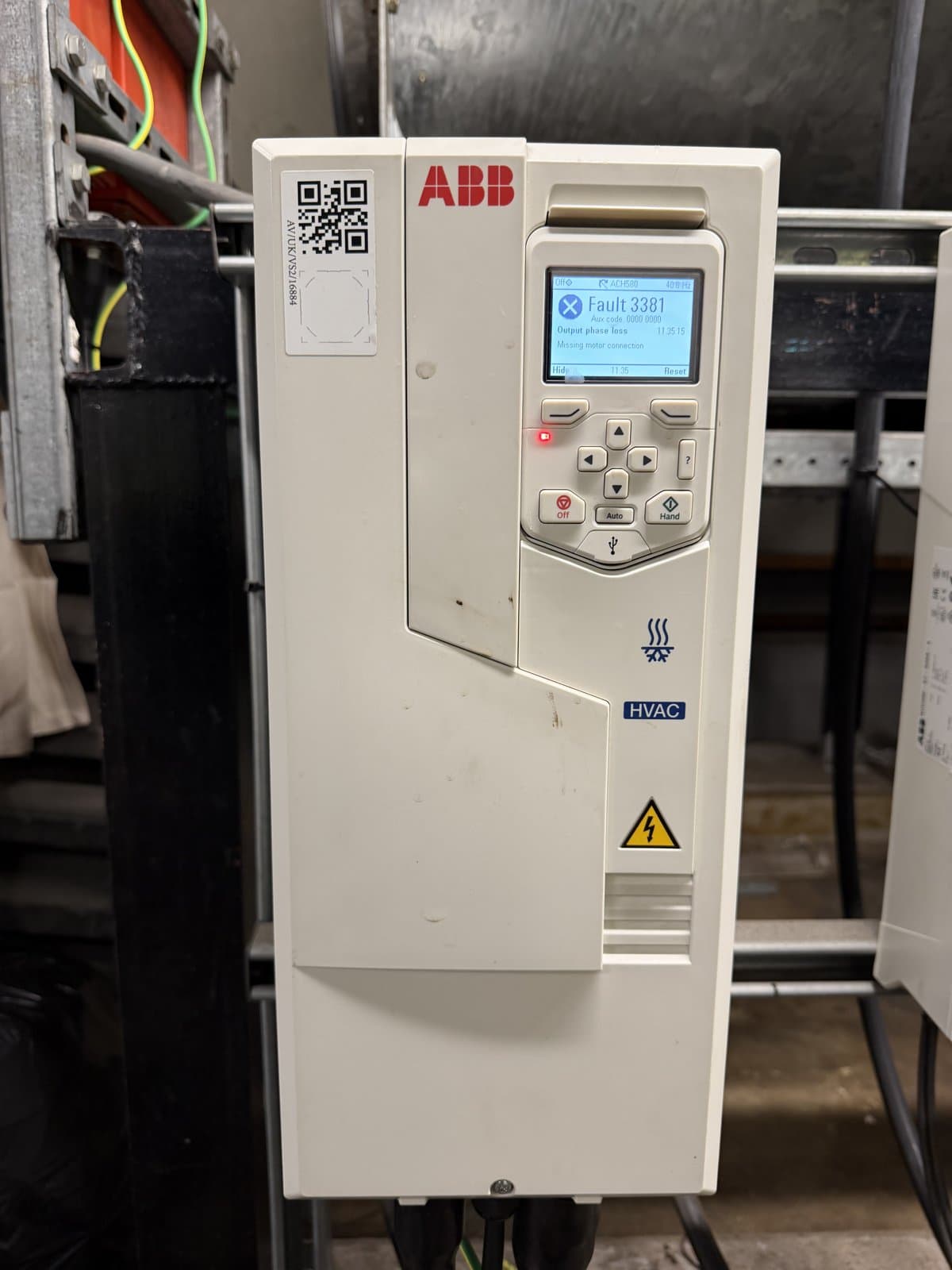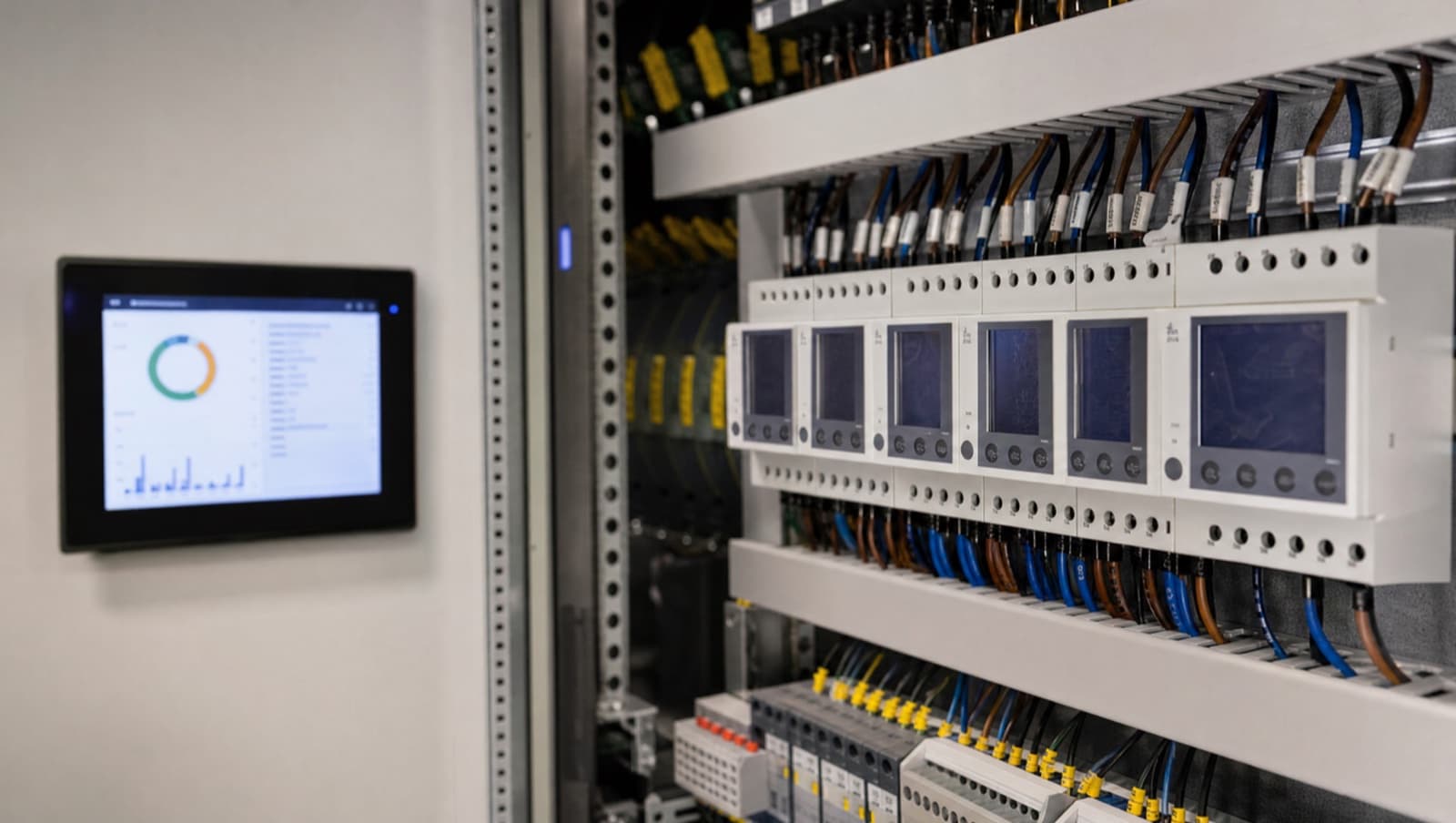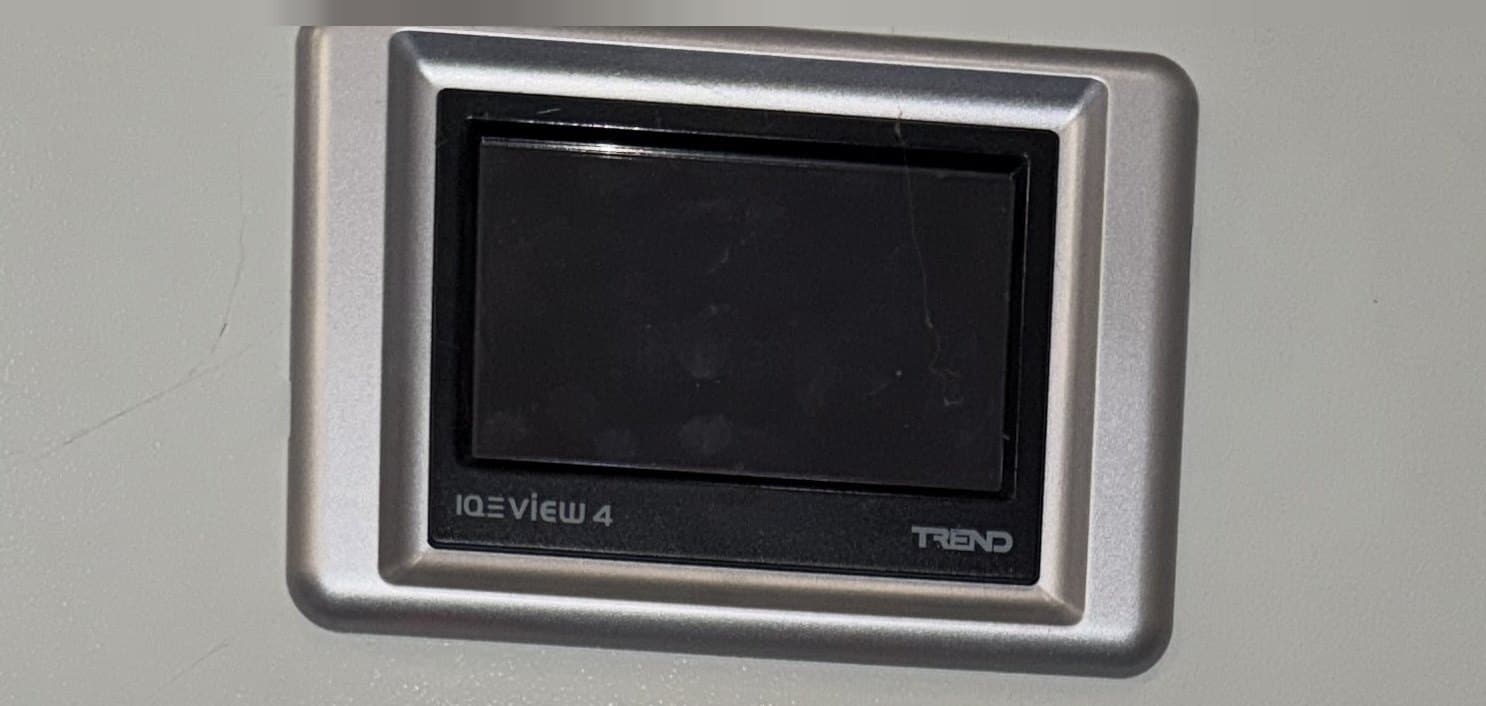

Running a mixed-brand BMS estate costs you in three places: labour, because engineers need separate toolsets and licences for Trend, Distech, Siemens and the rest; reliability, because the integration points between brands are where faults hide; and energy, because no single head-end sees the whole building well enough to optimise it.
It happens in stages. A 2009 Trend install goes in with the original fit-out. A 2015 Distech extension lands when a couple of floors get refurbished. Somewhere along the way a Siemens fire panel and a Schneider metering system arrive, and nobody quite integrated any of it properly. Each decision made sense on the day. Five or ten years on, you're left with a plant room and a comms room full of kit from four manufacturers, three of which don't talk to each other without a translator, and a maintenance contract that quietly costs more every year because of it. The bills are spread across labour rates, call-outs, energy and the odd panel swap, so the true cost stays invisible until someone actually adds it up.
Why does a multi-vendor BMS cost more to run?
The headline cost is engineering labour. A genuine Trend IQ4 controller is configured and commissioned in Trend's own tools — IQSET, or the SET licence and the relevant 963/IQVision supervisor environment. A Distech ECLYPSE is configured in EC-gfx and ENVYSION through Distech's own ecosystem. Siemens Desigo and Synco sit in yet another toolchain, Schneider EcoStruxure in another, Honeywell EBI in another again. Each of those is a separate skill, often a separate paid licence or engineering software subscription, and frequently a separate trained engineer. The moment your estate spans three brands, you've narrowed the pool of contractors who can credibly maintain all of it, and a narrower pool means higher day rates and longer lead times when something breaks.
Then there's the duplication you don't see on the quote. Two or three supervisor head-ends instead of one. Multiple software maintenance agreements. Separate spares holdings — a Trend module won't drop into a Distech panel, so you carry stock for each. Separate firmware and security patch cycles, each with its own release notes and its own way of going wrong. None of these line items is huge on its own. Added together, across a multi-building estate over a maintenance term, they add up to real money that a single-platform site simply doesn't spend.
Where do faults actually hide in a mixed BMS estate?
Faults hide at the integration points — the places where one manufacturer's kit hands data to another's. In a clean single-vendor system, a sensor value travels from controller to supervisor inside one ecosystem and one data model. In a mixed estate, that same value often crosses a protocol boundary: a Modbus register on a third-party meter mapped into a BACnet object, or a gateway translating between a legacy Trend network and a newer BACnet/IP backbone.
BACnet is meant to make this painless. As an open protocol standardised under BS EN ISO 16484-5:2022 (and ASHRAE Standard 135), it gives every device a self-describing data model so a Distech controller and a Siemens supervisor can, in principle, read each other's points natively. In practice, native interoperability depends on every device implementing the same BACnet objects and services correctly, and on someone having mapped them properly during commissioning. When a gateway sits in the middle translating Modbus or a proprietary protocol into BACnet, you've added a device that has to be configured, powered, patched and understood — and when it silently drops out, the points downstream of it just go stale. The supervisor still shows a value; it's just the last value before the gateway died.
That's the classic mixed-estate fault. A graphic shows a room at 21°C and a damper at 40% open, and it's been showing exactly that for three weeks because the integration link feeding it died and nobody noticed. No alarm fired, because the brand that owns the alarm logic isn't the brand that owns the dead link. Stale data that looks live is far more expensive than an honest fault, because it hides plant that's drifting, over-running or failing until a tenant complains or an energy bill spikes.
What goes wrong on site with multiple BMS brands?
The first thing that goes wrong is finger-pointing. When a system spans Trend, Distech and Siemens and a zone won't hold setpoint, each vendor's engineer can reasonably say the problem is on the other side of the interface. The Trend engineer says the BACnet point coming from the Distech side is wrong; the Distech engineer says they're publishing the value correctly and it's the mapping on the Trend supervisor. Without one party owning the whole integration, you pay two call-outs to establish whose fault it is before anyone fixes anything.
The second is undocumented integration. The original gateway mappings, the protocol bridges, the point lists that tie one brand to another — these are the first things to vanish. The contractor who set them up moves on, the as-built documentation never captured the integration layer in detail, and you're left with a black box that works until it doesn't. When it does fail, an engineer has to reverse-engineer the mapping live on a running building, which is slow and risky.
The third is partial visibility for energy and compliance. CIBSE Guide H, which covers building control system design, makes the point that the value of a BMS lies in coordinated control of the whole building, not isolated islands. A fragmented estate undermines exactly that. If your metering sits in Schneider EcoStruxure, your AHUs run on Trend and your terminal units on Distech, no single head-end gives you a clean, whole-building view. That matters for operational energy assessment under CIBSE TM54, and it matters under the MEES framework, where a commercial building needs to hold a valid EPC rating and demonstrate it's actually controlling energy use rather than just claiming to. You can't optimise what you can't see in one place.
Get a Free BMS Survey
We'll assess your controls and provide a detailed quotation.
Should you rip out a mixed BMS and standardise on one brand?
Usually no — at least not all at once. A full rip-and-replace across a live, occupied building is disruptive and expensive, and you rarely need it. The better question is whether to standardise the layer that matters: the integration backbone and the supervisor.
The pragmatic route is to unify the head-end. Modern open supervisors — including BACnet-native platforms and integration environments such as those built on the Niagara Framework — can sit above mixed field kit and present one coherent front end, one alarm philosophy, one trend log archive and one set of graphics, regardless of what brand of controller is doing the donkey work below. You keep the working Trend and Distech controllers in place, drive them through a single supervisory layer, and stop paying for three separate head-ends and three separate ways of looking at the same building. Where a legacy controller is genuinely end-of-life or unsupported, you replace that island on its own schedule rather than condemning the whole estate.
Standardisation pays off most where you're already spending — at refurbishment, at controller end-of-life, and at re-tender of the maintenance contract. The trick is to have a target architecture written down so that every future change moves toward it, instead of adding a fifth brand because it was cheapest on the day.
What does a well-run mixed or unified BMS estate look like?
A well-run estate has a single supervisory head-end with a documented integration layer underneath it. Every protocol bridge and gateway is recorded — what it translates, which points it carries, how it's addressed — so a fault can be traced in minutes rather than reverse-engineered. Integration links are monitored, so a dead gateway raises an alarm instead of quietly serving stale data. There's one alarm philosophy and one trend archive covering the whole building, which means energy performance is actually visible and assessable against CIBSE TM54 and your MEES obligations.
It also has a roadmap. Good operators know which controllers are current, which are approaching end-of-support, and what each one gets replaced with when its time comes — all pointing at one agreed target platform. Commissioning and handover follow proper discipline, in the spirit of BSRIA BG 11/2010 Soft Landings, so that integration knowledge is captured and handed over rather than walking out of the door with the last contractor. None of this requires a single-brand building. It requires one party owning the whole picture and writing it down.
When should you review a multi-brand BMS estate?
Review it before the next big spend, not after the next big failure. The natural trigger points are a maintenance contract renewal, a planned floor or plant refurbishment, an EPC or MEES deadline, or a run of call-outs where you've noticed the bills creeping up without a clear cause. If you're carrying spares for three controller brands, running more than one supervisor, or you've had a fault that took two contractors to diagnose because of an interface dispute, the hidden cost is already being paid — it just hasn't been totalled.
The starting point is a survey: what's actually installed, what each brand is doing, where the integration points are, and which controllers are approaching end-of-life. That gives you a target architecture and a sequence — what to unify now at the head-end, what to leave running, and what to replace as it ages out. Done that way, standardisation funds itself out of money you were going to spend anyway, instead of becoming a capital project of its own.
Mixed-brand BMS estates aren't a mistake — they're how most real buildings end up after a decade of fit-outs and refurbishments. The mistake is leaving them unmanaged, paying the hidden cost in labour, stale data and lost energy visibility without ever deciding to. If your estate spans Trend, Distech, Siemens, Schneider or Honeywell and nobody has a clear picture of how it all hangs together, that's worth fixing. Get in touch with Alpha Controls for a survey of your estate, or request a quote to unify the head-end and start putting the cost back where you can see it.
Darren Grix
Specialist BMS installation, commissioning, and maintenance across London and the South East. SafeContractor Approved, BCIA Member.