
A motorised smoke fire damper (MSFD) installation is done correctly when spring-return actuators are wired in fire-rated cable to BS 7629, the control panel interfaces with the fire alarm and BMS, and every damper is triggered, confirmed closed at the blade, and individually certified during commissioning rather than signed off on green LEDs alone.
What is an MSFD system and how does it work?
A Motorised Smoke Fire Damper (MSFD) is a mechanical device installed within ductwork or where ductwork penetrates a fire compartment wall or floor. In normal operation the blade sits open for airflow. When the fire alarm activates, or smoke is detected in the duct, a signal drives the actuator to close the blade — maintaining the fire-rated integrity of the compartment barrier and preventing smoke migration through the ventilation system.
The system comprises three core elements: the damper body (the blade and frame in the duct or builder's opening), the actuator (the motorised device that drives the blade), and the control panel (which receives fire alarm signals, commands actuators, and monitors damper position via end-switches). Cabling ties it together — power supplies, signal wiring, monitoring circuits, and fire alarm interfaces.
Unlike thermal-only fire dampers, which rely on a fusible link to close at 72°C, an MSFD responds to an electrical signal. That means it can be tested remotely, monitored continuously, and integrated with the building's fire strategy and BMS — and it also means there is significantly more to get wrong during installation.
Why do MSFD systems matter for facility managers and landlords?
For M&E consultants, the concern is regulatory compliance and design liability. For facility managers, it is operational — can you demonstrate that every damper in the building will close when called upon? For landlords, it is commercial — a building with non-compliant fire dampers is uninsurable, unlettable, and potentially subject to prohibition notices.
The Regulatory Reform (Fire Safety) Order 2005 places a duty on the Responsible Person to keep fire safety measures in working order. Motorised smoke fire dampers are explicitly part of the fire strategy in any building where mechanical ventilation serves multiple fire compartments. If those dampers do not close on demand, the building's passive fire protection is compromised.
Building insurers are increasingly requesting evidence of annual damper testing. Major landlords now require commissioning certificates before accepting practical completion on fit-out projects, and consultants writing fire strategies need confidence the systems will perform as designed. None of this works if the installation is poor.
What usually goes wrong with MSFD installations?
Having worked on MSFD installations and remedial projects across London and the South East, we see the same failures repeatedly. The most common is incorrect actuator selection — spring-return actuators specified where direct-drive units are installed, or vice versa. Spring-return actuators fail-safe to closed on power loss, which is typically what the fire strategy requires. Install a direct-drive actuator in a fail-safe application and you have a damper that sits open during a power failure. That is a compartmentation failure.
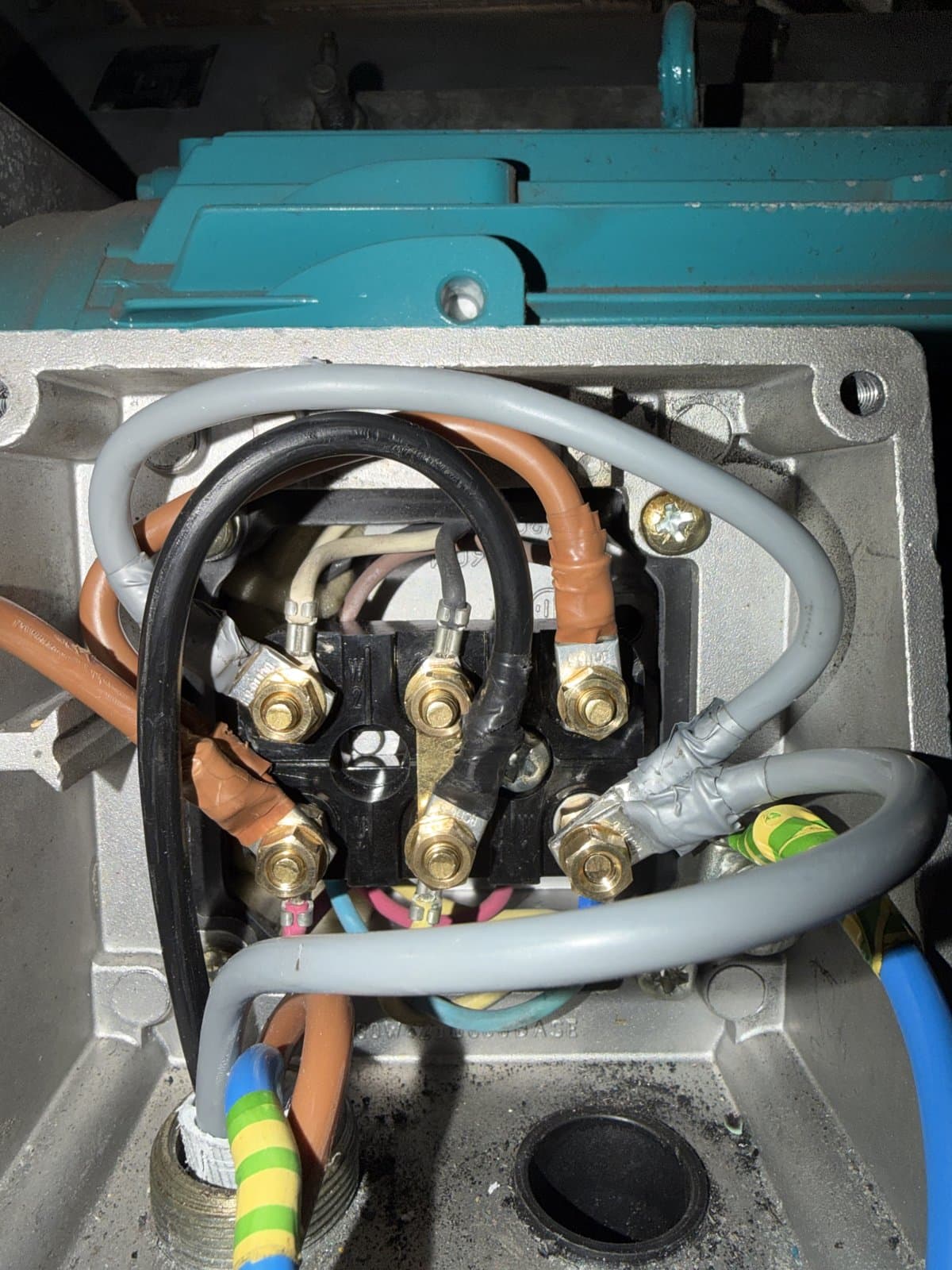
Cable termination is another persistent problem. MSFD systems typically require fire-rated cabling — often FP200 or equivalent to BS 7629 — between the panel and the actuators. We regularly find standard PVC cable used instead, or fire-rated cable terminated without the correct glands and backboxes. In a fire condition those terminations fail first, and the damper never receives its close signal.
Poor labelling and documentation causes headaches for years. Every actuator, cable, and terminal should be labelled to match the as-built drawings. When we attend buildings for annual testing and find unlabelled cables disappearing into ceiling voids, the only option is a full cable trace — which costs the client far more than doing it properly first time.
The final common failure is commissioning without genuine end-to-end testing. Certificates get issued where the panel is powered up and the LEDs are green, but nobody has triggered each damper from the fire alarm input and physically confirmed blade closure at the damper. That is not commissioning. That is paperwork.
Get a Free BMS Survey
We'll assess your controls and provide a detailed quotation.
What standards and legislation govern MSFD installations in the UK?
MSFD installations in the UK are governed by several overlapping standards and legislative requirements that sit alongside one another.
BS 9999:2017 (Fire safety in the design, management and use of buildings) provides the overarching framework. Section 27 addresses maintenance and testing of fire dampers, requiring that all motorised fire and smoke dampers are tested at intervals not exceeding 12 months, with the system designer's maintenance schedule followed. It also requires damper positions to be monitored and any failure to close reported to building management.
BS EN 15650:2010 (Ventilation for buildings — Fire dampers) defines the classification and testing methodology for fire dampers. It establishes the performance criteria (integrity and insulation ratings designated as EI) and the testing protocols dampers must pass. Any MSFD installed must carry CE/UKCA marking demonstrating compliance with this standard.
The Regulatory Reform (Fire Safety) Order 2005 is the primary legislation. Article 17 requires fire safety measures to be maintained in efficient working order and good repair — meaning regular testing, documented maintenance, and evidence the system functions as part of the fire strategy. The Responsible Person faces criminal liability for non-compliance.
BS 7346-8:2013 (Components for smoke and heat control systems) covers powered smoke and heat exhaust ventilation systems, including the dampers within them. It specifies requirements for smoke dampers used in engineered smoke control, including response time — the damper must achieve full closure within 60 seconds of receiving the signal — and the reliability testing required.
Additionally, the IET Wiring Regulations (BS 7671) apply to all electrical installation aspects, fire-rated cable installations must comply with BS 7629, and BS 5839-1 governs fire detection and alarm system integration.
What does a real MSFD installation involve? (155 Tooley Street, London)
Alpha Controls is currently delivering a full MSFD system installation across 6 floors at 155 Tooley Street, London Bridge. This project demonstrates the complete scope of what a properly executed MSFD installation involves.
The scope covers actuator wiring across all six floors, with spring-return actuators specified to ensure fail-safe closure in accordance with the building's fire strategy. Each actuator is wired in FP200 fire-rated cable, run back to floor-level junction points before being brought to the central MSFD control panel. The panel sits in the main riser cupboard, providing a single point of control and monitoring for all dampers, interfacing with the building's fire alarm system to receive zone and cause-and-effect signals, and providing volt-free contacts back to the BMS for status monitoring.
Cabling across six floors of a live, occupied commercial building requires careful coordination with other trades, route planning to maintain fire barriers at every penetration, and meticulous labelling at every junction. Every cable is fire-rated, every penetration is fire-stopped, and every termination is documented.
Commissioning on this project involves triggering every individual damper from the fire alarm panel, physically confirming blade closure at the damper location, verifying the end-switch feedback registers correctly at the MSFD panel, and confirming the BMS receives the correct status. Every damper is tested individually and as part of the cause-and-effect matrix, witnessed and documented with individual damper test certificates. At handover the client receives a full O&M manual, as-built drawings, cable schedules, and a recommended maintenance programme compliant with BS 9999.
What does a properly installed MSFD system look like?
A properly installed MSFD system starts with the right specification. The consulting engineer's design should define actuator type (spring-return for fail-safe applications), cable specification (fire-rated to BS 7629), panel location, interface requirements with the fire alarm and BMS, and the cause-and-effect matrix that defines which dampers respond to which fire alarm zones.
During installation, every actuator is bench-tested before being fitted to the damper. Cable routes are planned to avoid running through compartments they are not serving (which would require additional fire rating). Every penetration is fire-stopped to maintain the compartment integrity the dampers exist to protect. Every cable is labelled at both ends with a unique identifier matching the panel schedule and as-built drawings.
Commissioning is not a single afternoon with a clipboard. It is a structured process: power-on testing of the panel, individual actuator operation from the panel, fire alarm integration testing (triggering each relevant zone and confirming the correct dampers respond), end-switch monitoring verification, BMS interface confirmation, and finally cause-and-effect testing of the complete system. Each test is documented individually. The handover package includes as-built drawings, cable schedules, commissioning certificates for each damper, the O&M manual, and a servicing schedule — enough that any competent contractor can service the system without a cable trace.
When should you act on MSFD installation or remedial work?
If your building has MSFD systems that have never been commissioned properly, or annual testing is revealing consistent failures, or you are approaching a fit-out where new dampers are being installed, this is the time to get it right. Remedial work on a poorly installed MSFD system costs significantly more than a correct first-fix installation. Once ceiling tiles are back up, risers are closed, and tenants are in occupation, accessing dampers and re-pulling cables becomes a major operation.
Whether you are a facility manager receiving failed damper test reports, a consultant specifying MSFD systems for a new project, or a landlord approaching practical completion on a fit-out, the installation quality determines whether your fire strategy actually works or just exists on paper.
Why does execution matter more than the system itself?
Motorised smoke fire damper systems are not complex in principle, but they demand precision in execution. The actuator wiring, panel installation, cabling, commissioning, and testing must all be delivered by engineers who understand both the electrical installation requirements and the fire safety context in which these systems operate. Getting it wrong means a building that looks compliant on paper but fails in practice — a risk no responsible building owner should accept.
Alpha Controls delivers MSFD installations, commissioning, and ongoing maintenance across London and the South East. If you need a system installed correctly the first time, or you have an existing installation that needs bringing up to standard, get in touch or request a quote and we will scope the work properly.
How often do motorised smoke fire dampers need testing?
BS 9999 requires that all motorised fire and smoke dampers are tested at intervals not exceeding 12 months. Many building insurers and landlords require six-monthly testing. Each test should confirm full blade closure, correct end-switch feedback, and proper interface with the fire alarm system.
What is the difference between a fire damper and a smoke damper?
A fire damper maintains the fire rating of a compartment barrier — it prevents fire spread through ductwork. A smoke damper prevents smoke migration between zones. An MSFD (Motorised Smoke Fire Damper) combines both functions: it is fire-rated (typically EI 60 or EI 120) and responds to smoke detection signals. The motorised element means it closes on an electrical signal rather than relying solely on a fusible link.
What type of cable should be used for MSFD actuator wiring?
Fire-rated cable compliant with BS 7629 — typically FP200 or equivalent. Standard PVC cable is not acceptable because it will fail in a fire condition before the damper receives its close signal. The cable must maintain circuit integrity for the period specified in the fire strategy, which is usually 30 or 60 minutes.
What happens if an MSFD actuator fails?
If a spring-return actuator loses power, either from a cable failure or supply interruption, the spring drives the damper to the closed position — this is the fail-safe condition. The MSFD panel should detect the position change via end-switches and raise a fault. Direct-drive actuators do not have this fail-safe capability, which is why spring-return types are specified for most fire safety applications.
Do MSFD systems need to interface with the BMS?
While not strictly a regulatory requirement, BMS integration is strongly recommended and is standard practice on commercial buildings. The BMS receives damper position status (open/closed/fault) and can display this on the operator workstation, allowing facility managers to identify and respond to damper faults without waiting for the annual test. The interface is typically via volt-free contacts from the MSFD panel.
Alpha Controls
Specialist BMS installation, commissioning, and maintenance across London and the South East. SafeContractor Approved, BCIA Member.