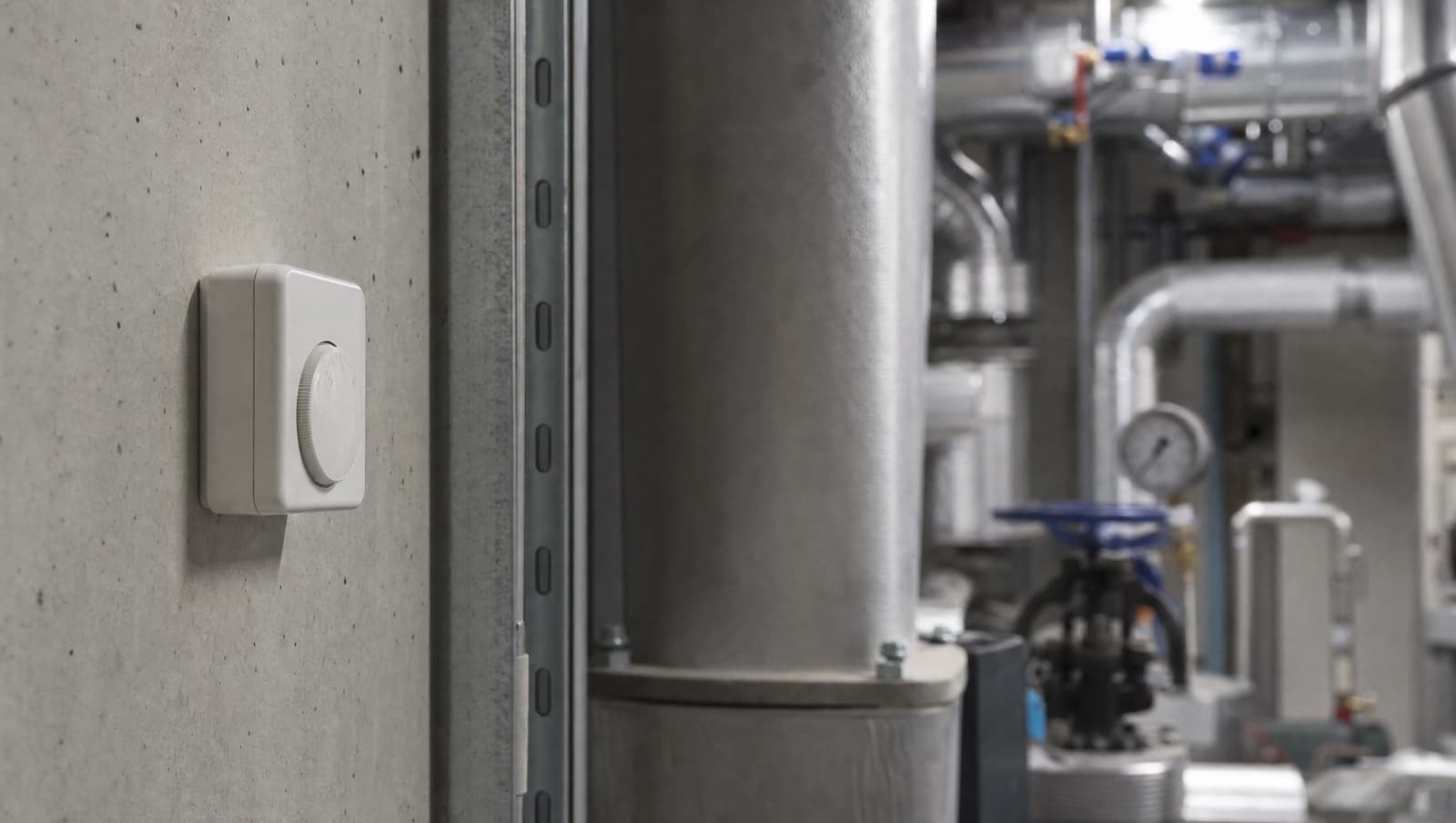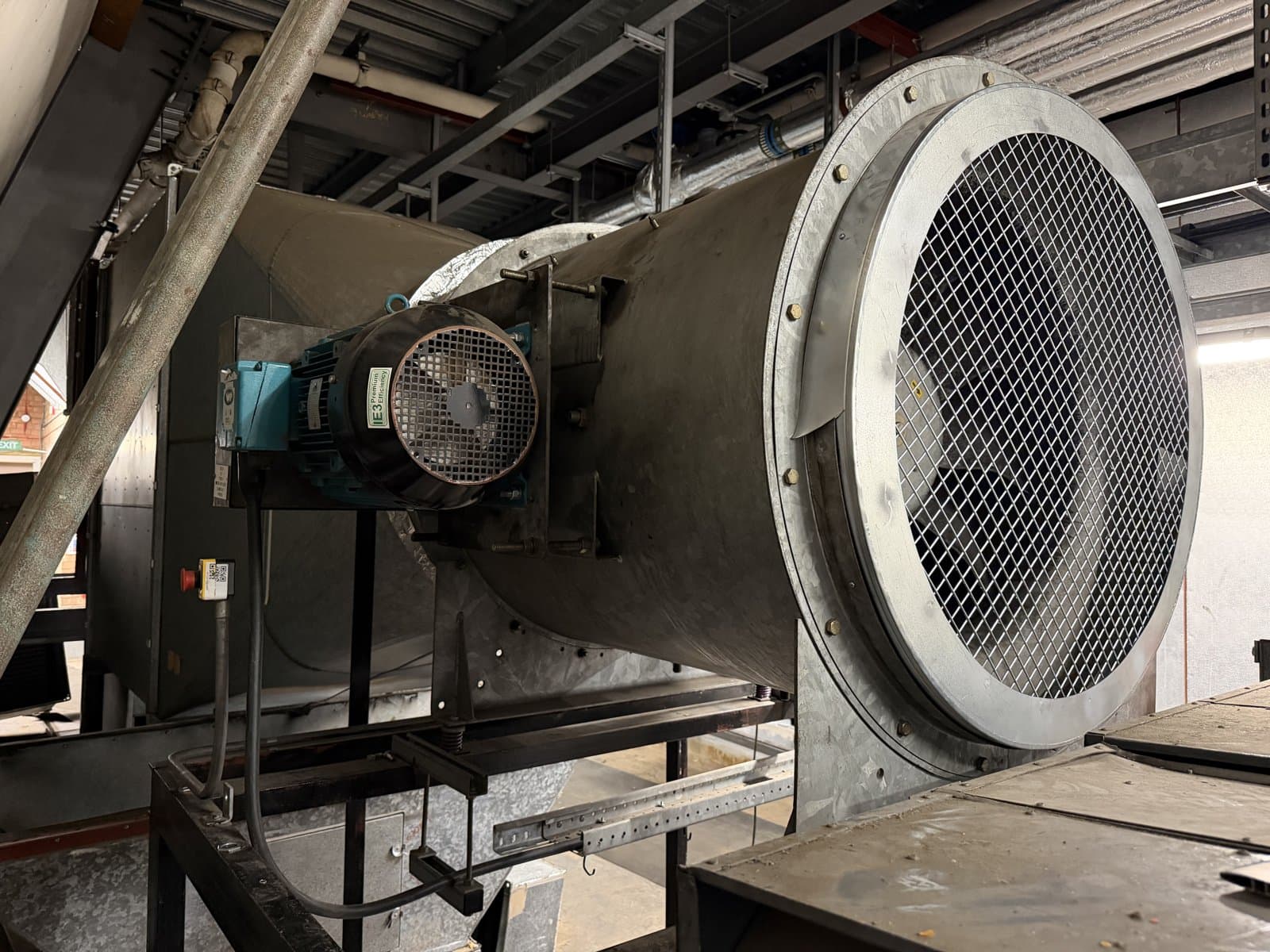

In a fully sealed building with fixed glazing, only the AHU brings in fresh air — FCUs just recirculate room air, so they can run continuously and never fix a CO₂ complaint. If the AHU isn't ventilating enough, or was never set up to respond to CO₂ demand, no FCU adjustment will help.
When facilities managers get CO₂ complaints from a sealed commercial building, the first instinct is to check the BMS — are the FCUs running, is the plant scheduled correctly, is the setpoint right? These are reasonable questions, but they're often the wrong ones, because FCUs recirculate room air and don't introduce fresh air. The only system that brings outside air into the building is the AHU. Understanding why modern commercial buildings are sealed, and what that means for the mechanical ventilation that serves them, is fundamental to getting air quality right — and to avoiding expensive, futile troubleshooting that misses the actual cause. For a clear explanation of how AHUs and FCUs divide responsibilities in a modern commercial building, see our guide to why modern buildings need both AHUs and FCUs.
Why Are Modern Commercial Buildings Sealed?
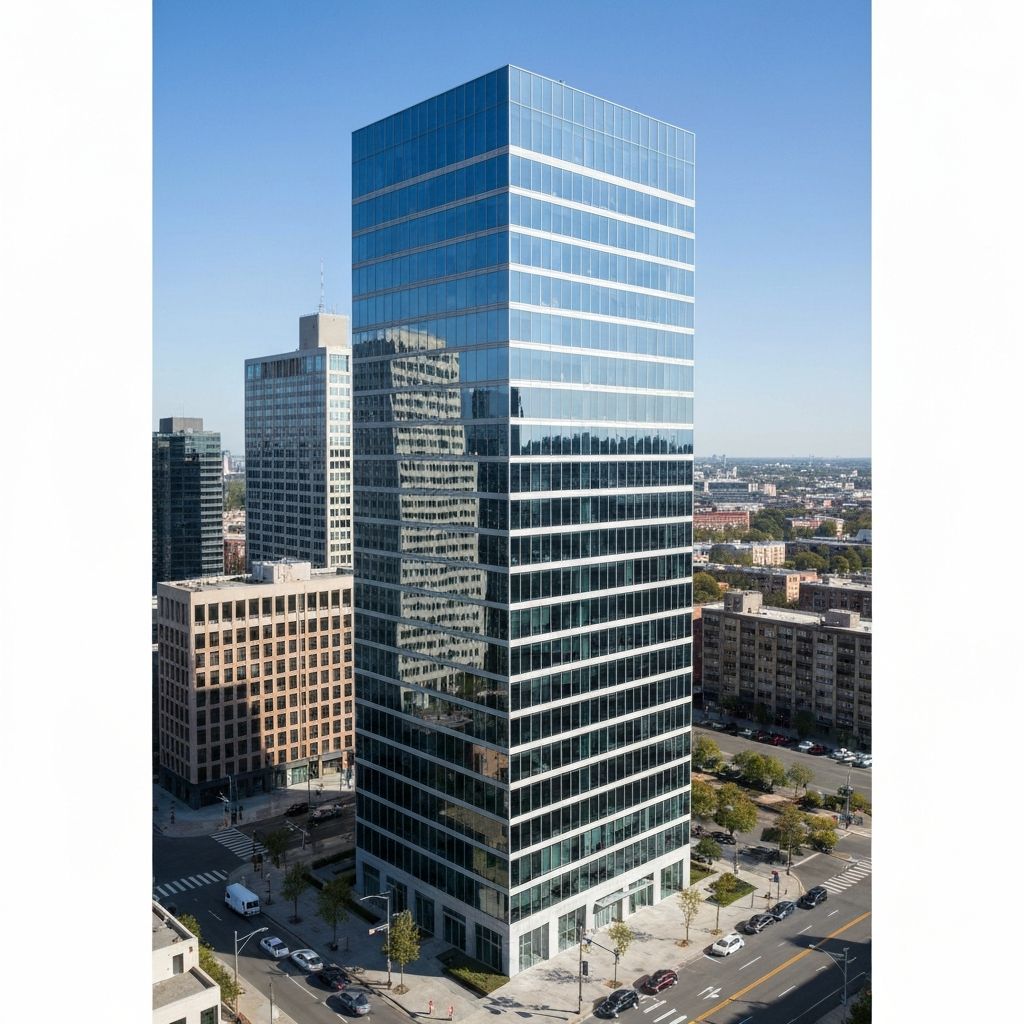
The shift to sealed, fixed-glazing commercial buildings has been largely driven by energy regulation. Approved Document L of the Building Regulations — which sets the energy performance requirements for new and significantly refurbished buildings — has progressively tightened its requirements for fabric air permeability over successive revisions. A building with openable windows cannot reliably meet the air leakage standards required under Part L, because the control of heat loss and heat gain through the facade depends on it being airtight. When a window is open on a south-facing floor in July and the chiller is running to cool that zone, the energy waste is significant and entirely unmeasured.
Beyond energy, there are safety and comfort arguments for fixed glazing on taller buildings. Above approximately six or eight floors, wind forces at the facade create pressure differentials that make openable windows impractical — they slam in gusts, create internal pressure surges that affect door operation, and on high-rise buildings with atria or through-floor openings, can cause uncontrolled smoke movement in a fire scenario. For commercial office buildings designed to a modern standard, fixed glazing is the norm rather than the exception. The consequence is that the only way fresh air gets to the occupants is through the mechanical ventilation system — fine when the AHU is correctly sized, commissioned and controlled, and a compliance, air quality and tenant relations problem when any of those three aren't met.
What Ventilation Rates Do the Regulations Require?
Approved Document F sets minimum ventilation rates for occupied spaces. For offices, the minimum outdoor air supply rate is 10 litres per second per person, with a background rate of at least 0.5 litres per second per square metre of floor area regardless of occupancy. These are minimum rates — they're the floor, not the design target. CIBSE Guide B recommends higher rates in high-density occupancy scenarios, and the WELL Building Standard (which is increasingly specified in commercial office fit-outs) sets its own air quality targets that often exceed Part F minimums.
BS EN 16798-3, which covers the energy performance of ventilation for non-residential buildings, provides the calculation methodology for determining design airflow rates and the approach to demand-controlled ventilation. This is the standard that informs how a properly designed BMS should modulate AHU fresh air volume in response to occupancy — not running at full design flow when the building is at 10% occupation at 8am, and not starving a packed floor of fresh air because the AHU was set to a constant volume at commissioning and never revisited.
HTM 03-01 applies to healthcare settings and sets significantly more stringent ventilation requirements — specific air change rates for different room types, filtration standards, pressure differentials between adjacent areas. In healthcare buildings, the AHU isn't just a comfort system; it's a clinical safety system, and its commissioning and ongoing maintenance are governed accordingly.
How Does an AHU Serve a Sealed Building?
The AHU's job is to take outside air — filtered, heated or cooled to a suitable supply temperature, and where specified humidified or dehumidified — and deliver it to occupied spaces through a ductwork distribution network. In a sealed building, this is the only source of fresh air. The AHU also extracts stale air from the building — typically through return air ducts from the same zones — and either recirculates it (mixed with a proportion of fresh air) or discharges it externally through heat recovery equipment that recovers the energy from the exhaust airstream before it leaves the building. BS EN 1886:2007 — the European standard for AHU mechanical performance — classifies units by air leakage (Class L1 the tightest, L3 the most permissive) and thermal performance (Class T1 through T5); an AHU serving a sealed building should achieve at minimum Class L2 casing leakage and Class T2 thermal performance — an under-specified unit in a sealed building leaks warm, conditioned air into the ceiling void and draws untreated air back in.
A well-commissioned AHU in a modern commercial building will use CO₂ sensors in the return air duct — or in individual zones where zonal ventilation control is required — to modulate the proportion of fresh outside air being supplied. When CO₂ levels are low (low occupancy), the AHU reduces fresh air volume and increases recirculation, saving energy. When CO₂ rises (building fills up), the AHU opens its fresh air damper to dilute CO₂ and maintain air quality. This is Demand Controlled Ventilation (DCV), and when it's working correctly it delivers both the air quality that Part F requires and meaningful energy savings compared with a constant-volume fresh air system.
Get a Free BMS Survey
We'll assess your controls and provide a detailed quotation with energy savings estimates.
What Goes Wrong With AHU Ventilation?
The failure modes are straightforward but consequential. An AHU where the CO₂ control is not commissioned — where the system runs at a fixed damper position regardless of occupancy — will either over-ventilate empty floors (wasting energy) or under-ventilate full ones (producing the CO₂ and stuffiness complaints that trigger the helpdesk calls). An AHU where the heat recovery wheel has been bypassed — a surprisingly common finding on sites more than five years old — is losing between 30 and 50% of the energy it should be recovering from exhaust air. An AHU where the supply air temperature is fixed at its design condition year-round is running its heating or cooling plant harder than necessary in shoulder seasons when ambient conditions would allow a more economical setpoint. In a sealed building these aren't cosmetic faults — they directly determine whether occupants get enough fresh air and whether the energy bill is justified.
What Is the BMS Role in AHU Control?
The BMS is what ties the AHU's mechanical capability to the building's actual demand. A sophisticated AHU without a well-configured BMS control sequence is like a powerful engine with no driver — it runs, but not intelligently. Supply air temperature reset, demand-controlled ventilation, economiser control, optimum start, heat recovery management, and frost protection are all BMS functions. They require correct sensor installation, correct signal conditioning, correct control logic, and — critically — correct commissioning and ongoing review as the building's use patterns change over time. Each of those is a distinct sequence with its own setpoints and its own failure modes, and we take them one at a time in our guide to how air handling unit control sequences actually work.
On sites where we've carried out recommissioning of existing AHU control sequences, the consistent findings are: CO₂ sensors that haven't been calibrated since installation and are reading 150 to 200 ppm too high or too low; supply air temperature setpoints that are fixed at summer design conditions and never change; fresh air dampers stuck at a fixed minimum position because the DCV sequence was never properly configured. Each of these is a software fix requiring no new hardware, and each of them improves air quality and reduces energy consumption simultaneously. For a detailed look at CO₂ monitoring, sensor placement, and what good indoor air quality management looks like in practice, see our article on indoor air quality monitoring.
When Should You Review Your AHU Controls?
If your building is sealed and you're getting air quality complaints — CO₂ headaches, stuffiness, tenant dissatisfaction with ventilation — the AHU control strategy is the first place to look, not the FCUs. If your energy bills have increased since the original commissioning date without a corresponding increase in building use, AHU control optimisation is likely to be one of the higher-value interventions available.
Alpha Controls commissions and recommissions AHU control systems across London and the South East. If you'd like us to review your existing AHU sequences or discuss a new installation, get in touch. We also cover recommissioning services for buildings where original commissioning was incomplete or has drifted over time.
Alpha Controls
Specialist BMS installation, commissioning, and maintenance across London and the South East. SafeContractor Approved, BCIA Member.