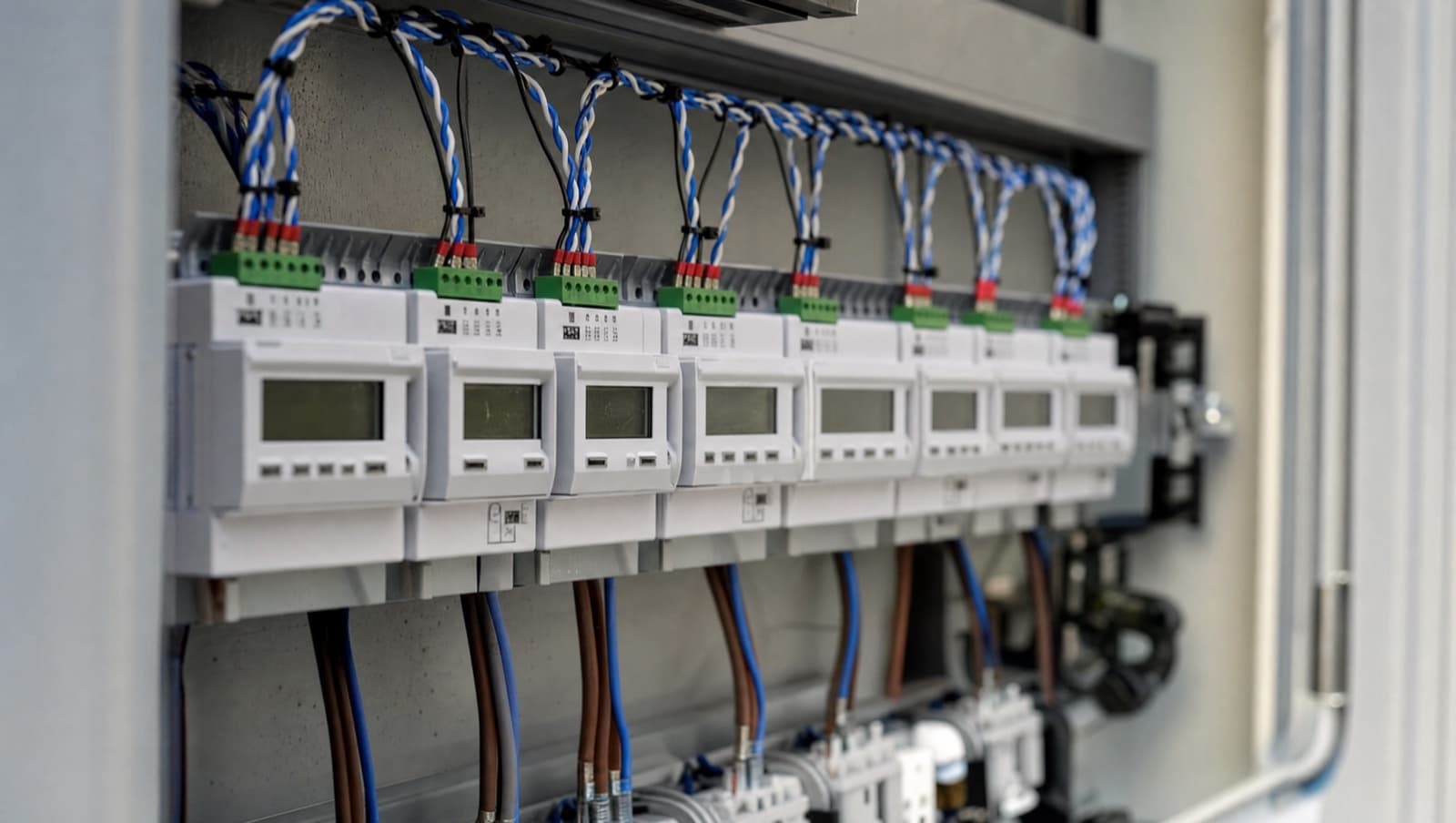

A Trend BMS system is a building management system built by Trend Controls, a UK manufacturer now part of Honeywell Building Technologies and installed in over 50,000 UK buildings. It uses IQ-series field controllers and a supervisory platform — IQVISION or the legacy 963 — to monitor and control heating, ventilation, and energy use.
What Is a Trend BMS System?
Trend Controls is a UK-based manufacturer, now part of Honeywell Building Technologies, that has been designing and manufacturing building management system controllers since 1982. Their systems are installed in over 50,000 buildings across the UK, making Trend the single most widely deployed BMS platform in British commercial property.
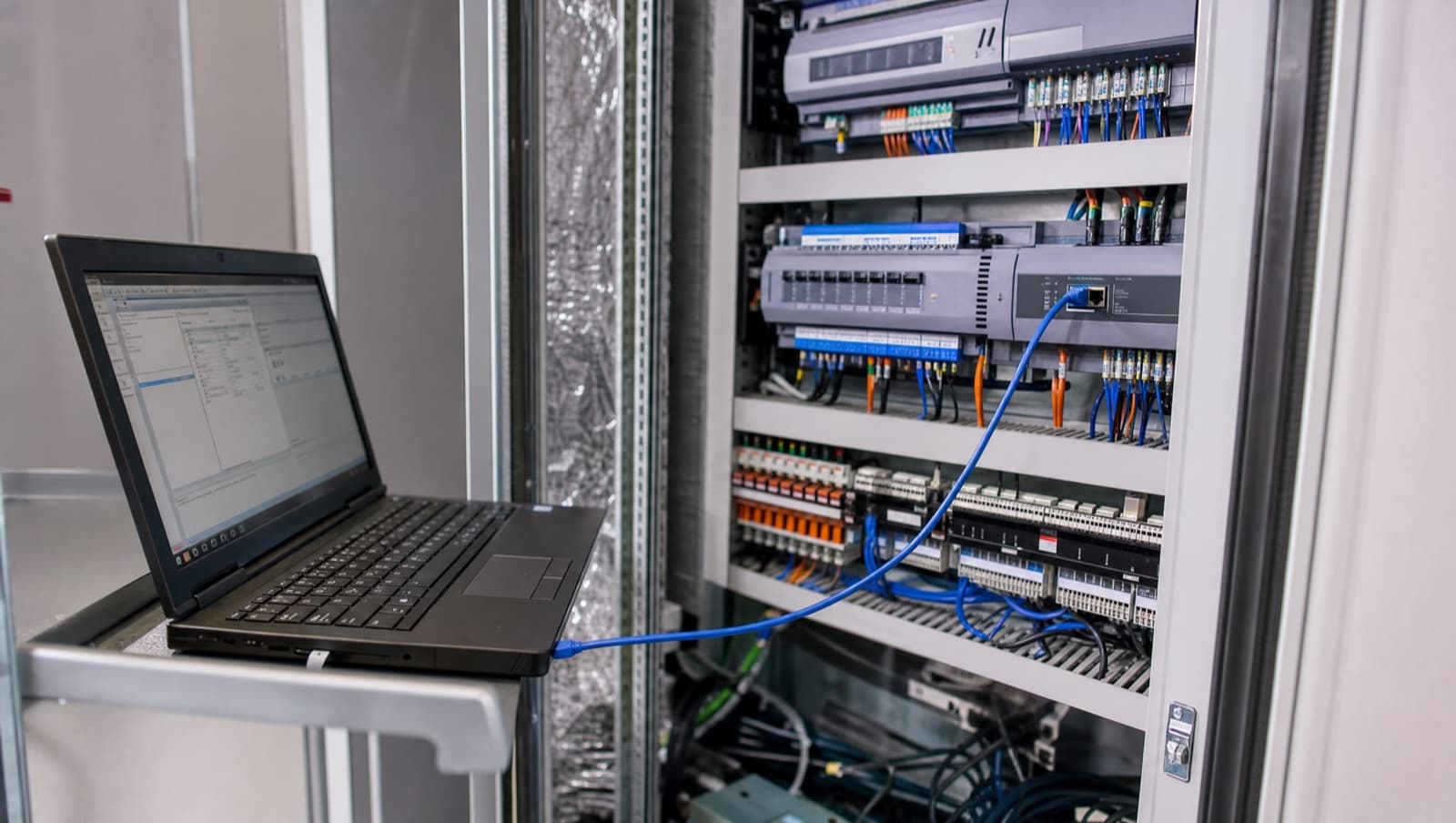
A typical Trend BMS installation consists of three layers. At the field level, IQ-series controllers (IQ3, IQ4, or IQ5) read sensor inputs — temperature, humidity, pressure, CO2 — and drive outputs to actuators, valves, dampers, and fans. These controllers execute the control strategies that keep the building comfortable and efficient. At the network level, controllers communicate via a LAN (for IQ3 using BACnet MS/TP) or IP network (for IQ4 and IQ5 using BACnet IP). At the supervisory level, the Trend IQVISION platform — or the legacy 963 Supervisor on older sites — provides the graphical interface, alarm management, trend logging, time scheduling, and user access controls that allow facilities teams to monitor and manage the building.
Trend controllers are programmed using SET (Strategy Editor for Trend) for IQ3 units or Trend Control Studio for IQ4 and IQ5. The programming defines the control logic — how the system responds to changing conditions, when plant starts and stops, how temperatures are maintained, and how different mechanical systems interact with each other.
Why Do So Many Trend BMS Systems Underperform?
Most buildings running Trend BMS systems are not getting what they paid for. The controllers are installed, the supervisor is online, the graphics look fine on screen — but behind the interface, time schedules are years out of date, trend logs have stopped recording, alarms have been suppressed, and the system is running plant that should have been off three hours ago. We see this on roughly seven out of every ten Trend sites we audit.
The issue is rarely the hardware. Trend manufactures some of the most reliable BMS controllers on the UK market. The problem is what happens after commissioning — maintenance lapses, FM teams change, the original installer moves on, and nobody left on site knows how to use SET or Trend Control Studio to make the changes the building actually needs. The result is a perfectly good Trend BMS system operating well below its potential, wasting energy, generating comfort complaints, and costing the building owner money every single day.
What Is the Difference Between Trend IQ2, IQ3, IQ4, and IQ5 Controllers?
Understanding the differences between Trend controller generations matters because it directly affects your upgrade options, maintenance costs, and what functionality you can expect from the system.
The Trend IQ2 is the oldest generation still found in buildings, though it is now well past end of life. IQ2 controllers use proprietary Trend communication protocols, have very limited memory and processing power, and cannot be integrated with IQVISION without protocol converters. In almost all cases, IQ2 controllers should be replaced when upgrading a Trend BMS installation.
The Trend IQ3 was the workhorse controller from the early 2000s until the IQ4 took over. The IQ3 supports BACnet MS/TP communication, has 32-bit processing, and is programmed using SET. Although no longer manufactured, IQ3 controllers remain in service across thousands of UK buildings. Critically, IQ3 controllers can be connected to a modern IQVISION supervisor without replacement — this is the most cost-effective upgrade path for buildings with a large IQ3 estate.
The Trend IQ4 — specifically the IQ412 and IQ422 models — is the current mainstream controller. It supports BACnet IP and BACnet MS/TP natively, has significantly more memory (up to 128 MB), faster processing, an integrated web server for direct browser access, and supports both SET and Trend Control Studio programming environments. The IQ4 is what Alpha Controls specifies for most commercial retrofit and new-build projects because it offers the best balance of capability, reliability, and cost.
The Trend IQ5 is the latest generation, designed with enhanced cybersecurity features aligned with IEC 62443 principles. It offers greater I/O density, native IP-only communication, improved processing power, and built-in support for encrypted connections. The IQ5 is specified where cybersecurity is a primary concern — data centres, government buildings, healthcare, and critical infrastructure.
Get a Free BMS Survey
We'll assess your controls and provide a detailed quotation.
What Is Trend IQVISION and What Does It Do?
Trend IQVISION is the current-generation supervisory platform, built on Tridium Niagara 4. It replaces the legacy 963 Supervisor and provides everything facilities teams need to monitor and control a Trend BMS from a standard web browser — no Java applets, no special software, just an HTML5 interface accessible from any device.
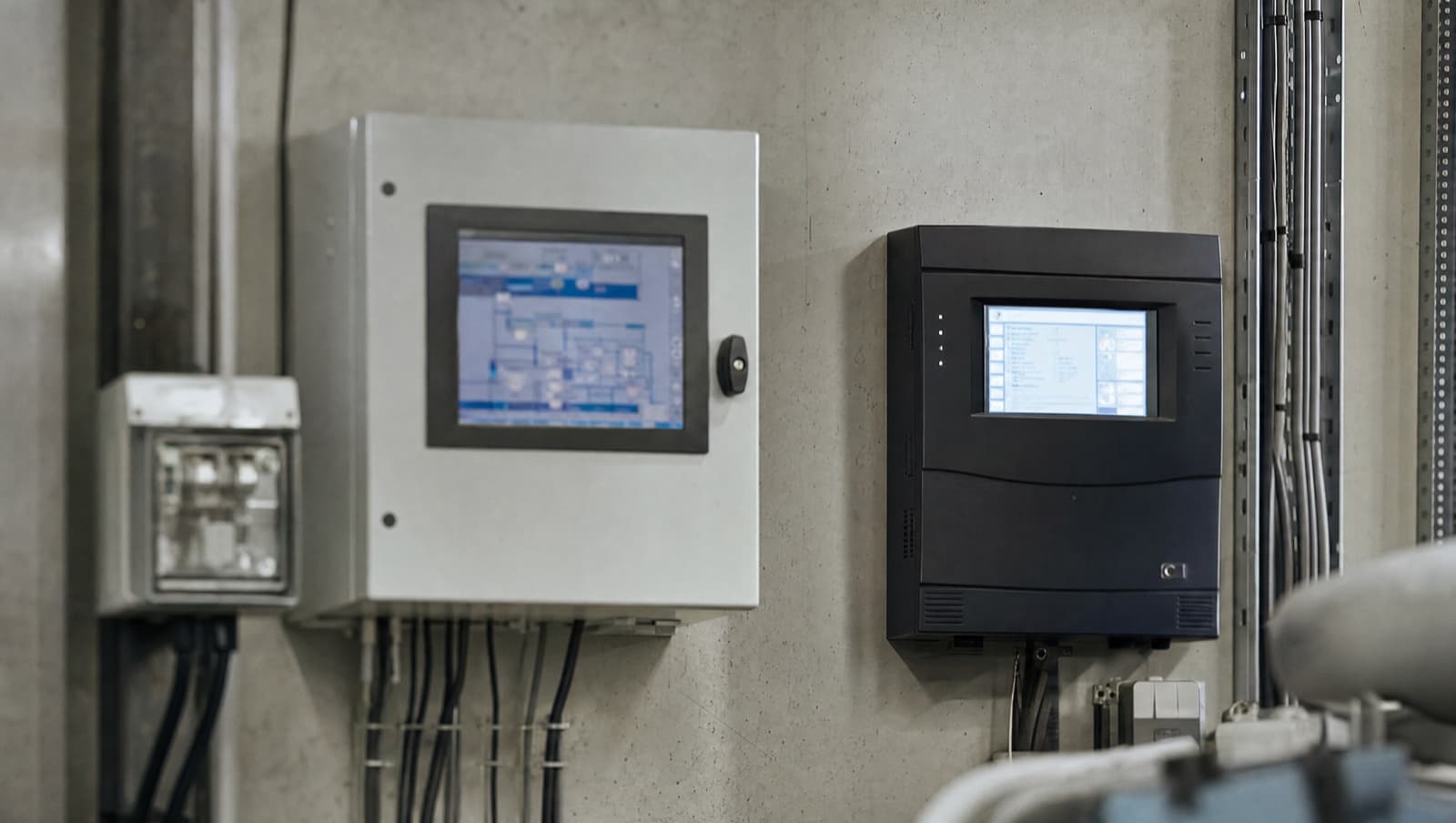
IQVISION supports graphical floor plans with live data overlays, comprehensive trend logging and data export, alarm management with email and SMS notification, time scheduling with holiday calendars and exception handling, multi-level user access controls, and integration with third-party systems via BACnet, Modbus, LON, and OPC protocols. Because it runs on the Niagara 4 framework, IQVISION can integrate equipment from non-Trend manufacturers into a single unified front end — making it suitable for multi-vendor buildings where different systems need to be monitored from one platform.
IQVISION also supports secure remote access via HTTPS with certificate-based authentication, a critical improvement over the 963's insecure Java-based remote connection that was routinely blocked by IT departments and browser security policies.
Is the Trend 963 Supervisor End of Life?
Yes. As of January 2025, Trend has officially withdrawn all technical support, licensing, and software updates for the 963 platform. If your building is still running a Trend 963 Supervisor, this is urgent. The 963 cannot run on Windows 11, uses Java applets that are blocked by every modern web browser, and has known cybersecurity vulnerabilities that will never be patched.
The practical consequences are serious. If your 963 server hardware fails, you cannot relicense the software on a new machine. If your operating system needs updating, the 963 will not run on the new version. If you need to make programming changes and your legacy tools become incompatible with current operating systems, you lose the ability to modify your own BMS. And critically, the cybersecurity vulnerabilities in the 963 represent a real and growing risk — particularly for buildings connected to corporate IT networks.
The recommended upgrade path is to Trend IQVISION. In most cases, existing IQ3 and IQ4 field controllers can be retained — only the supervisory layer needs replacing. This means the cost and disruption of a 963-to-IQVISION migration is significantly less than a full system replacement. Alpha Controls has completed multiple 963-to-IQVISION migrations across London and the South East, typically achieving the changeover with minimal disruption to building operations.
What Usually Goes Wrong With Trend BMS Installations?
The most common failures on Trend sites are not hardware problems — they are operational and maintenance failures. Time schedules set during original commissioning and never updated despite changes in building occupancy. Trend logs that were configured but have run out of buffer space and stopped recording, leaving facilities managers with no historical data to diagnose faults. Alarms that have been suppressed or acknowledged-and-forgotten because nobody understood what they meant. Control strategies written for a heating-only building that have never been updated to accommodate the chiller plant installed three years later.
A second common failure is the original contractor leaving without providing proper documentation, software backups, or training. The building owner has a fully functional BMS but no points schedule, no control strategy descriptions, no as-built drawings, and no access to the programming tools. This is the definition of proprietary lock-in — not because Trend is proprietary (it supports open BACnet protocols), but because the installer withheld the information needed to maintain the system independently.
Alpha Controls provides full documentation, complete software backups, unrestricted user access, and training to every client. We believe the building owner should have complete control of their own system, as specified in CIBSE Guide H recommendations for BMS handover documentation and BSRIA BG 11/2010 Soft Landings requirements for post-occupancy support.
Which Standards and Regulations Apply to Trend BMS Systems?
Trend BMS installations in commercial buildings must comply with several UK standards and regulations. CIBSE Guide H: Building Control Systems is the primary design and specification reference for BMS installations in the UK, covering system architecture, control strategies, commissioning requirements, and documentation standards. Any Trend BMS specification should reference Guide H for design principles and handover requirements.
BS EN ISO 16484-5 (also published as ASHRAE 135) defines the BACnet communication protocol that Trend IQ4 and IQ5 controllers use for open-protocol communication. Compliance with this standard ensures that the Trend system can communicate with equipment from other manufacturers without proprietary gateways or converters. When Alpha Controls commissions a Trend BMS, we verify BACnet interoperability as part of the commissioning process.
Approved Document L of the Building Regulations requires automatic monitoring and targeting of energy use, zone-by-zone time and temperature control, optimum start/stop on heating systems, and weather compensation. A properly configured Trend BMS delivers all of these capabilities — but only if the control strategies are correctly specified and commissioned. Too many installations meet the Part L requirements on paper at handover but never fully implement the actual control strategies.
What Does a Real Trend BMS Project Look Like? Pinsent Masons 16-Floor FCU Upgrade
One of our most comprehensive Trend BMS projects was the Pinsent Masons office in London — a 16-floor commercial building requiring a complete FCU controls upgrade using Trend controllers. The existing system had aging controllers with intermittent communication faults, inconsistent comfort control across floors, and no centralised monitoring capability.
Alpha Controls designed and installed a new Trend IQ4-based control system for all fan coil units across all 16 floors. The project required weekend-only access to minimise disruption to the law firm's operations, with each floor completed in a single weekend to maintain the programme. We installed new Trend controllers, temperature sensors, valve actuators, and fan speed controllers on every FCU, connected via a BACnet IP network to a central IQVISION supervisor. The system included LightFi integration for occupancy-based control, with the BMS automatically adjusting FCU operation based on real-time occupancy data rather than fixed time schedules.
The result was consistent comfort control across all 16 floors, centralised monitoring and alarm management through IQVISION, measurable energy savings from occupancy-based operation, and a complete documentation package including points schedules, control strategies, as-built drawings, and user training. This project demonstrates what a properly specified and commissioned Trend BMS system delivers in a real commercial building — not just a box of controllers, but a fully integrated, documented, and optimised building control solution.
Which Trend BMS Upgrade Path Makes Sense for Your Building?
The right upgrade path depends entirely on what you currently have installed and what you need the system to do. If your building has IQ3 controllers with a 963 Supervisor, the most cost-effective approach is usually to migrate the supervisor to IQVISION while retaining the IQ3 field controllers. This gives you a modern HTML5 interface, proper remote access, and full Niagara 4 integration capability at a fraction of the cost of replacing the entire system.
If you have IQ2 controllers, those need replacing — the IQ4 is the standard replacement, with IQ5 specified for security-critical environments. If your building has a mix of IQ2 and IQ3, a phased approach works well: replace the IQ2s first (they are the most unreliable and limited), then connect the retained IQ3s and new IQ4s to IQVISION.
For buildings with no existing Trend infrastructure considering a new BMS installation, Alpha Controls typically specifies IQ4 controllers with IQVISION as the baseline. The IQ4 offers the best balance of capability and cost for most commercial applications. We specify IQ5 when the client's cybersecurity requirements demand it or when the additional I/O density offers a practical advantage on high-point-count applications. Every specification is tailored to the building — there is no one-size-fits-all approach to Trend BMS design.
What Does Good Trend BMS Maintenance Look Like?
Maintaining a Trend BMS involves several layers. At the hardware level: regular inspection of controllers for failed indicators, checking communication status across the network, verifying power supply voltages, and inspecting field wiring for damage. At the software level: reviewing and backing up controller strategies, checking that time schedules are correct (especially after clock changes and bank holidays), verifying sensor calibration by spot-checking BMS readings against portable instruments, and reviewing alarm configurations to confirm they are still relevant. SFG20, the industry-standard maintenance specification for building services, provides detailed task schedules for BMS maintenance including controller health checks, network communication audits, sensor calibration verification and software backup procedures. A contract aligned to SFG20 gives you an auditable, defensible maintenance regime rather than one built on whatever the engineer feels like checking on the day.
Three Trend-specific tasks are the ones that actually get missed. Strategy backups: if a controller fails and there is no backup, the replacement has to be reprogrammed from scratch. Network health monitoring: BACnet communication errors degrade slowly and are easy to ignore until they cause a system failure. And supervisor updates on 963 or IQVISION — the web interface is the main user touchpoint, so it needs attention for both security patches and performance.
How Do You Find a Good Trend System Integrator in London and the South East?
Trend does not sell directly to end users. All sales, installation and commissioning go through their network of authorised system integrators, previously known as Trend Control Partners — so the question is never really "which platform", it is "which integrator". When choosing one in London or the South East, the same principles apply as for any BMS contractor: controls engineering competence, a documented commissioning process, genuine platform experience, and FM references from buildings they have both installed and then maintained.
That last point matters more than it sounds. CIBSE Guide H: Building Control Systems covers the design and commissioning of control systems in detail, and the practical lesson from it is one we would stand behind from site experience anyway: a well-commissioned Trend system will outperform a badly commissioned system on any other platform, every time. The control strategy, the commissioning quality and the ongoing maintenance regime determine real-world performance far more than the choice of hardware. Anyone selling you a platform without wanting to talk about commissioning is selling you the easy half of the job.
When Should You Act on Your Trend BMS?
If your building is running a 963 Supervisor, the time to act is now — not when the server fails and you discover it cannot be relicensed. If your Trend system has not been properly maintained for more than 12 months, you are almost certainly wasting energy and missing faults that are costing money. If your facilities team cannot make basic schedule changes or investigate comfort complaints using the BMS, the system is not delivering value regardless of what hardware is installed.
Alpha Controls provides Trend BMS maintenance contracts, 963-to-IQVISION migration services, controller upgrades, system audits, and complete new installations. Whether you need a full system design or just someone to take a proper look at what you've got, our Trend-trained engineers can help. Contact us for a no-obligation site assessment, or request a quote for your project.
Frequently Asked Questions About Trend BMS Systems
What is SET programming and do I need to understand it?
SET (Strategy Editor for Trend) is the graphical programming environment used to create control strategies for Trend IQ3 controllers. It uses a drag-and-drop module-based approach where functional blocks (sensors, controllers, logic, outputs) are connected to define how the system responds to changing conditions. You do not need to understand SET as a facilities manager — but your BMS maintenance contractor absolutely must. If your current contractor cannot program in SET, they cannot properly maintain IQ3 controllers. Trend Control Studio is the equivalent tool for IQ4 and IQ5 programming. Alpha Controls engineers are proficient in both environments.
Can a Trend BMS control non-Trend equipment?
Yes. Trend IQ4 and IQ5 controllers support BACnet IP, BACnet MS/TP, Modbus RTU, and Modbus TCP protocols, enabling integration with chillers, heat pumps, AHUs, metering systems, and field devices from any manufacturer that supports these open standards as defined in BS EN ISO 16484-5. IQVISION extends this further with LON, KNX, OPC, and SNMP drivers. Alpha Controls regularly integrates Trend head-ends with third-party mechanical equipment on multi-vendor sites.
How long does a Trend 963 to IQVISION migration take?
For a typical commercial building with 5-20 IQ controllers, the migration takes 2-4 weeks from survey to completion, including server setup, IQVISION configuration, graphics creation, controller connection, commissioning, and training. Most of the work happens off-site (software configuration) with on-site work typically completed in 2-5 days depending on the number of controllers. Alpha Controls can schedule the on-site changeover for weekends or out-of-hours to minimise disruption.
Is Trend being discontinued since Honeywell acquired them?
No. Trend continues to operate as a distinct brand within Honeywell Building Technologies, manufacturing and developing the IQ controller range and IQVISION platform. Honeywell has invested in the Trend product line, and the IQ5 controller is the latest example of continued development. The UK Trend installer network remains active, and Alpha Controls continues to receive manufacturer training and support for all current Trend products.
What is the difference between Trend BMS and Honeywell BMS?
While Trend is owned by Honeywell, they are separate product lines. Trend systems use IQ-series controllers programmed with SET or Trend Control Studio, supervised by IQVISION. Honeywell's own BMS products include the EBI (Enterprise Building Integrator) platform and Tridium Niagara N4. The connection is that IQVISION is built on Niagara 4, which is a Honeywell/Tridium product — so there is architectural alignment at the supervisory level. At the controller level, they remain distinct products with separate programming tools, hardware, and installer networks.
How do I find a qualified Trend BMS installer near me?
Look for contractors whose engineers hold current Trend manufacturer certifications — not just company-level claims, but individual engineer qualifications on the specific controller range you need. Ask for project references on similar buildings, verify they can program in SET (for IQ3) and Trend Control Studio (for IQ4/IQ5), and confirm they provide full documentation and unrestricted system access after installation. Alpha Controls is a Trend-trained BMS installer covering London and the South East, with engineers certified on IQ3, IQ4, IQ5, and IQVISION.
Our Trend BMS needs recommissioning — what does that involve?
Recommissioning a Trend BMS involves systematically reviewing and correcting every aspect of the system's operation. This includes verifying all sensor readings against calibrated instruments, testing all actuator and valve operations, reviewing and updating time schedules for current occupancy patterns, checking and correcting control strategies, restarting trend logging, rationalising alarms, removing manual overrides, and documenting the current state of the system. Alpha Controls carries out Trend BMS recommissioning projects to CIBSE Commissioning Code M standards, typically delivering measurable energy savings within weeks of completion.
Alpha Controls
Specialist BMS installation, commissioning, and maintenance across London and the South East. SafeContractor Approved, BCIA Member.