
In commercial buildings, use copper (Cat6 or Cat6a) for horizontal cabling to desks, access points and devices, because it carries data and Power over Ethernet on one cable up to 100 metres. Use fibre optic for backbone runs between comms rooms, between buildings, and over longer distances where copper can't reach.
Every few years, someone declares that copper cabling is dead and fibre optic will replace everything. And every few years, copper proves them wrong. The reality in commercial buildings is more nuanced: fibre and copper do different jobs, and a well-designed structured cabling system uses both — in the right places, for the right reasons.
The question isn't fibre or copper. It's where each one belongs in your building, what each one costs over its lifetime, and what happens if you choose wrong. We install both across commercial offices, schools, healthcare facilities and multi-tenanted buildings, and the split between fibre and copper in any given project depends on distance, bandwidth, environment, and budget.
What's the difference between fibre optic and copper cabling?
Copper cabling — specifically Cat6 and Cat6a twisted-pair cable — transmits data as electrical signals over balanced copper conductors. It's defined under BS EN 50173-1 and TIA/EIA-568. Cat6a supports 10 Gigabit Ethernet up to 100 metres and can deliver Power over Ethernet (PoE) simultaneously over the same cable. That dual capability — data and power on one cable — is copper's killer feature.
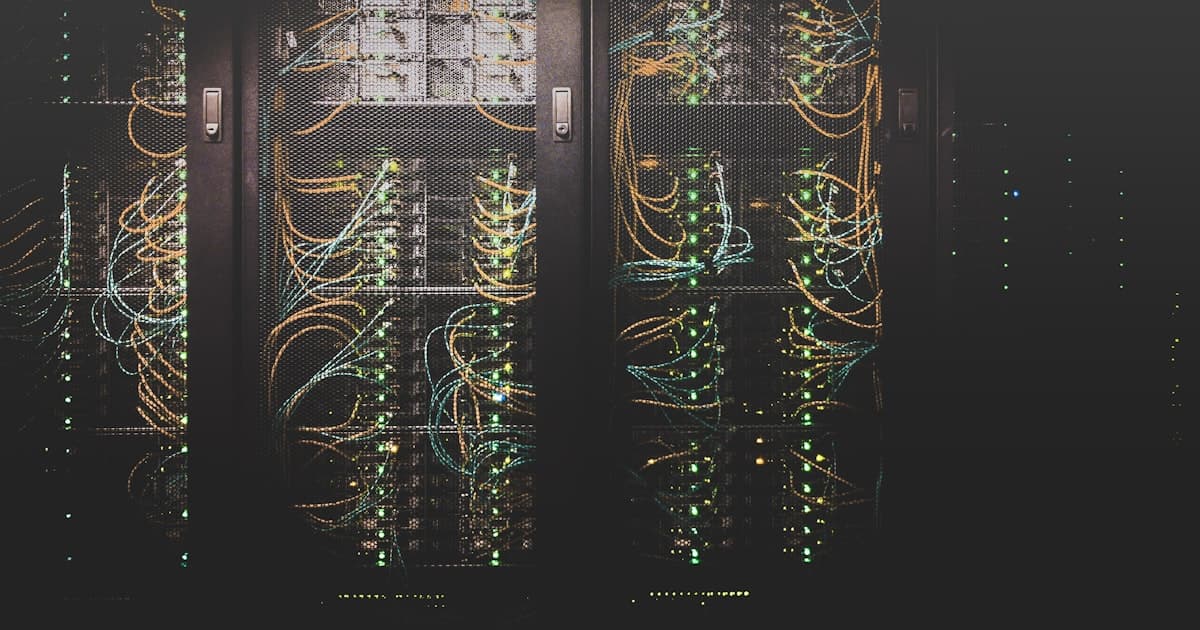
Fibre optic cabling transmits data as light pulses through glass or plastic cores. There are two main types: multimode fibre (OM3, OM4, OM5) for shorter runs, and single-mode fibre (OS2) for longer distances. Multimode OM4 supports 10 Gbps up to 400 metres and 100 Gbps up to 150 metres using parallel optics. Single-mode OS2 supports virtually unlimited bandwidth over distances measured in kilometres — 10 Gbps, 40 Gbps, 100 Gbps and beyond, with reach limited mainly by the transceivers, not the fibre itself.
Fibre is immune to electromagnetic interference (EMI), produces no electromagnetic emissions of its own, and provides complete galvanic isolation between connected equipment. In environments with high electrical noise — near power distribution boards, industrial plant, or heavy electrical switchgear — fibre performs where copper struggles.
When should you use copper cabling in a commercial building?
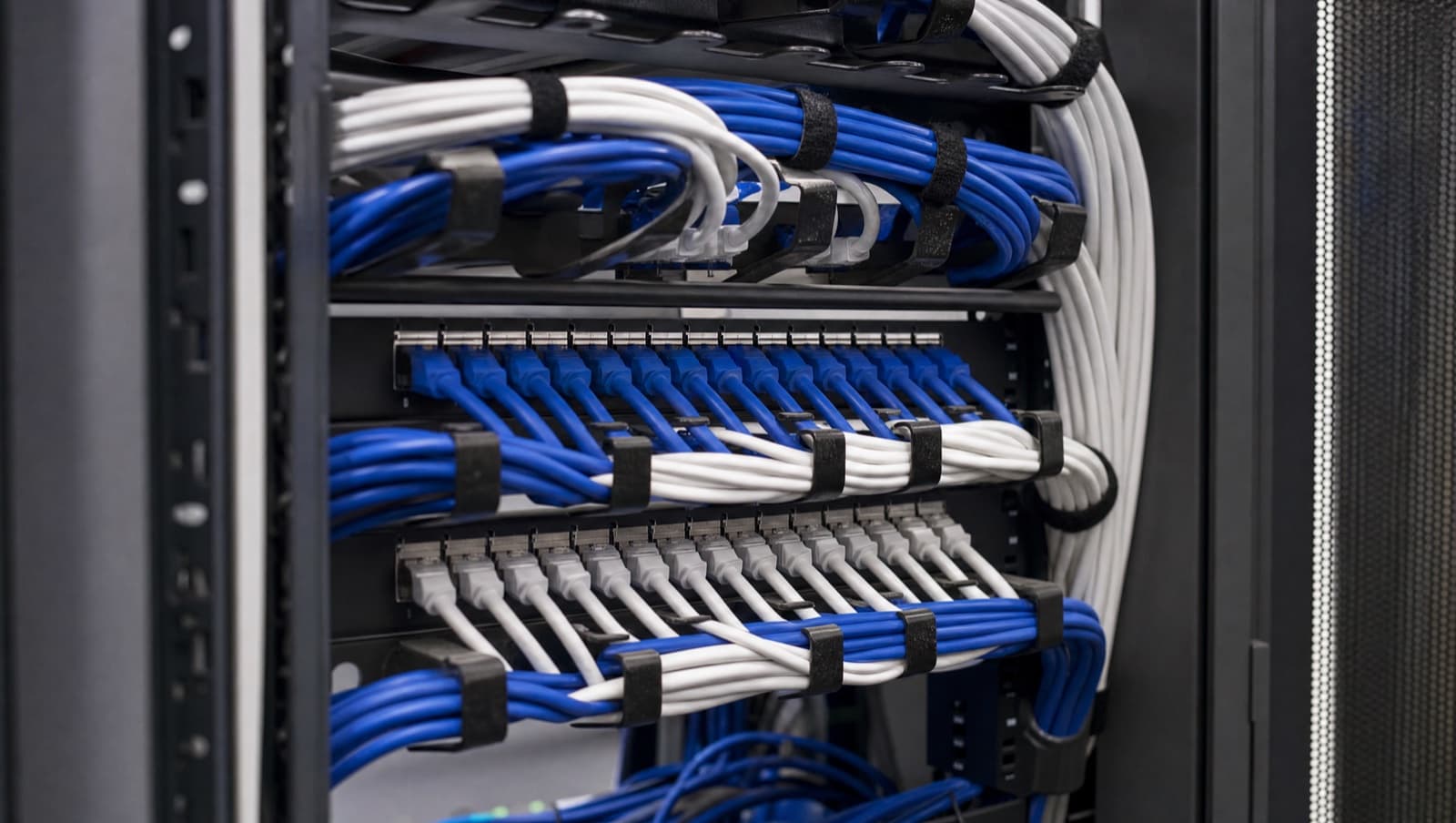
Copper is the right choice for horizontal cabling — the runs from the floor distributor (comms room) to the desk, the access point, the IP phone, the CCTV camera, or the BMS controller. There are several reasons for this.
First, Power over Ethernet. PoE eliminates the need for a separate mains power supply at the device end. IEEE 802.3bt (PoE++) can deliver up to 90W per port over Cat6a cable. That powers Wi-Fi access points, IP cameras, VoIP phones, LED lighting controllers, digital signage, building sensors, and door access panels — all from the comms room switch. Fibre cannot carry electrical power, so every fibre-connected device needs its own power supply or a media converter with PoE, which adds cost and failure points.
Second, cost at the endpoint. A Cat6a outlet, patch lead, and switch port costs significantly less than a fibre connection. Copper RJ45 termination is straightforward with proper training. Fibre termination requires fusion splicing or pre-terminated assemblies and more expensive transceivers at both ends. For a 200-drop office fit-out, the cost difference at the desk is substantial.
Third, familiarity. Every laptop, desktop, VoIP phone, and most IoT devices ship with an RJ45 Ethernet port or use PoE. Fibre requires a media converter or a device with a built-in SFP port, which adds a layer of complexity and cost.
BS EN 50173-1:2018 defines the horizontal cabling subsystem as the portion from the floor distributor to the telecommunications outlet, with a maximum permanent link length of 90 metres. For this distance, copper is almost always the right answer.
When should you use fibre optic cabling in a commercial building?
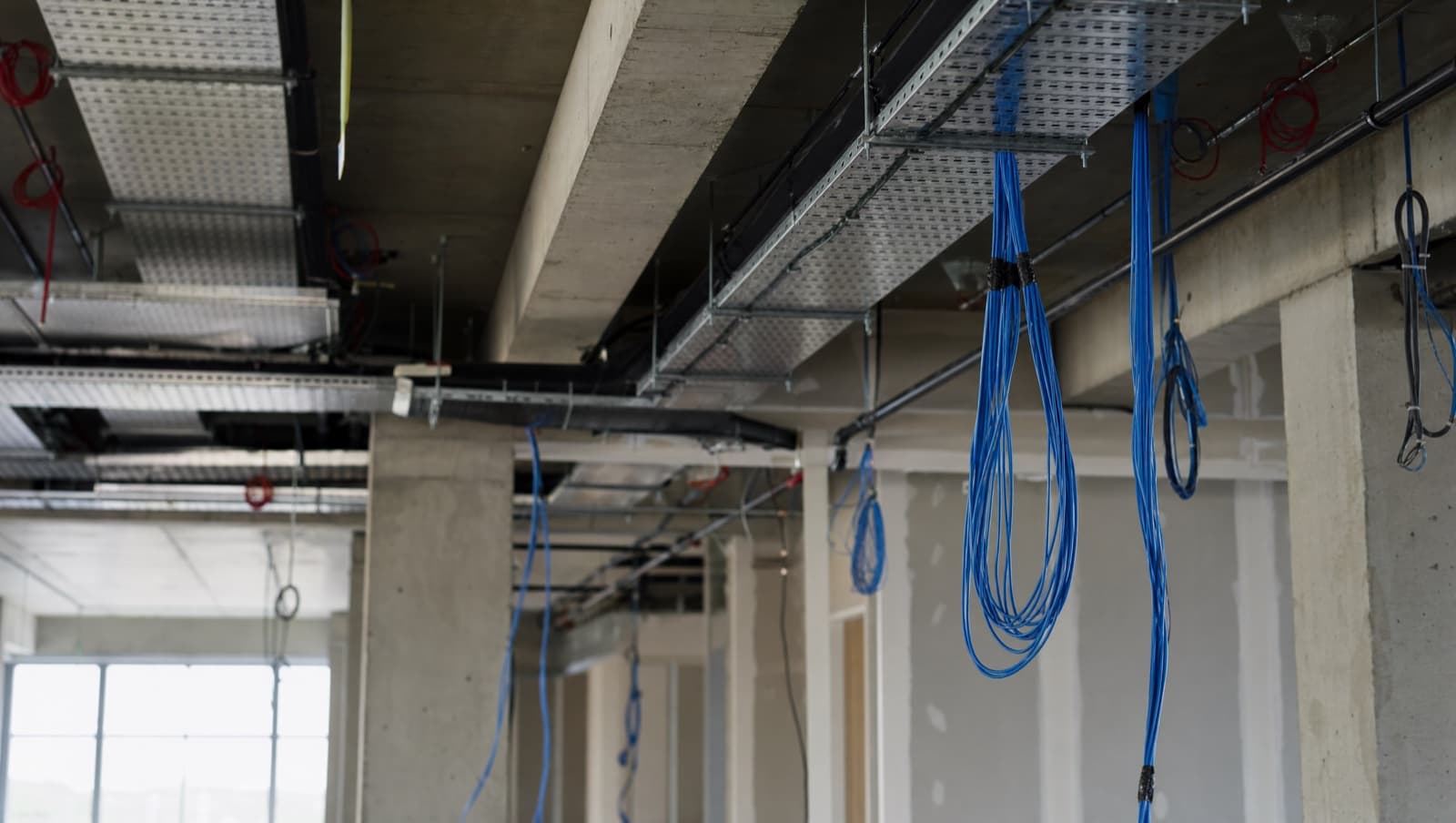
Fibre comes into its own for backbone cabling — the runs between comms rooms on different floors, between buildings on a campus, and between the building entry point and the main distributor.
Distance is the first factor. If you need to connect two buildings 300 metres apart, copper isn't an option — Cat6a maxes out at 100 metres. Single-mode fibre will cover that distance with ease, and multi-kilometre runs are routine. For campus backbone networks, fibre is the only practical choice.
Bandwidth is the second factor. While Cat6a delivers 10 Gbps, modern fibre backbone deployments routinely run 40 Gbps or 100 Gbps between core switches. As buildings deploy more wireless access points, more IP-connected building services, and more cloud-dependent applications, the bandwidth demand on the backbone grows exponentially. Fibre scales to meet this demand with a transceiver upgrade — the fibre itself doesn't change.
BS EN 50173-1:2018 defines the backbone cabling subsystem as the portion connecting distributors at different levels of the cabling hierarchy. For optical fibre backbone cabling, the standard specifies maximum distances of 300 metres for multimode and 2,000 metres for single-mode within a building, and 1,500 metres (multimode) or 3,000 metres (single-mode) for campus backbone.
The third factor is environment. In buildings with heavy electrical plant — hospitals, manufacturing facilities, buildings with large transformer rooms or generator sets — EMI can degrade copper cable performance. Fibre is completely immune. It also provides galvanic isolation, which prevents ground loop problems between buildings connected by metallic cable. If you're linking two buildings with different earthing systems, fibre eliminates the risk of dangerous potential differences on the data cabling.
Get a Free BMS Survey
We'll assess your controls and provide a detailed quotation.
Is fibre optic more expensive than copper?
The upfront cost of fibre is higher than copper for any given connection. Fibre cable itself isn't hugely more expensive than Cat6a, but the termination, connectors, transceivers (SFP/SFP+ modules), and enclosures add up. A single-mode fibre link between two switches requires two SFP+ transceivers at approximately forty to eighty pounds each, plus the fibre cable, patch leads, and termination panels. A copper 10 Gbps link needs two Cat6a patch leads at a few pounds each.
But total cost of ownership shifts the picture for backbone and long-distance applications. Fibre is maintenance-free in normal conditions — no corrosion, no EMI degradation, no crosstalk. It has a longer operational lifespan than copper (30+ years vs 15-25 years for structured copper). And when you need to upgrade bandwidth, you replace the transceivers, not the fibre. An OS2 single-mode fibre installed today will support terabit speeds with future transceivers. That's genuine future-proofing.
For horizontal cabling to desks and devices, copper remains more cost-effective because of PoE capability, simpler termination, and lower per-port equipment costs. The sweet spot in most commercial buildings is copper horizontal cabling with fibre backbone — and that's exactly what BS EN 50173 envisions in its cabling hierarchy model.
What are the most common fibre and copper cabling mistakes?
The most common mistake is running copper backbone between floors when fibre should have been used. A building with three floors and a comms room on each floor might have copper trunk cables connecting the floor switches. This works for 1 Gbps, but when the building needs 10 Gbps between floors — and it will — those copper trunks become a bottleneck. Replacing them with fibre means pulling new cable through existing risers, which may be full, fire-stopped, or inaccessible.
Another common error is specifying multimode fibre for new backbone installations. Ten years ago, multimode was cheaper because multimode transceivers cost less. Today, the price gap between multimode and single-mode SFP+ modules has narrowed considerably, and single-mode fibre supports much longer distances and higher bandwidths. For any new fibre backbone, OS2 single-mode is the right specification unless there's a compelling reason otherwise. The cable costs the same; the transceivers are near-parity; and the performance headroom is vastly superior.
Poor termination quality is the third recurring fault — high splice losses, dirty connectors, or patch panels without proper strain relief. Fibre is precise. A speck of dust on a connector endface can cause signal loss or back-reflection. Every fibre connection should be inspected with a fibre microscope and cleaned before testing. BS EN 61280-4-1 defines the testing methodology for installed optical fibre links, and every fibre link should be tested with an OTDR (Optical Time Domain Reflectometer) to verify splice losses and identify any faults along the route.
What does a well-designed commercial cabling system look like?
A well-designed commercial cabling infrastructure typically has Cat6a copper horizontal cabling to every desk, access point, and device — supporting both data and PoE. The backbone between floor comms rooms uses OS2 single-mode fibre, sized with spare capacity (if you need 12 fibres today, install 24). The fibre terminates in rack-mounted enclosures with LC duplex connectors, properly labelled and documented. The building entry point has both copper and fibre service entry, with appropriate lightning and surge protection on copper feeds.
Every copper link is Fluke-certified to Class EA. Every fibre link is OTDR-tested and tier-1 certified per BS EN 61280. The as-built documentation covers both copper and fibre subsystems with port maps, test results, and containment routes.
When should the copper-vs-fibre decision be made?
If you're planning a new commercial building, a refurbishment, or a technology upgrade, the copper-vs-fibre split should be decided at the design stage. Getting it wrong is expensive to fix — running fibre to every desk is wasteful, and running copper between buildings is a limitation you'll regret.
If you're not sure what your building needs, get in touch for a cabling design consultation or request a quote. We'll assess the distances, bandwidth requirements, PoE demands, and environmental conditions, and specify the right mix of copper and fibre for your building — installed, tested and certified to BS EN 50173 and BS 6701.
Alpha Controls Team
Specialist BMS installation, commissioning, and maintenance across London and the South East. SafeContractor Approved, BCIA Member.