
One common route into BMS engineering in the UK is through an electrical background — electricians retraining through manufacturer courses (Trend, Distech, Siemens) and BCIA modules. In our experience hiring and subcontracting in London and the South East, it's the route we see most. The formal alternative is the Level 4 BEMS Controls Engineer apprenticeship (ST0629), a typically 36-month programme delivered nationally by Group Horizon in partnership with the BCIA. Either route takes roughly two to four years to reach genuine commissioning competence.
Every FM manager we quote for is chasing the same thing: an engineer who can actually fix a plant room, not just read a manual. We're a BMS install specialist working across Kent and London, and hiring is the hardest part of running this business — not because there's no interest in the trade, but because so few people know how to get into it properly. If you're a school leaver weighing up options, an 18th Edition electrician wondering whether to specialise, or someone retraining from a different trade altogether, this is the honest version of how people actually end up doing this job for a living.
Most of what's written about "how to become a BMS engineer" online reads like it was written by someone who's never stood in a plant room. There's no single qualification you sit and no exam you pass that makes you a BMS engineer overnight — it's a trade you build through a mix of formal training and years of real fault-finding, and the routes in are narrower and more specific than most career sites let on. We'll set out exactly what those routes are, what they cost in time rather than just money, and what actually gets a CV taken seriously when it lands on our desk.
What does a BMS engineer actually do?
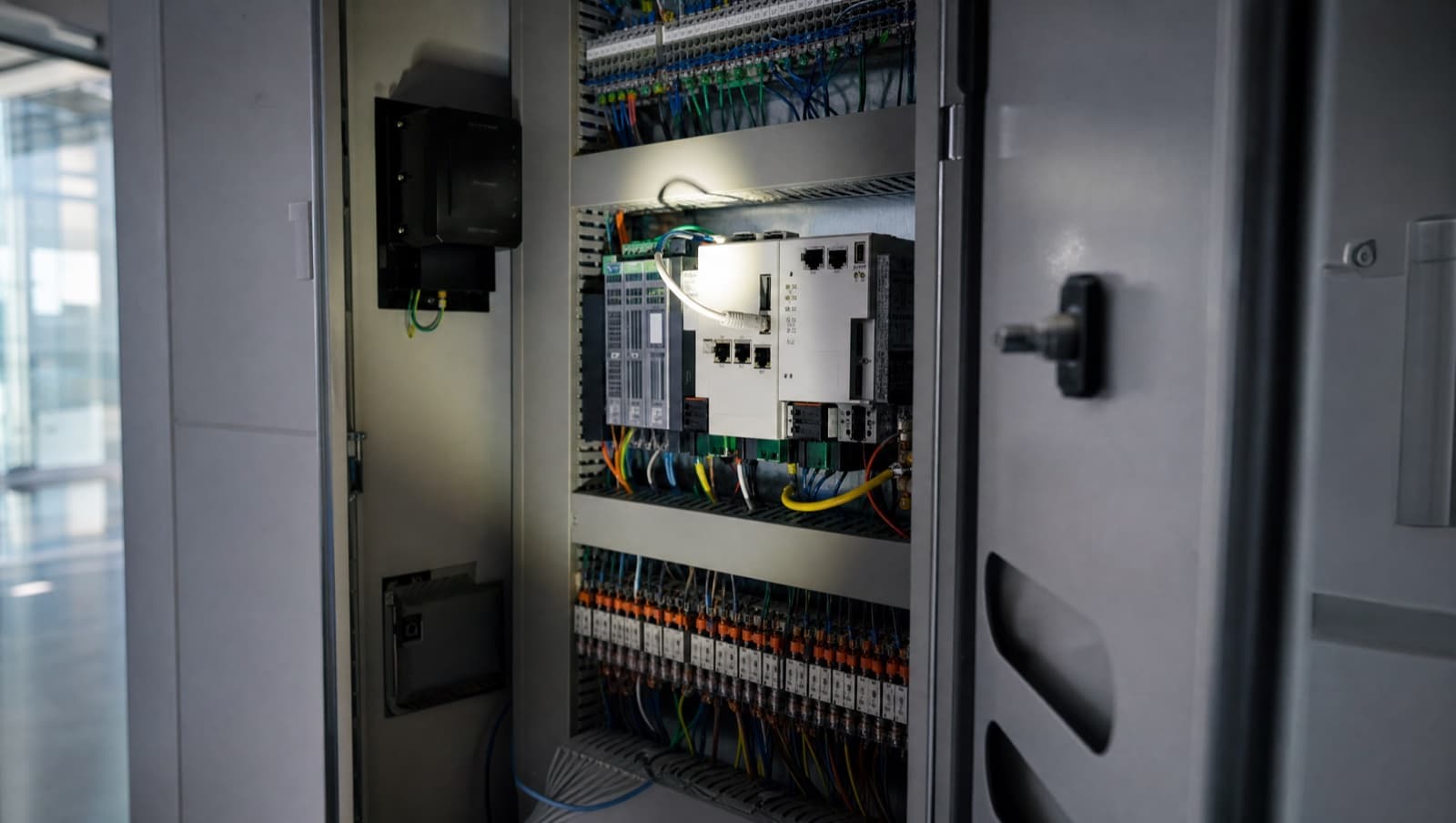
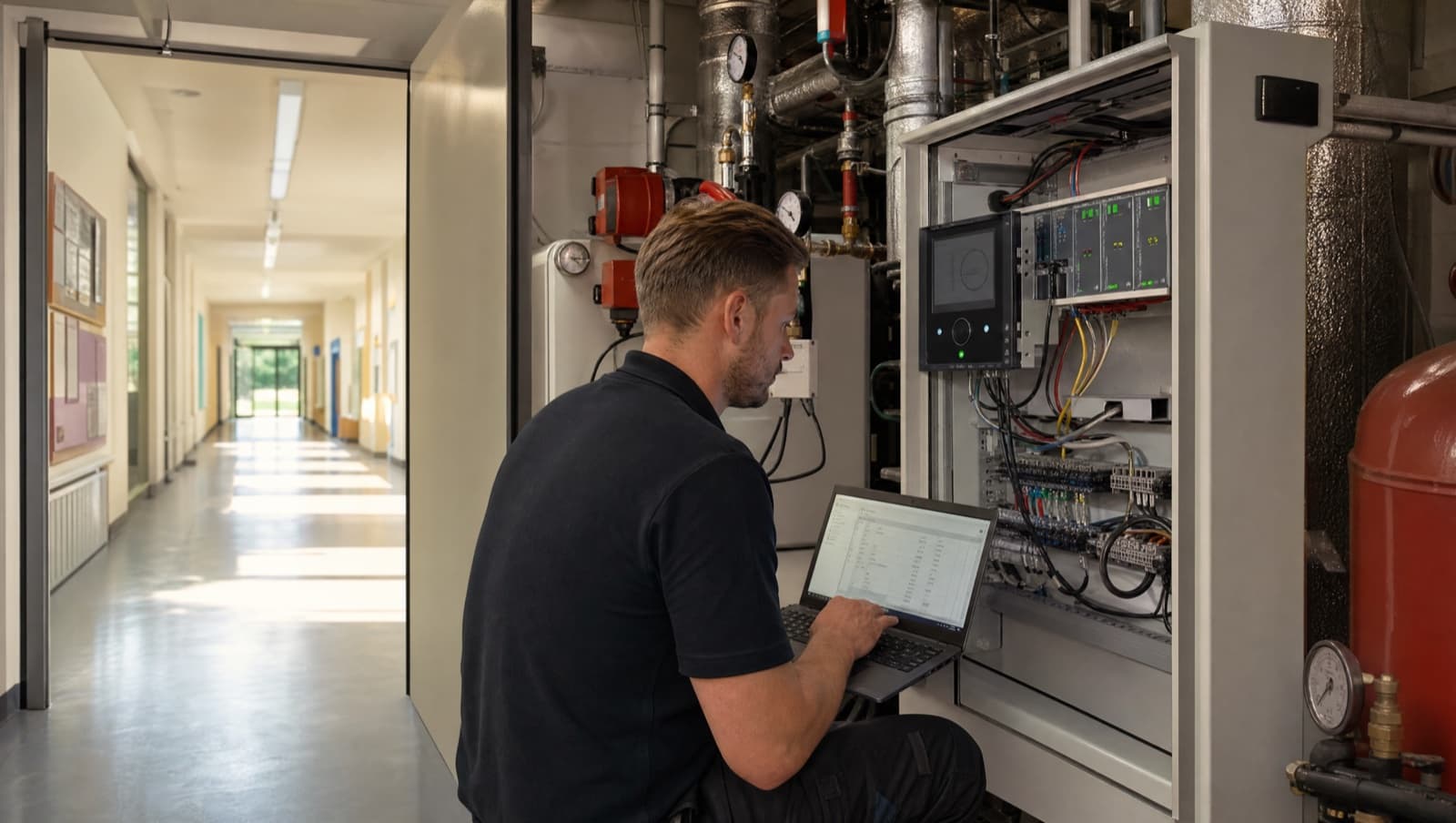
A building management system engineer installs, commissions, programmes and maintains the controls that run a building's heating, cooling, ventilation and lighting — the outstations, sensors, actuators and front-end software that keep a building management system doing its job without an FM team having to walk round adjusting valves by hand. On any given week that might mean pulling cable and wiring outstations on a new install, points-testing and commissioning a Trend or Distech panel, writing strategy logic so a plant room actually behaves the way the design intended, or diagnosing why a chiller sequence has been running wrong for six months and nobody noticed. It's electrical work, controls logic and building services knowledge all in one trade, which is exactly why it's hard to hire for and well paid when you're good at it.
What does a week on the tools actually look like?
It varies more than most trades, which is part of the appeal. Early in your career you're mostly on install: first fix cable containment and outstation wiring on a new-build or refurb, working from design drawings alongside the mechanical and electrical trades on site. As you move into commissioning you're points-testing every input and output on a panel, checking sensors read correctly and actuators drive the right way, then loading and tuning the control strategy so the plant actually runs the way it was designed to — not just powers up. Established engineers split their time between commissioning new installs, fault-finding on service contracts (a chiller short-cycling, a BMS graphic showing a space that's freezing when the sensor says it's fine, a Trend or Distech network that's dropped a device), and increasingly, retrofit work replacing end-of-life controllers on buildings under MEES pressure. No two weeks look the same, and you're rarely in the same building twice in a row across a working month.
How do I become a BMS engineer in the UK?
There are four routes people actually take, and they're not equally common. The dominant one, in our experience hiring and subcontracting across Kent and London, is an electrician retraining into controls: someone already 18th Edition qualified moves onto a BMS contractor as a wiring/install engineer, then picks up manufacturer training (Trend, Distech, Siemens) and BCIA modules over two to four years until they're commissioning independently. The second route is the formal one — the Level 4 BEMS Controls Engineer apprenticeship, a standard built specifically for this trade and run with the BCIA, which takes a school or college leaver straight in without an electrical background first. Third is coming from HVAC or mechanical services and moving into controls, which works well because you already understand the plant you're controlling. Fourth, less common but real, is a building services or electrical engineering graduate joining a systems house or consultancy and working up through design and commissioning rather than installation. We cover the training side of all four routes in detail in our guide to BMS courses and apprenticeships.
Get a Free BMS Survey
We'll assess your controls and provide a detailed quotation with energy savings estimates.
Do I need to be an electrician to work in BMS?
No — but it helps enormously, and it's why an electrical background is such a common starting point for working BMS engineers. BMS work is electrical work at its core: wiring outstations, running control cabling, understanding circuits and earthing to BS 7671 (the IET Wiring Regulations) before you ever get to the software layer. An 18th Edition qualification gets you onto site doing real work from day one, and the controls layer — points, strategy, graphics — gets taught on top of that through manufacturer and BCIA courses. The Level 4 BEMS apprenticeship is the one route designed to take you in without electrical experience first, building both the electrical fundamentals and the controls knowledge together over three years.
How long does it take to become a BMS engineer?
Expect two to four years from a standing start to genuine independent commissioning competence, whichever route you take. An electrician moving across typically spends their first year or two on install and wiring under supervision while working through manufacturer courses, then starts commissioning small jobs solo in year two or three. The Level 4 BEMS apprenticeship typically runs 36 months (excluding the end-point assessment period) and sits at Level 4 — the same level as an HNC on the national qualifications framework. Either way, this isn't a six-week bootcamp trade — the reason BMS engineers are scarce and well paid is that it genuinely takes a few years on real plant to get good at it.
How much do BMS engineers earn in the UK?
Salaries vary a lot by source, so treat any single figure with caution. In Alpha Controls' experience recruiting and subcontracting in London and the South East, trainee and entry-level engineers tend to start in the £30,000s, experienced commissioning engineers who can run a job solo sit comfortably in the £50,000s, and the strongest Trend or Tridium/Niagara specialists earn more again. For a wider market view, the HVAC FM Recruitment BMS & Controls Engineer Salary Guide UK (2026 edition, checked July 2026) — a specialist recruiter's guide to advertised roles rather than an official wage survey — puts junior engineers at £40,000–£55,000, mid-level service and commissioning engineers at £45,000–£60,000 (Trend/Tridium specialists £50,000–£70,000+), senior engineers at £55,000–£75,000+ and project managers at £70,000+. Glassdoor's UK self-reported average for a BMS engineer sat at roughly £39,500 in a July 2026 snapshot — below the recruiter's junior band, which is what you'd expect from self-reported figures that mix all experience levels together. Contract work is priced differently again: through mid-2026 we saw contract BMS commissioning roles in London and the South East advertised at roughly £300–£400 a day, mostly outside IR35 — that's contractor day-rate income, not a salary, and not guaranteed between contracts. The reason the ceiling sits higher than a standard electrical career is genuine demand: BMS and controls roles are widely reported by specialist recruiters as hard to fill, and decarbonisation and MEES pressure keep pushing more commercial buildings toward proper controls.
What do employers actually look for?
Here's our view, as a firm that hires and subcontracts BMS engineers regularly: when we sift a CV, we look for BS 7671 electrical fundamentals, real site time, and a manufacturer or BCIA certificate — in that order. A generic online "smart building" certificate with no BCIA, CIBSE or manufacturer recognition tells us nothing about whether someone can wire an outstation or fault-find a stuck valve. Real routes — the electrician-to-controls path and the Level 4 BEMS apprenticeship — both put people in front of actual plant early, and it shows in how fast they pick up commissioning work. If you're choosing how to spend your training time and money, that's the test to apply: does this put me on real plant, or just in front of a screen?
Beyond the paperwork, the practical side matters just as much. Most site-based BMS work needs a driving licence — you're moving between buildings across a patch, not sitting in one office — and depending on the client, a basic DBS check or site-specific induction (CSCS card, working-at-height training) before you're let on site at all. We'd rather see a candidate who's comfortable working unsupervised in a plant room, can read a schematic without being talked through it, and communicates clearly with FM staff and other trades, than someone with a longer list of certificates but no evidence of working independently. It's a hands-on trade before it's a desk job, and the hiring process should feel like it.
Is BMS a good career?
Yes, and not as a throwaway line — the fundamentals are genuinely strong. BMS and controls roles are widely reported by specialist recruiters as hard to fill, and the wider engineering sector reports significant recruitment gaps — the IET's 2025 skills survey found 76% of engineering employers struggle to recruit for key roles. Salaries reflect that demand, and it's only growing as more commercial buildings come under pressure to cut energy use and hit MEES targets. It's also a trade with room to move: install, commissioning, design, project management and specialist manufacturer roles are all open once you've got a few years of solid experience. The catch is that it takes real time on real plant to get there — there's no shortcut version of this career that skips the site experience.
Where does the career go after that?
Once you're commissioning independently, the trade opens out. Some engineers stay on the tools and specialise — becoming the go-to person for a particular manufacturer's platform, which is where the strongest salaries sit given how scarce deep Trend or Tridium/Niagara knowledge is. Others move into design, specifying control philosophies and points schedules for new projects rather than installing them; others move into project or commissioning management, running the delivery of a whole installation rather than one panel at a time. A smaller number move into service and maintenance leadership, managing a team of engineers across a portfolio of buildings for an FM contractor. None of these routes skip the site years — every senior BMS person we've worked with, ourselves included, spent years fault-finding on real plant before they were trusted to design or manage it.
Next steps
If you're an electrician thinking about the switch, the fastest route is getting onto a BMS contractor's books as an install engineer and starting manufacturer training alongside real site work — see our breakdown of BMS courses, BCIA modules and the Level 4 apprenticeship for what to prioritise. If you're earlier in your career, the apprenticeship route is worth investigating directly through gov.uk's Find Apprenticeship Training service. And if you're an FM company or main contractor trying to find engineers rather than train them, that's a conversation we have every week — see our services or get in touch and we'll tell you honestly what's realistic for your project timeline.
Sources and further training information
The apprenticeship, funding and salary facts above were checked in July 2026 against primary sources. Standards and funding rules change, so confirm the current position before making decisions.
Apprenticeship standard and listing: BEMS controls engineer apprenticeship standard (ST0629) — Skills England and Find apprenticeship training: BEMS controls engineer Level 4 — GOV.UK.
Funding: Employer guide to apprenticeship funding — GOV.UK and Apprenticeship funding rules 2026 to 2027 — GOV.UK.
Training bodies: BEMS controls engineer apprenticeship — BCIA and Building controls training courses — BCIA.
Salary data (market and self-reported, not official wage surveys): BMS & Controls Engineer Salary Guide — HVAC FM Recruitment and BMS engineer self-reported salaries — Glassdoor UK.
Alpha Controls Team
Specialist BMS installation, commissioning, and maintenance across London and the South East. SafeContractor Approved, BCIA Member.