
A commercial leak detection system should be wet-tested on a documented schedule: monthly visual inspections, quarterly wet tests on high-risk zones, six-monthly full functional tests of every zone and alarm chain, and annual cable resistance and battery backup checks. Without this regime, sensing cables degrade, batteries die, and detection silently fails.
Every leak detection system installed in a UK commercial building has a shelf life on its reliability — and that shelf life is determined entirely by whether anyone maintains and tests it. The uncomfortable truth is that most don't. The system gets installed, the handover pack lands on a desk somewhere, and the next time anyone thinks about it is when water is already pooling under a raised floor or dripping through a ceiling tile onto a server rack. By that point, the detection system that was supposed to prevent exactly this scenario has been silently degraded for months or years. Contaminated sensing cables, dead batteries in wireless nodes, alarm chains that terminate at a panel nobody checks — these are not edge cases. They are the norm on sites where leak detection maintenance has never been programmed into a planned preventative maintenance schedule.
The commercial consequences are not abstract. A single undetected water leak in a plant room, comms closet, or riser can cause tens of thousands of pounds in damage to electrical infrastructure, IT equipment, and building fabric. Insurance claims get complicated fast when the loss adjuster discovers that a detection system was installed but never tested. And in critical environments — data centres, pharmaceutical stores, financial trading floors — the business interruption cost of a water ingress event dwarfs the physical damage. All of this is preventable with a structured maintenance regime that takes a competent technician a few hours per visit.
What does leak detection maintenance actually involve?
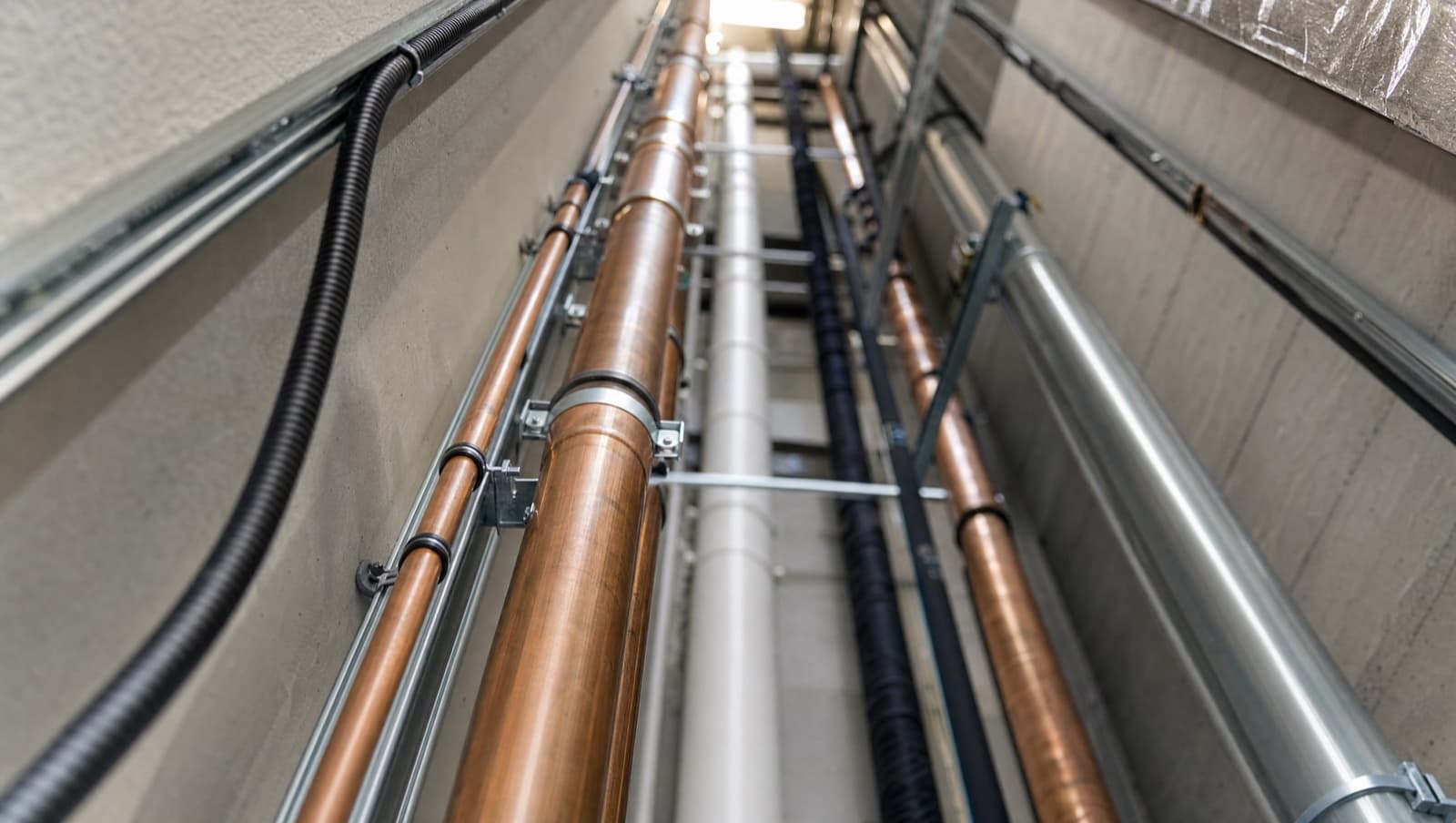
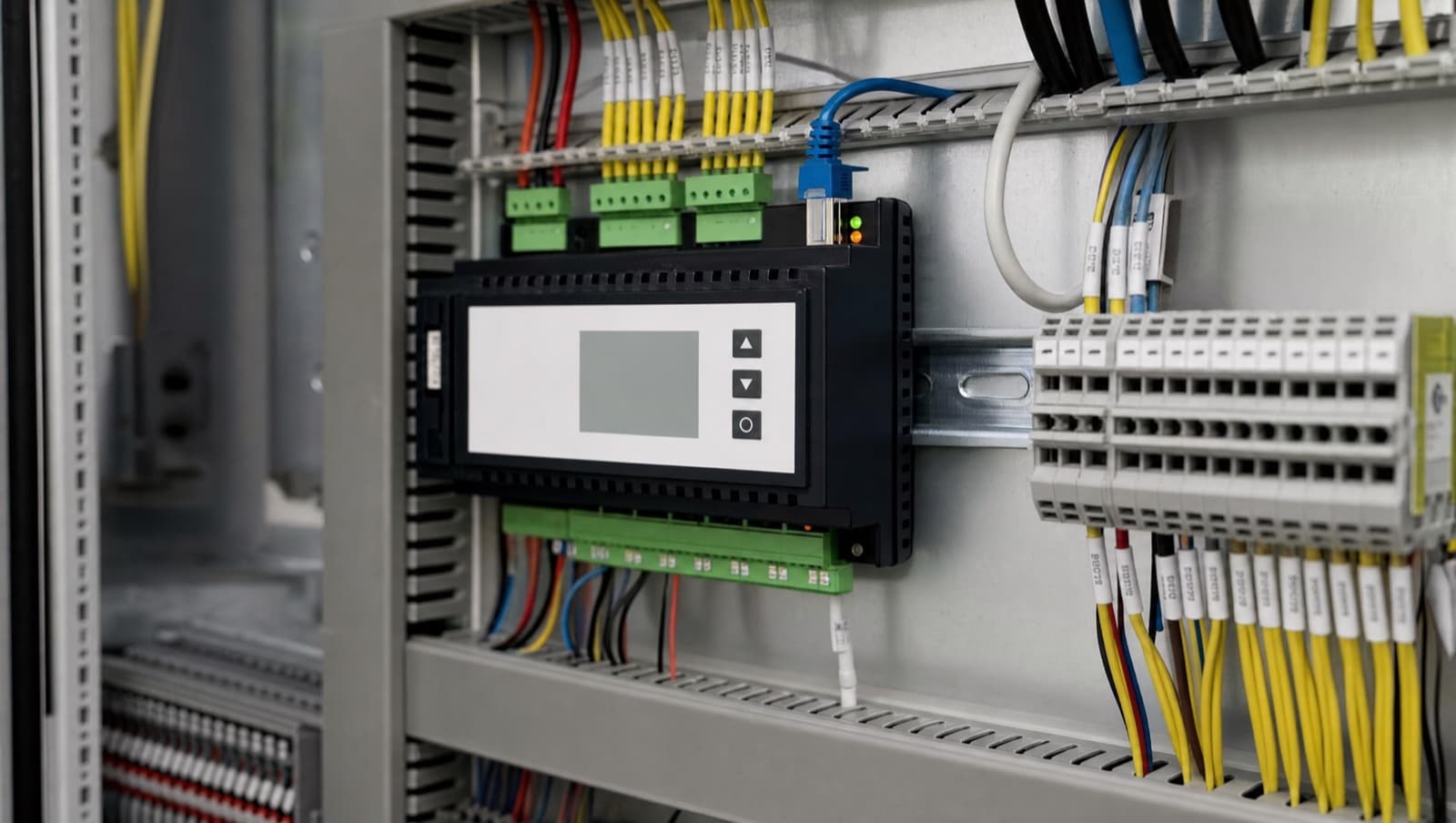
Leak detection maintenance is not complicated, but it is specific. The systems used in commercial buildings — typically sensing cable systems from manufacturers like TraceTek, RLE Technologies, Aqualeak, or similar — consist of a detection panel (or controller), sensing cables routed along pipework, beneath raised floors, or through risers, and an alarm output chain that connects to either a local sounder, a BMS input, or both. Wireless sensor systems use individual point sensors with battery-powered transmitters instead of cable, but the maintenance principles are broadly the same.
The maintenance task breaks down into a handful of distinct activities: visual inspection of cables and sensors, functional wet testing of each detection zone, panel and communications testing, battery backup verification, and cable integrity measurement. Each of these activities has a different frequency requirement, and getting that frequency right is the difference between a system you can rely on and one that gives you a false sense of security.
What makes this different from, say, maintaining a fire alarm system is that leak detection rarely has a regulatory framework enforcing the testing schedule. Fire alarms have BS 5839-1 and a weekly call-point test that most FM teams follow religiously. Leak detection has guidance — good guidance — but no legal mandate with the same teeth. That means the discipline has to come from the FM team's own procedures, or from a maintenance contractor who builds it into a planned schedule. Left to drift, it will drift.
Why does leak detection maintenance matter in real buildings?
The facilities manager's concern is straightforward: does the system work when it needs to? The answer, on a surprising number of sites, is “we don't actually know.” And that uncertainty creates a cascade of problems that go well beyond the immediate risk of water damage.
For landlords and building owners, an unmaintained leak detection system is a liability issue. If water damage occurs and the installed detection system is found to have been non-functional due to lack of maintenance, the insurance position becomes adversarial. Insurers increasingly expect evidence of regular testing — not just that a system was installed, but that it was tested on a documented schedule with records of each test. The absence of those records can and does affect claim outcomes.
For M&E contractors managing building services, leak detection that hasn't been tested is a reputational risk. If you're responsible for the mechanical plant in a building and a leak goes undetected because the sensing cable under the AHU was contaminated with cleaning fluid residue, that conversation with the client is not a comfortable one. The same applies to consultants specifying leak detection on new projects — if the O&M manual doesn't include a clear maintenance schedule, and the system degrades within two years of handover, the specification has failed to deliver what it promised.
In practice, the buildings most at risk are those where leak detection was installed as part of a fit-out or refurbishment but was never integrated into the wider BMS or building maintenance regime. The system sits on its own panel, in its own corner of the plant room, running on its own battery backup, and nobody has it on their PPM schedule. We see this regularly when we're brought in to survey existing leak detection installations in plant rooms — the hardware is there, but the operational discipline around it has evaporated.
What usually goes wrong with unmaintained leak detection?
The single most common failure is the fit-and-forget mindset. A leak detection system gets installed, commissioned, signed off, and then ignored. Nobody wet-tests the cables. Nobody checks the panel batteries. Nobody verifies that the BMS alarm point is still mapped correctly after the last software update. The system is technically present but functionally dead.
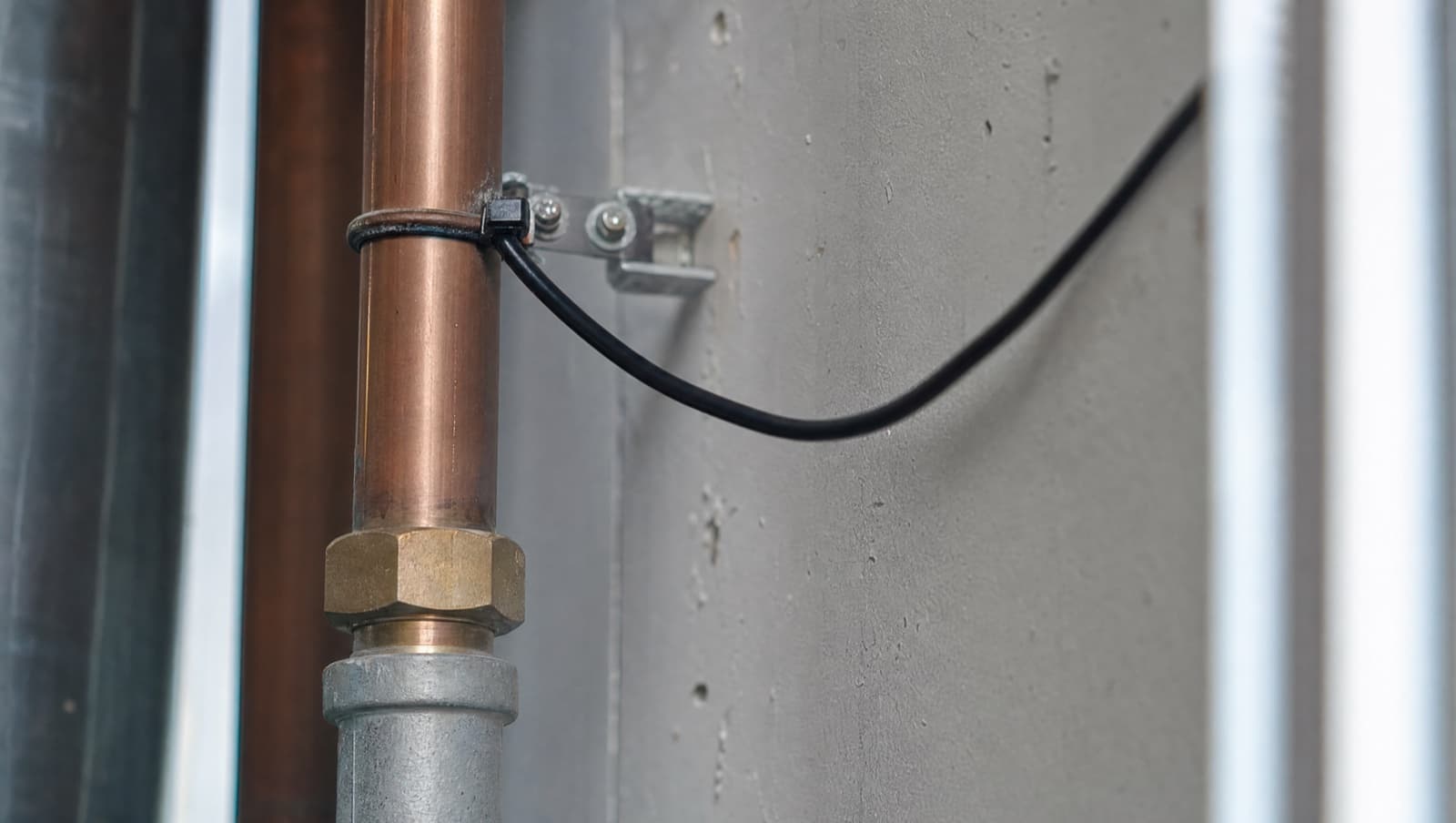
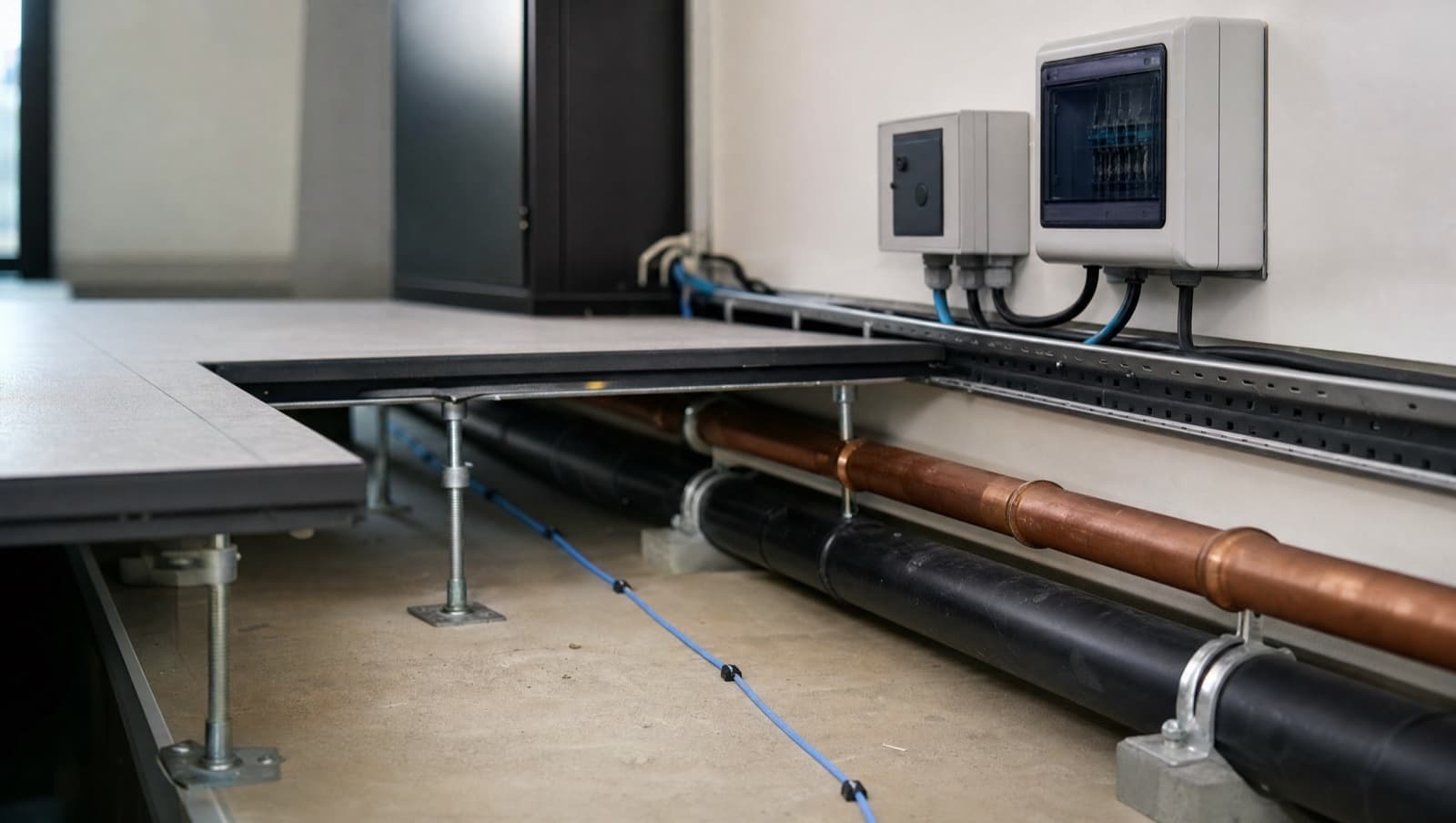
Concealed sensing cables are a particular problem. On many installations, cable is routed beneath raised access floors, behind panels, or through ceiling voids. If the cable can't be accessed without lifting floor tiles or removing panels, it doesn't get inspected. Contamination builds up — dust, cleaning fluid residue, condensation — and over time, the cable's ability to detect water degrades or it starts producing false alarms. False alarms are arguably worse than no alarm at all, because they train the FM team to ignore the system entirely. Alarm fatigue from degraded cables is one of the most reliable ways to ensure that a real leak gets missed.
Battery backup failure in wireless sensor systems is another silent killer. Wireless leak sensors are popular for retrofit installations because they avoid the cabling cost, but every wireless sensor runs on a battery. Those batteries have a finite life — typically two to five years depending on the reporting interval and environmental conditions. If nobody is tracking battery status and replacing units proactively, the sensor network develops gaps. A dead sensor in a critical location — under a valve manifold, at a riser penetration — means zero detection capability in exactly the spot where you need it most.
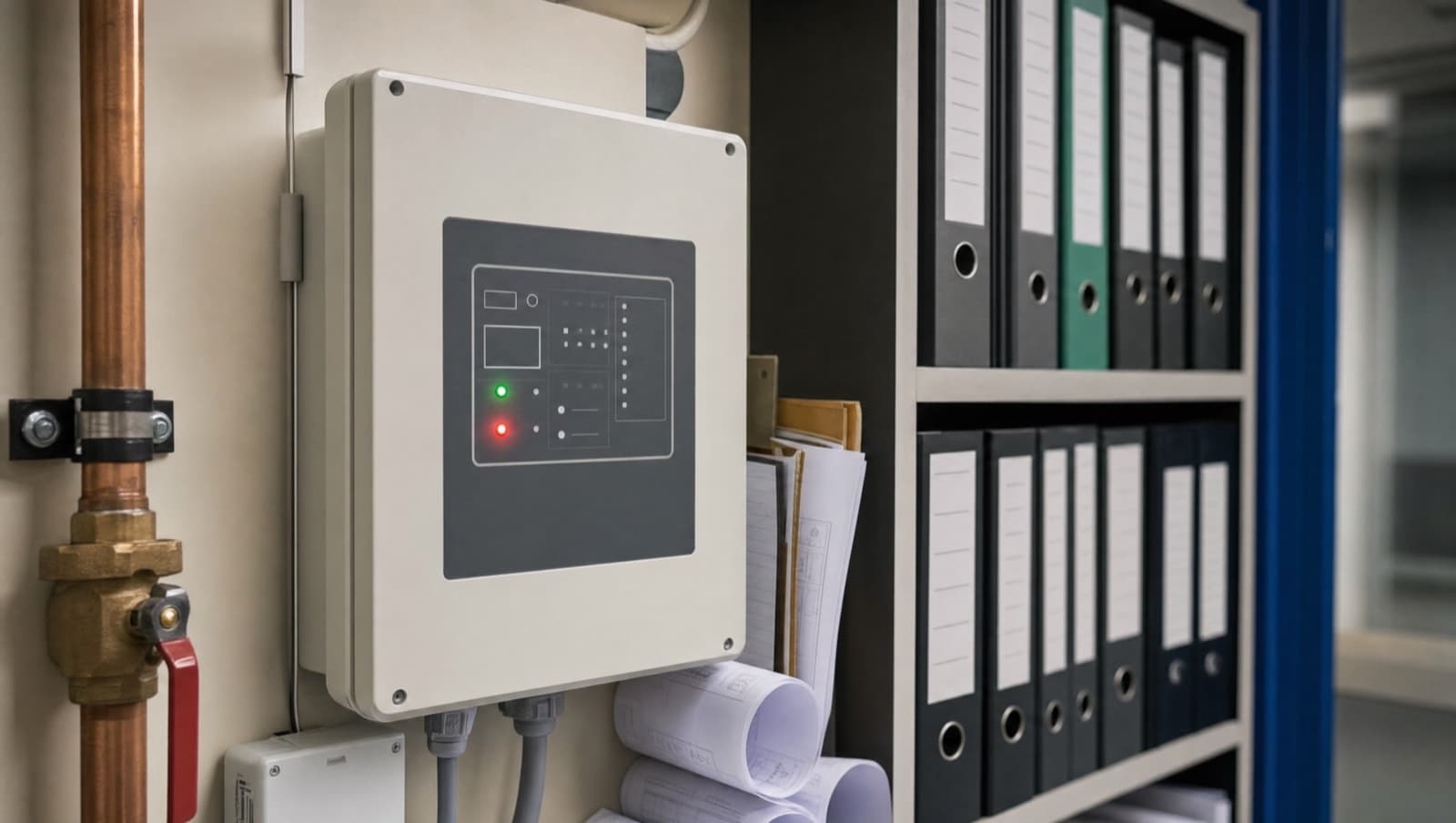
The other common failure is a broken alarm chain. The sensing cable or sensor detects water correctly, the panel registers the alarm, but the output relay that should trigger the BMS alarm point has failed, been disconnected during other works, or was never wired in the first place. We've attended sites where the leak detection panel was alarming locally — red LED lit, sounder active — but the BMS showed nothing because the volt-free contact had been disconnected during a panel modification six months earlier. Nobody noticed because nobody tested the full alarm chain. Our guide on commissioning leak detection systems covers how to verify these alarm chains properly at handover, but the same verification needs repeating at regular intervals.
Post-deep-clean damage is one that catches people off guard. Building deep cleans — particularly in retail, healthcare, and food service environments — use water and chemical cleaning agents liberally. Sensing cables at floor level get saturated with cleaning solution, which can bridge the conductors and either trigger a false alarm or leave a residue that permanently impairs the cable's sensitivity. If nobody verifies the system after a deep clean, the next genuine leak may not register.
Get a Free BMS Survey
We'll assess your controls and provide a detailed quotation.
Which standards set the framework for leak detection maintenance?
Two standards are directly relevant to leak detection maintenance scheduling, and both provide specific, practical frameworks rather than vague principles.
BSRIA BG 8/2009, the guide to maintenance strategy for engineering services, establishes a structured approach to planned preventative maintenance across all building services disciplines. The specific relevance to leak detection is in its framework for categorising maintenance tasks by frequency and criticality. BG 8/2009 defines maintenance as falling into three categories: routine (daily/weekly visual checks), planned preventative (scheduled inspections and functional tests at defined intervals), and corrective (reactive repair after failure). For leak detection, routine maintenance means visual inspection of accessible cable runs and panel status indicators. Planned preventative maintenance means scheduled wet testing, battery checks, and cable integrity measurement. The guidance is clear that corrective maintenance alone — fixing things only when they break — is not an acceptable strategy for life-safety and asset-protection systems. BG 8/2009 is available through BSRIA's publications library and is widely referenced in FM procurement specifications.
BS 8210:2020, the British Standard for maintenance management of built environment assets, goes further in establishing the organisational framework around maintenance. Section 6 of BS 8210 requires that all building services installations have documented maintenance procedures, defined responsibilities, and recorded evidence of testing. For leak detection specifically, this means the FM team or their maintenance contractor must hold a written schedule of what gets tested, when, and by whom — and must retain records of each test including the date, the zones tested, the method used, and the result. BS 8210 also requires that maintenance procedures are reviewed and updated whenever the building undergoes modification — which is directly relevant to leak detection, because any alteration to pipework, floor layouts, or ceiling voids can affect cable routing and detection coverage. The standard is published by BSI and referenced in most institutional FM contracts.
Between them, these two standards create a clear expectation: leak detection systems must be maintained on a documented schedule, with functional testing at defined intervals, and records retained as evidence. The schedule itself is not arbitrary — it follows the risk profile of the installation and the manufacturer's guidance for the specific detection technology in use.
What does a good leak detection maintenance schedule look like?
The schedule below reflects what we specify and deliver on Alpha Controls planned maintenance contracts. It draws on manufacturer recommendations, the BSRIA and BS 8210 frameworks, and our own experience of what actually prevents system failures in practice.
- Monthly activities focus on visual inspection. Every accessible cable run should be checked for physical displacement, mechanical damage from foot traffic or stored equipment, and visible contamination. Panel front indicators should be checked — power on, no fault LEDs illuminated, communications link active if the panel is networked to a BMS. This takes fifteen to twenty minutes on a typical floor and doesn't require specialist tools.
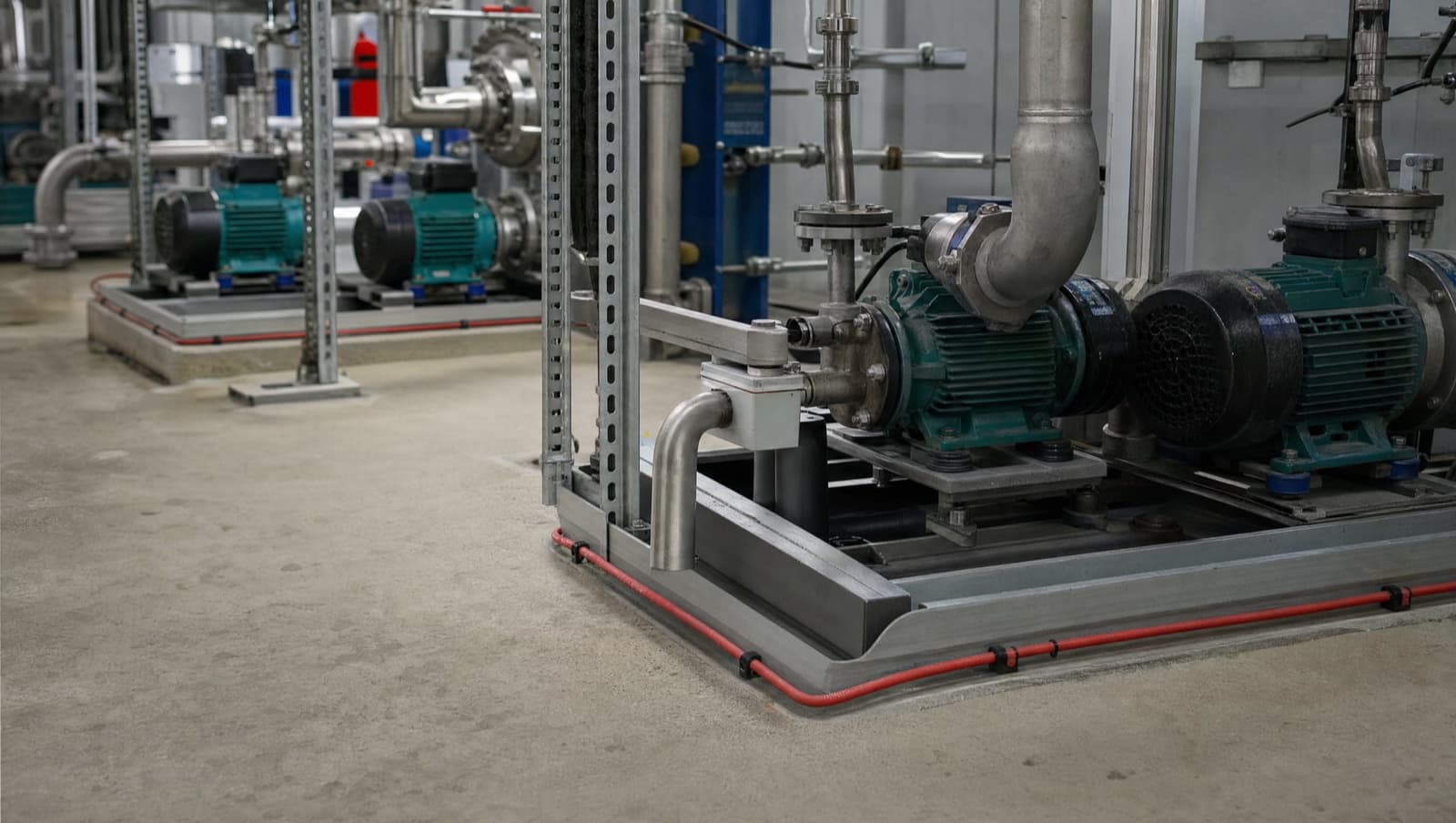
- Quarterly wet testing applies to high-risk zones: areas around fuel storage, chemical dosing equipment, generator fuel lines, and any location where a leak could involve hazardous substances rather than just water. A damp cloth applied to the sensing cable at a known point should trigger the alarm within the manufacturer's specified response time — typically under sixty seconds for conductive cable systems. The alarm chain should be verified end-to-end: cable detects, panel alarms, BMS receives the alarm point, FM team is notified.
- Six-monthly testing is the core functional test for the entire system. Every zone gets a wet test using the damp cloth method. Every panel function is tested: zone alarm, general fault, communications failure, and battery backup switchover. The BMS alarm chain is verified for every zone — not just a sample. If the system uses wireless sensors, every sensor is tested individually and battery voltage is recorded. This is also the point at which any sensors or cables flagged during monthly inspections are investigated and replaced if necessary.
- Annually, cable resistance measurement should be carried out on all sensing cable circuits. This is a quantitative check that detects gradual degradation — increased resistance indicates contamination, moisture ingress into cable terminations, or physical damage that hasn't yet caused a visible fault. The manufacturer's baseline resistance value, recorded at commissioning, is the reference point. Any cable showing resistance drift beyond the manufacturer's tolerance should be investigated and either cleaned or replaced. Battery backup duration testing is also an annual task: the panel is run on battery power alone, and the duration before low-battery alarm is recorded against the manufacturer's specification. Batteries that don't meet the rated duration are replaced.
- After any deep clean, the FM team or cleaning contractor should notify the maintenance team so a verification visit can be scheduled. This doesn't need to be a full six-monthly test — a targeted wet test on the zones in the cleaned area, plus a visual inspection for chemical residue on cables, is sufficient.
- After any building modification that affects the areas where sensing cables are routed — raised floor works, pipework alterations, ceiling void access, riser modifications — the affected zones should be fully recommissioned. This means a wet test, a visual inspection of cable routing and support, and a BMS alarm chain check. Modifications are the single most common cause of sensing cable displacement, and a cable that's been moved off its intended route may no longer be in the right position to detect a leak from the source it was designed to monitor.
What happens when a neglected system is finally surveyed?
Alpha Controls was contracted to take over the maintenance of a leak detection system in a multi-tenanted office building in the City of London. The system had been installed three years earlier as part of a major refurbishment, covering the basement plant room, ground-floor comms room, and risers serving floors one through eight. The original installing contractor had provided a handover pack but no ongoing maintenance contract. In the three years since handover, no recorded maintenance or testing had been carried out.
Our initial survey found four of the twelve sensing cable zones non-functional. Two had cables that had been displaced during subsequent fit-out works on floors three and five — the cables were physically present but had been moved away from the pipework they were supposed to monitor. One zone had a contaminated cable that was producing intermittent false alarms, which the FM team had responded to by muting the panel sounder. The fourth had a failed relay output, meaning the panel was detecting correctly but the BMS was receiving nothing.
The BMS integration — which should have been providing floor-by-floor alarm identification via the building's Trend IQ system — had been partially overwritten during a BMS software update eighteen months earlier. Three of the alarm points had been de-mapped and were no longer active. The battery backup on the main panel had not been tested since installation and failed to hold the system for more than forty minutes against a rated backup of four hours.
We replaced the two displaced cables, cleaned and retested the contaminated zone, replaced the failed relay, re-mapped the BMS alarm points, fitted new backup batteries, and carried out a full wet test on all twelve zones with documented results. The building is now on a planned maintenance contract with Alpha Controls covering all the intervals described above. The cost of the remedial work — which included two full cable replacements — was approximately three times what the annual maintenance contract would have cost had it been in place from handover. That ratio is consistent with what we see across most sites: deferred maintenance always costs more than planned maintenance.
When should you act on leak detection maintenance?
If your building has a leak detection system and you cannot produce a documented record of the last time it was tested, you should assume it is not fully functional. That is not pessimism — it is the statistical reality of what we find on site surveys. Systems that haven't been tested within the last six months have a failure rate on at least one zone that we'd estimate conservatively at forty to fifty per cent based on our survey data across London commercial buildings.
The trigger points are clear. If you have no maintenance contract covering leak detection, get one in place. If your system was installed more than twelve months ago and has never been wet-tested, schedule a survey. If your building has undergone any significant modification — fit-out works, pipework changes, deep cleans, BMS upgrades — and the leak detection system wasn't verified afterwards, it needs checking. If you're seeing false alarms that have led the FM team to mute or ignore the system, that is an urgent maintenance issue, not a nuisance to be tolerated. And if your system includes wireless sensors, check the battery replacement records — if there aren't any, the batteries are overdue.
For buildings where leak detection was installed but never properly integrated with the BMS, our post on BMS integration for leak detection covers what that integration should look like and why it matters for alarm response. The integration check should be part of every maintenance visit.
How do you keep the system you paid for working?
Leak detection systems are only as reliable as the maintenance regime behind them. The hardware is robust — modern sensing cables and detection panels are designed for long service lives in building environments — but they are not immune to contamination, displacement, battery degradation, and the inevitable entropy of a building that gets modified, cleaned, and lived in every day.
A structured maintenance schedule — monthly visual inspections, quarterly high-risk wet tests, six-monthly full functional tests, and annual cable resistance and battery checks — keeps the system within its design parameters and gives FM teams the confidence that when an alarm comes in, it means something real. Alpha Controls provides planned maintenance contracts for leak detection systems as standalone services, as part of our leak detection and trace heating cover, or integrated with wider BMS maintenance and support. If your system hasn't been tested, or if you're not sure what state it's in, get in touch or request a quote and we'll survey it and tell you exactly what needs doing.
Alpha Controls
Specialist BMS installation, commissioning, and maintenance across London and the South East. SafeContractor Approved, BCIA Member.