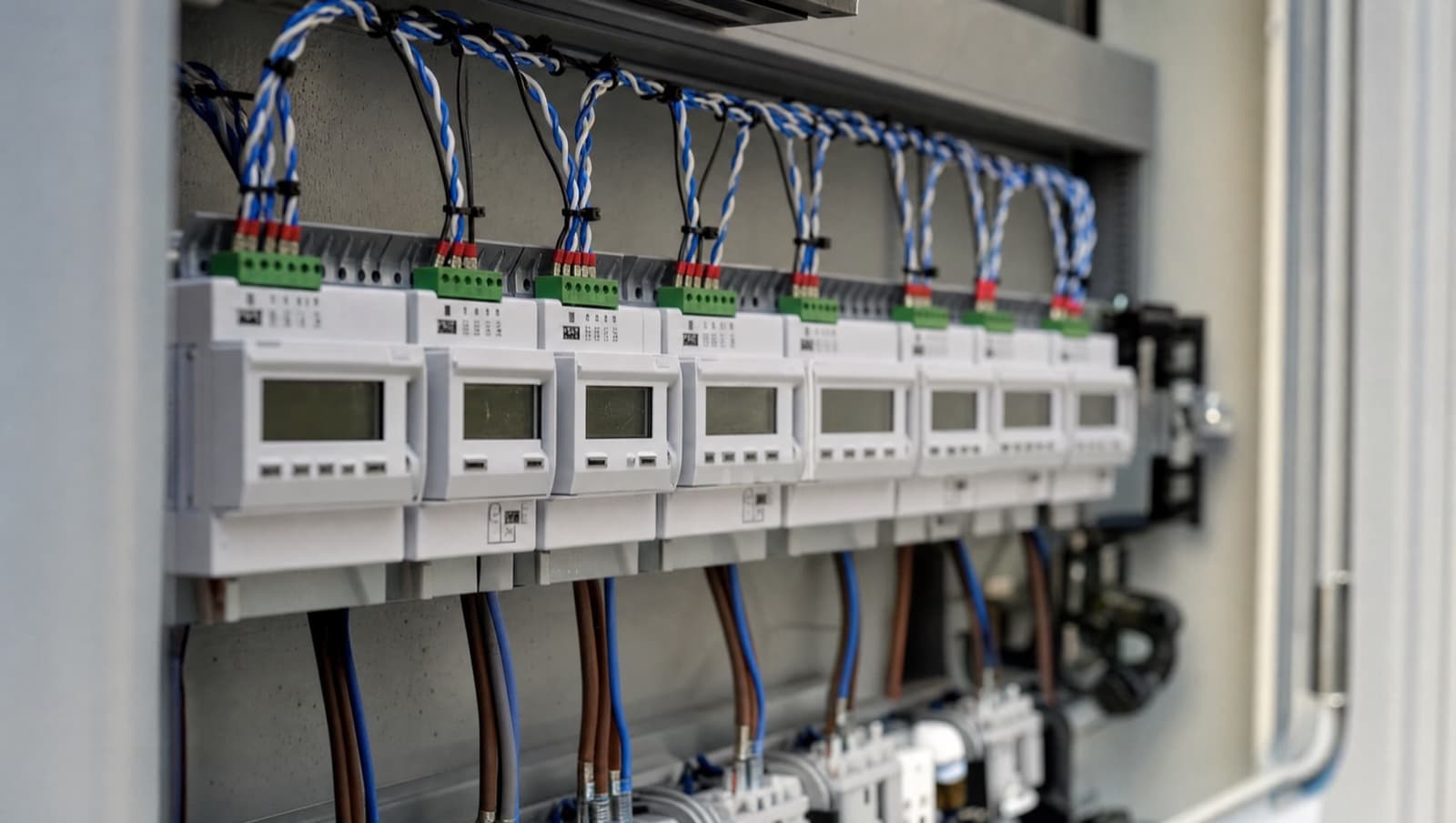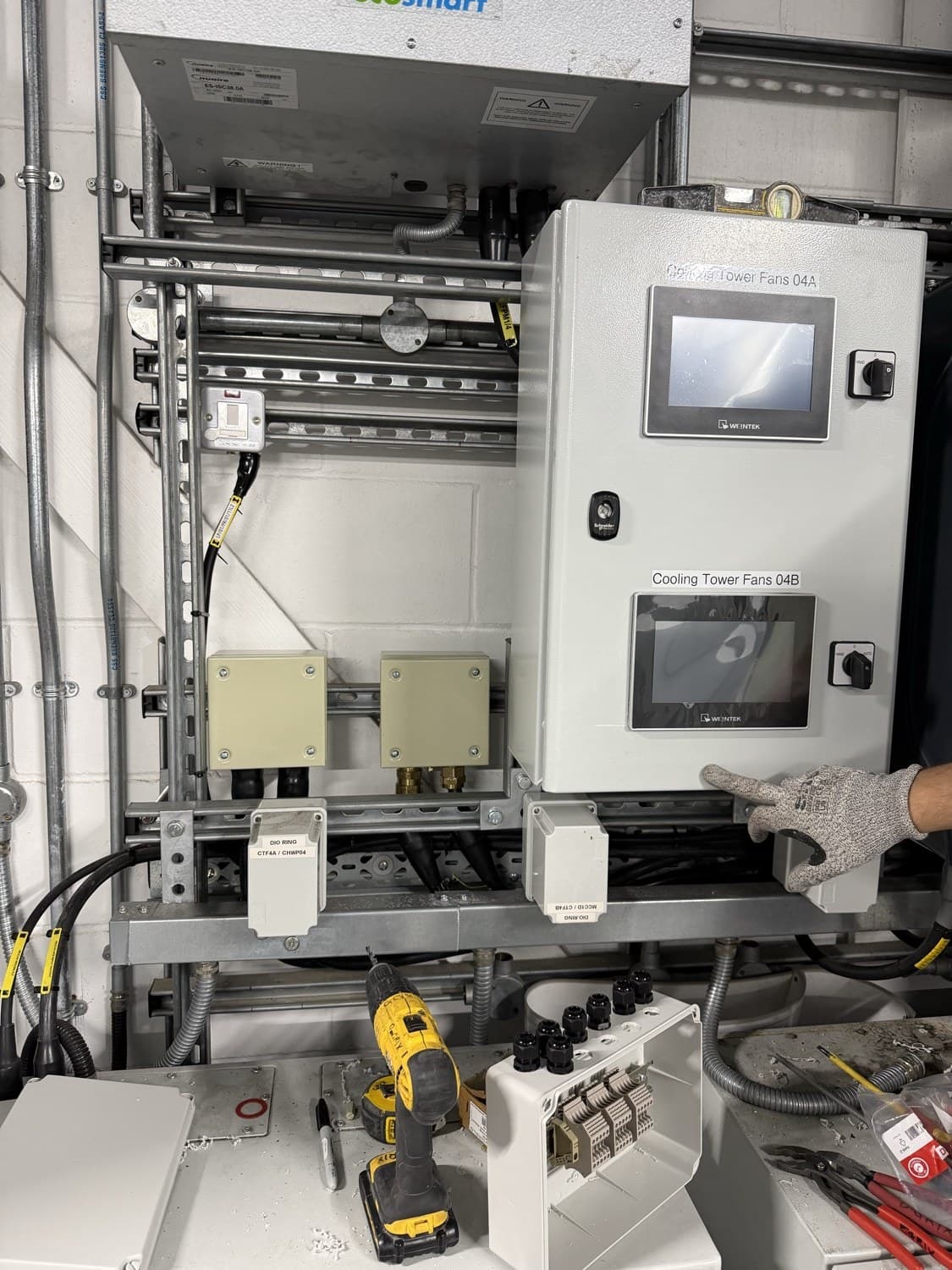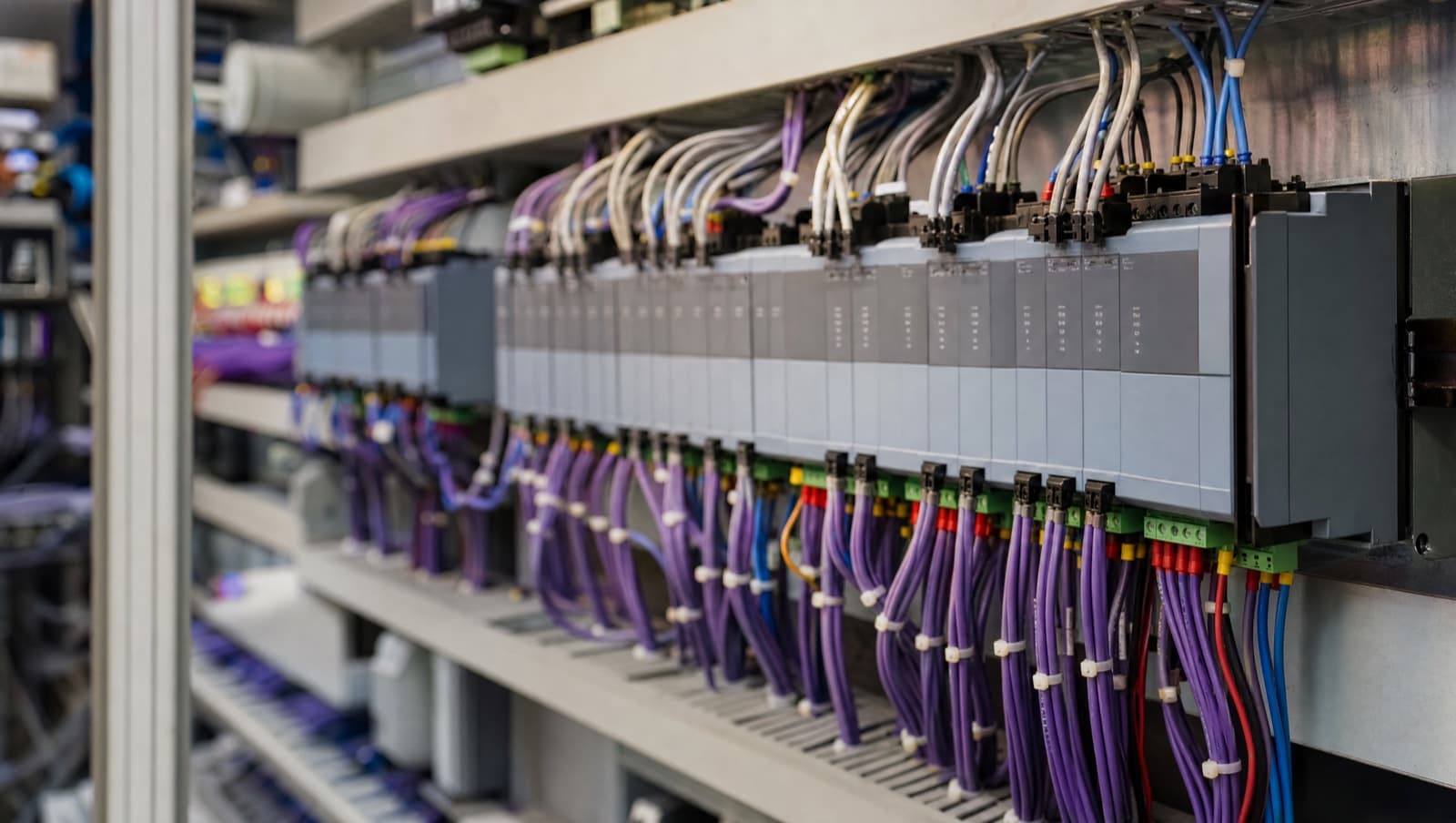

BACnet (Building Automation and Control Networks) is the open protocol that lets controllers from different manufacturers share data on one building automation network. When a BACnet network drops devices or shows stale graphics, the cause is usually wiring, addressing, or broadcast configuration. Alpha Controls installs, commissions and troubleshoots BACnet across London and Kent.
Your BACnet network is dropping devices, the graphics show stale data, and the last contractor said the wiring was fine. You have spent months chasing intermittent communication faults, the building is running on manual overrides, and every callout ends with the same answer: "it must be a software issue." Meanwhile, tenants are complaining about comfort, energy bills are climbing, and nobody can tell you what is actually wrong with the network.
This is the reality for hundreds of commercial buildings across London and Kent. BACnet is the backbone of modern building automation, but when it goes wrong — and it does go wrong — you need an installer who understands the protocol at a diagnostic level, not just someone who can plug in a controller and hope for the best.
Alpha Controls is a specialist BACnet installer based in Kent, covering London and the South East. We install, commission, troubleshoot, and maintain BACnet networks in commercial offices, healthcare facilities, data centres, education buildings, and multi-tenant developments. This guide covers the real BACnet problems we encounter on site every week, and how we solve them.
What Is BACnet and Why Does It Matter for Your Building?
BACnet — Building Automation and Control Networks — is an open communication protocol standardised under BS EN ISO 16484-5 internationally and ASHRAE Standard 135 in North America. It was developed specifically for building automation, unlike industrial protocols adapted for building use.
Before BACnet became the industry standard, every BMS manufacturer used proprietary communication protocols. If you installed a Trend system, only Trend controllers could talk to each other. If you wanted to add a chiller from a different manufacturer, you needed expensive, bespoke gateways — or you were told it could not be done. BACnet changed this by defining a common language that all building automation equipment can speak, regardless of manufacturer.
BACnet defines standard object types — analogue inputs, binary outputs, schedules, trend logs, notification classes — that every compliant device must support. This means a Trend IQ4 controller can communicate with a Distech ECLYPSE controller, a Schneider SmartX controller, and a Siemens PXC controller on the same network, all exchanging data using the same protocol. For building owners and facilities managers, this eliminates vendor lock-in and gives you the freedom to choose the best equipment for each application.
The protocol is maintained by ASHRAE Standing Standard Project Committee 135 (SSPC 135) and administered by BACnet International. In the UK, compliance with BS EN ISO 16484-5 is referenced in CIBSE Guide H (Building Control Systems) as the recommended approach for open building automation.
BACnet IP or BACnet MS/TP: Which Network Type Should You Use?
BACnet supports multiple network types, but the two you will encounter in virtually every commercial building are BACnet IP and BACnet MS/TP.
BACnet IP
BACnet IP runs over standard Ethernet and TCP/IP networks. It operates at 100 Mbps or 1 Gbps, supports standard network infrastructure (managed switches, VLANs, fibre optic backbone), and allows BACnet devices to communicate across an entire building or campus. BACnet IP is used for:
- Backbone communication between BMS supervisors and floor-level routers
- High-capacity controllers managing large point counts
- Multi-building campus networks
- Remote access and cloud connectivity
- Integration with IP-native devices and IoT platforms
The main operational consideration with BACnet IP is broadcast management. BACnet relies on broadcast messages (Who-Is, I-Am, COV notifications) for device discovery and real-time data exchange. On multi-subnet networks, a BACnet Broadcast Management Device (BBMD) must be configured on each subnet to forward broadcasts — without this, devices on different subnets cannot find each other.
BACnet MS/TP
BACnet MS/TP (Master-Slave/Token-Passing) runs over RS-485 serial cabling. It operates at speeds from 9600 bps to 76800 bps and is used for field-level communication between controllers within a plant room, riser, or floor. MS/TP is used for:
- Connecting field controllers (fan coil units, VAV boxes, plant room controllers)
- Low-cost device networks where Ethernet infrastructure is not justified
- Retrofit installations where RS-485 cabling already exists
- Equipment-level controllers with limited communication requirements
MS/TP uses a token-passing mechanism where each device takes turns to transmit, preventing collisions but adding latency as the number of devices increases. The maximum cable length is 1200 metres per trunk, and the practical device limit is 20-25 per trunk for reliable performance.
The Hybrid Approach
Most commercial BMS installations in London and Kent use a hybrid architecture: BACnet IP for the main network backbone connecting floors, plant rooms, and the supervisor, with BACnet MS/TP trunks serving groups of field controllers on each floor. A BACnet router bridges between the IP and MS/TP layers. Alpha Controls designs these hybrid networks for every new installation and upgrade project, balancing performance, cost, and future expandability.
What Are the Most Common BACnet Faults on Site?
After thousands of BACnet commissioning and troubleshooting visits across London and Kent, these are the five faults that account for the majority of BACnet communication problems. Every one of these comes from real site experience — these are the problems that forums, Reddit threads, and BMS engineer groups discuss constantly because they are so prevalent.
1. Reversed Polarity on MS/TP RS-485 Wiring
RS-485 uses differential signalling with two wires typically labelled A (or -) and B (or +). If the polarity is reversed at any single device on the trunk, that device corrupts data for every other device on the same bus. The frustrating part is that the reversed device may appear to work intermittently — it may respond to some polls and not others, creating the impression of a software or configuration fault rather than a simple wiring error.
Making matters worse, there is no universal standard for which terminal is positive and which is negative. Different manufacturers label their terminals differently — Trend uses A/B, some use +/-, others use D0/D1. Alpha Controls verifies polarity at every device on the trunk during commissioning, using an oscilloscope to confirm correct signal orientation rather than relying on terminal labels.
2. Missing or Incorrect Termination Resistors
Every RS-485 bus must have a 120 ohm termination resistor at each physical end of the cable — and only at the ends. Missing termination causes signal reflections that corrupt data. Extra termination resistors in the middle of the bus change the characteristic impedance and cause different problems. We regularly find trunks with no termination at all, or with termination at every device (because someone read that "termination is important" and applied it everywhere).
The correct installation is exactly two termination resistors per trunk: one at the device at each physical end of the daisy-chain. Alpha Controls installs and verifies termination on every MS/TP trunk we commission.
3. Duplicate Device Instance Numbers
Every BACnet device on a network must have a unique device instance number. If two devices share the same instance number, the network cannot distinguish between them — requests may be answered by either device randomly, causing data corruption, intermittent communication, and supervisor confusion. This typically happens when controllers are cloned from a template without updating the device instance, when replacement controllers are installed with default settings, or when two separate BMS installations are merged onto the same network.
Alpha Controls maintains a device instance registry for every site we manage, and we verify unique addressing as part of every commissioning and maintenance visit.
4. BBMD Misconfiguration
On multi-subnet BACnet IP networks, BBMD misconfiguration is responsible for a disproportionate number of communication faults. Common errors include: no BBMD configured at all (relying on broadcast which does not cross subnets); incomplete Broadcast Distribution Tables where not all BBMDs know about each other; incorrect subnet masks in the BDT entries; and BBMDs disabled during IT network changes without the BMS team being informed. The symptom is typically devices disappearing from the supervisor or failing to respond to commands, often affecting an entire floor or wing served by a specific subnet.
Alpha Controls configures BBMDs as part of every multi-subnet BACnet IP installation and documents the BDT configuration so it can be maintained when IT network changes occur.
5. Cable Specification and Routing Violations
MS/TP RS-485 requires shielded twisted-pair cable (typically Belden 9841 or equivalent), wired in strict daisy-chain topology. We frequently find: unshielded cable used to save cost; star or spur connections where multiple cables radiate from a single point rather than daisy-chaining; cables routed alongside or inside power cable trays, picking up electromagnetic interference; shield connections bonded at both ends creating ground loops; and Cat5e or Cat6 cable used instead of proper RS-485 cable. Any of these violations can cause intermittent faults that are extremely difficult to diagnose without an oscilloscope.
Get a Free BMS Survey
We'll assess your controls and provide a detailed quotation.
How Do You Integrate Modbus Devices into a BACnet BMS?
Very few commercial buildings run exclusively on BACnet. Energy meters, heat meters, variable speed drives, and packaged plant often use Modbus RTU or Modbus TCP. Integrating these into a BACnet BMS requires protocol gateways or controllers with built-in Modbus master capability.
Modern BMS controllers like the Trend IQ4 and Distech ECLYPSE include native Modbus master ports, allowing them to poll Modbus devices directly and present the data as BACnet objects on the BMS network. For larger integrations, standalone gateways from Intesis, HMS Anybus, or Contemporary Controls handle the protocol translation. The gateway reads Modbus registers and maps them to BACnet analogue input, analogue value, or binary input objects that the supervisor can read, trend, and alarm on.
Alpha Controls designs hybrid BACnet/Modbus networks for buildings where both protocols are present. We handle the register mapping, gateway configuration, data type conversion, and end-to-end commissioning. For more detail on Modbus integration, see our Modbus installation and troubleshooting guide.
What Is BACnet Secure Connect and When Do You Need It?
Traditional BACnet IP has no built-in security. Data travels in plaintext, there is no device authentication, and any device connected to the network can read or write to any other device. This was acceptable when BMS networks were physically isolated, but modern buildings increasingly share network infrastructure between BMS, IT, access control, and IoT systems — making unencrypted BACnet a cybersecurity risk.
BACnet Secure Connect (BACnet/SC), defined in Addendum bj to ASHRAE 135, addresses this with TLS 1.3 encryption and X.509 certificate-based mutual authentication. BACnet/SC runs over WebSocket connections on port 443, meaning it can traverse standard IT firewalls without requiring special rules or dedicated VLANs. Each device must present a valid certificate to join the network, preventing unauthorised devices from accessing the BMS.
BACnet/SC is particularly important for buildings subject to IEC 62443 (industrial automation security), NHS facilities following NHS Digital cybersecurity guidance, government buildings, and any organisation where the BMS network connects to corporate IT infrastructure. Alpha Controls specifies BACnet/SC-capable controllers for new installations where cybersecurity is a requirement, and advises on migration paths for existing BACnet IP networks.
Which Standards Govern BACnet Installation in the UK?
BACnet installation and commissioning in the UK should reference the following standards:
- BS EN ISO 16484-5 — the international standard for BACnet data communication protocol for building automation and control systems
- ASHRAE Standard 135 — the original BACnet standard, maintained by ASHRAE SSPC 135
- CIBSE Guide H — Building Control Systems, which references BACnet as the recommended open protocol for building automation
- IEC 62443 — Security for industrial automation and control systems, increasingly applied to BMS networks
- BS EN ISO 16484-3 — Data communication protocol for building automation, Part 3: functions
- BSRIA BG 11/2010 — Commissioning water systems and BG 30/2007 for pre-commissioning and commissioning code
Alpha Controls commissions all BACnet installations to these standards and provides documentation to demonstrate compliance.
How Do You Unify Multiple BMS Vendors onto One BACnet Network?
A 12-storey commercial office in Central London had accumulated three separate BMS systems over 15 years of phased refurbishments: Trend IQ3 controllers managing the original fan coil units on floors 1-4, Siemens PXC controllers installed during the floors 5-8 refit, and Distech ECLYPSE controllers on the newly refurbished floors 9-12. Each system had its own supervisor, its own schedule database, and its own alarm management. The facilities team had to check three separate screens to understand building status.
Alpha Controls designed a unified BACnet IP backbone connecting all three controller types. We installed BACnet routers to bridge the Trend IQ3 MS/TP trunks onto the IP network, configured BACnet IP communication between the Siemens and Distech controllers, and deployed a single Trend IQVISION supervisor (built on Niagara 4) as the unified front end. All three controller types now appear as native BACnet devices on a single network, with unified graphics, alarms, schedules, and trend logging. The facilities team has one screen instead of three, and any future controller additions — regardless of manufacturer — integrate seamlessly via BACnet.
Why Do You Need a BACnet Specialist Rather Than a General Electrician?
BACnet installation is not electrical work. It requires understanding of network architecture (IP subnets, VLANs, routing), serial communication (RS-485 signalling, termination, bias), protocol behaviour (device discovery, COV subscriptions, priority arrays), and diagnostic tools (Wireshark, BACnet explorers, oscilloscopes). A general electrician can install the physical cable, but they cannot diagnose why Device 103 drops off the network every Tuesday afternoon, or why the BBMD on subnet 3 is not forwarding I-Am responses to subnet 7.
Alpha Controls engineers carry BACnet protocol analysers, RS-485 oscilloscopes, and network diagnostic tools on every site visit. We do not guess at BACnet faults — we capture network traffic, analyse protocol behaviour, and identify root causes with evidence. This is the difference between a specialist BACnet installer and a contractor who happens to have installed a few controllers. Request a quote for a BACnet installation, integration, or network health assessment.
Frequently Asked Questions
How much does BACnet installation cost for a commercial building in Kent or London?
Costs depend on building size, the number of systems being integrated, and the existing infrastructure. A typical BACnet BMS installation for a medium commercial office (5,000-10,000 m²) with AHU control, fan coil units, and metering integration ranges from £80,000 to £250,000. BACnet network upgrades for existing buildings where controllers are retained but the network architecture is redesigned typically cost £15,000 to £60,000. Alpha Controls provides detailed fixed-price quotations based on site surveys.
Can you troubleshoot BACnet faults on a system you did not install?
Yes. Alpha Controls regularly diagnoses and resolves BACnet communication faults on systems installed by other contractors. We bring protocol analysers and diagnostic tools that allow us to assess the network objectively, regardless of who installed it. We provide a diagnostic report with findings, root causes, and costed recommendations.
What is the difference between BACnet and LON?
LON (LonWorks) is another open building automation protocol, but it has been largely superseded by BACnet in the UK market. BACnet offers better interoperability testing (BTL), wider manufacturer support, and native IP connectivity. Most new BMS installations in London and Kent specify BACnet. Alpha Controls can integrate existing LON devices into BACnet networks using protocol gateways.
How do we know if our BACnet network is healthy?
A healthy BACnet network has zero duplicate device instances, all MS/TP trunks properly terminated, no stale data in the supervisor, alarm routing working correctly, and all devices responding within expected timeframes. Alpha Controls provides BACnet network health assessments that test all of these parameters and provide a detailed report.
Can BACnet work over wireless networks?
BACnet IP can technically run over WiFi, but this is not recommended for production BMS networks due to latency variability, potential interference, and reliability concerns. For wireless sensor applications, Alpha Controls integrates wireless devices via BACnet gateways that provide the wireless-to-wired bridge while maintaining protocol reliability on the main network.
Do you provide BACnet training for facilities management teams?
Yes. Alpha Controls provides BACnet awareness training for FM teams covering network architecture, basic troubleshooting (identifying communication faults, checking device status), supervisor operation, and when to call for specialist support. Understanding the basics helps FM teams provide better fault reports and reduces unnecessary callouts.
Get In Touch
If you need a BACnet installer in Kent, London, or the South East — whether for a new installation, a multi-vendor integration, network troubleshooting, or an upgrade from a legacy system — contact Alpha Controls. Call us on 01474 552200, email info@alphacontrols.io, or visit alphacontrols.io. For commercial controls work in the capital, see our BMS installers in London page.
Related guides: Trend BMS Systems Complete Guide | Distech BMS Systems Guide | BMS Installers in Kent | Modbus Installers in London and Kent
Related service: Room pressure control and differential-pressure monitoring
External references: ASHRAE BACnet Resources | CIBSE Guide H
Alpha Controls
Specialist BMS installation, commissioning, and maintenance across London and the South East. SafeContractor Approved, BCIA Member.