
A BMS upgrade in Kent replaces the obsolete outstation controllers and supervisory software while retaining the existing field wiring and sensors, typically 70–90% of the original infrastructure. For a 2,000–5,000 m² commercial building, expect £30,000–£80,000 — far less than a full replacement, because the field devices are usually still functional.
There is a specific moment when a legacy BMS crosses the line from "old but functional" to "actively costing you money." It is not when the supervisor PC finally dies — that is too late. It is when the maintenance contractor starts charging premium rates for callouts because the parts are obsolete. When the FM team stops trusting the alarms because half of them are phantom. When the energy bills climb year on year because the optimisation routines were never updated for the building's current occupancy pattern. When the managing agent cannot produce the energy data that MEES requires because the trending system lost its database six months ago and nobody noticed.
In Kent, we see this transition happening right now on a large scale. The commercial buildings along the A2 corridor, the Dartford and Medway business parks, the schools and public buildings across the county — many were fitted with BMS systems in the late 1990s and early 2000s that are now 20–25 years old. Trend 963 and IQ2xx controllers, Satchwell MicroNet, Honeywell Excel 500, Johnson Controls DX9100 — all platforms that served their purpose but are now beyond economic repair. The question is not whether to upgrade, but how to do it without shutting the building down and without spending more than necessary.
What is the difference between a BMS upgrade and a BMS replacement?
A BMS upgrade is not the same as a BMS replacement, and the distinction determines the cost, the programme, and the level of disruption. A full replacement means stripping out every controller, every sensor, every actuator, and every metre of cable — starting from scratch. An upgrade means replacing the controllers and supervisory software while retaining as much of the existing field infrastructure as possible. In most Kent buildings, an upgrade is the right approach, because the field devices — temperature sensors, valve actuators, pressure transducers — are often still functional even when the controllers that read them are obsolete.
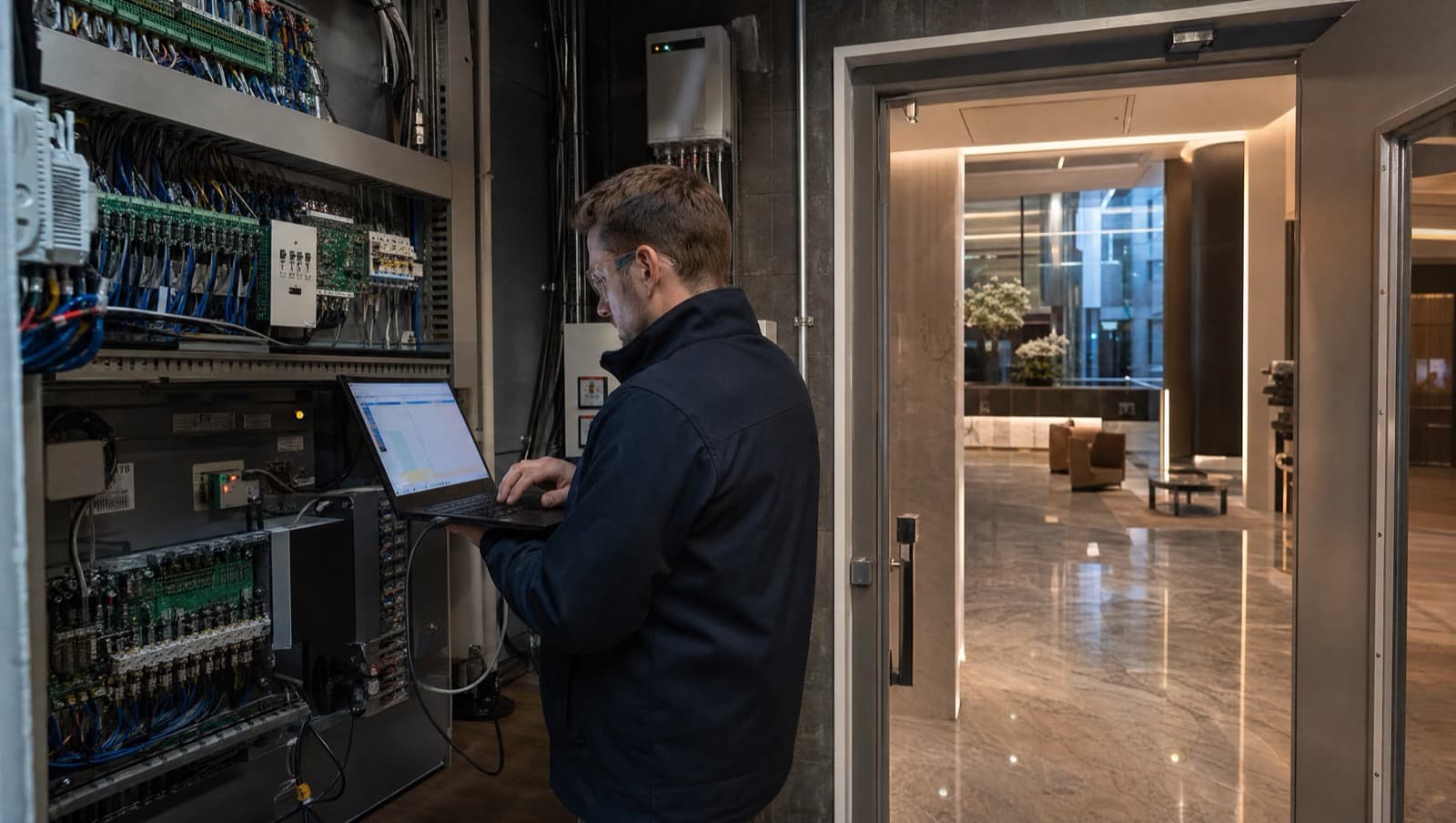
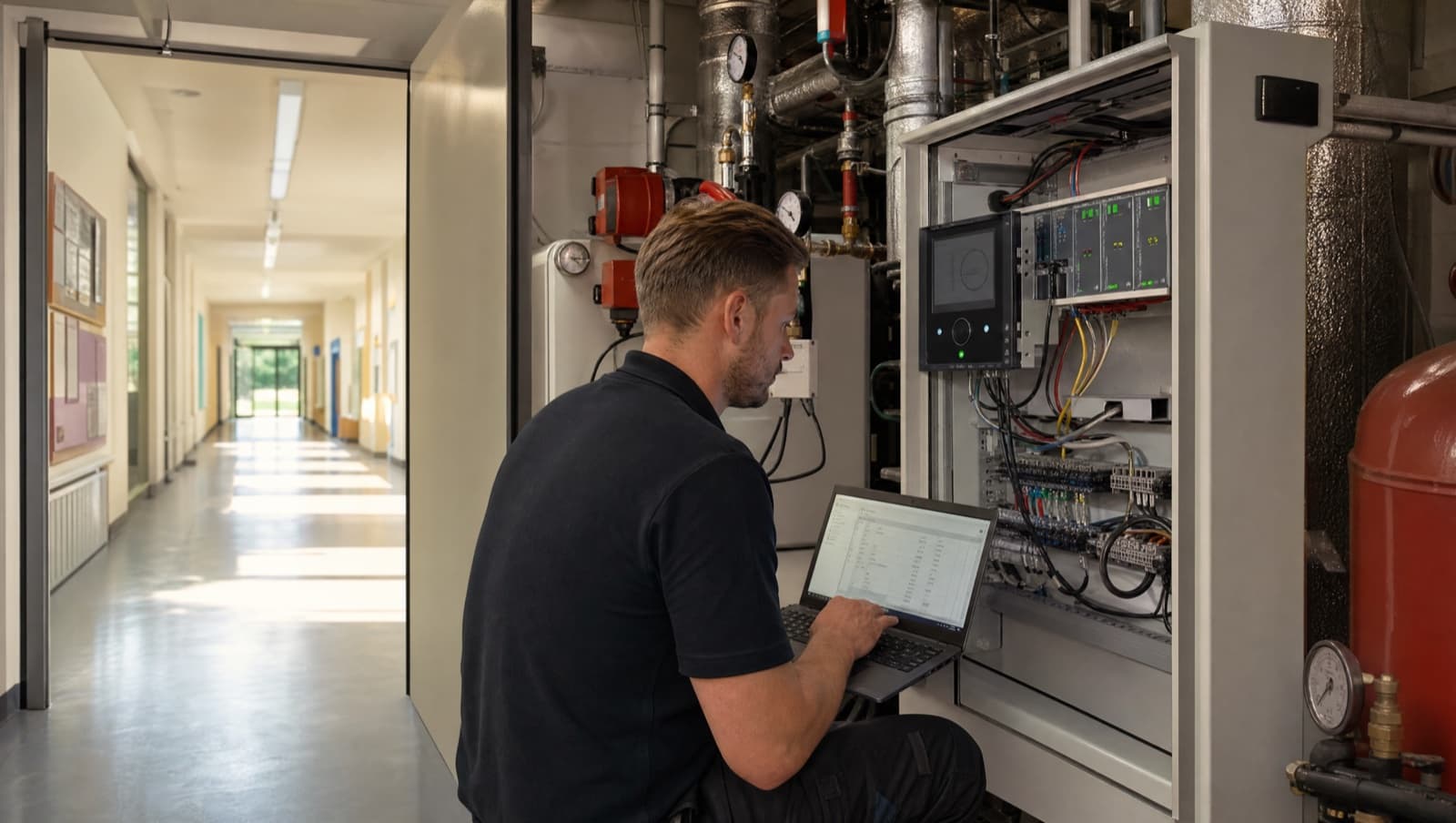
The typical BMS upgrade follows this pattern: replace the outstation controllers (the boxes in the plant room that process I/O and run control sequences) with modern equivalents, retain and re-terminate the existing field wiring where it meets current standards, replace any field devices that are faulty or out of specification, install a new supervisory platform with modern trending, alarming, and remote access capability, and recommission every control loop against the current building operating profile — not the original design intent from 1998.
That last point is critical. When a building was originally commissioned, it was set up for the design occupancy, the design plant loading, and the design schedules. Twenty years later, the occupancy pattern has changed, floors have been reconfigured, plant has been added or removed, and the building operates differently. Recommissioning to the original settings is a waste of time. The upgrade is an opportunity to commission the system for how the building actually operates today — and that requires a controls engineer who understands building physics, not just someone who can wire a controller.
Which legacy BMS platforms get upgraded in Kent?
The platforms we most frequently upgrade in Kent buildings are Trend, Satchwell, and Honeywell, each with its own upgrade path:
Trend 963 and IQ2xx series. These were the workhorses of UK commercial BMS from the late 1990s through the mid-2000s. The controllers themselves are reliable — we still find 963 outstations running after 20+ years — but the supervisory software (Trend 963 Supervisor, IQ Vision) runs on Windows XP or Windows 7, neither of which receives security patches. The controllers use a proprietary serial protocol that cannot be bridged to modern IP networks without gateway hardware. And spare parts — particularly PSU boards and analogue input modules — are increasingly difficult to source. The upgrade path is Trend IQ4, which uses the same field wiring standards and can often reuse existing sensor and actuator connections with minimal re-termination.
Satchwell MicroNet. Schneider Electric discontinued active support for MicroNet several years ago. The controllers are still functional in many Kent buildings — particularly schools and public buildings that were built or refurbished under PFI contracts in the 2000s — but finding engineers who can programme them is increasingly difficult, and the proprietary communication protocol means they cannot integrate with modern systems. Upgrade options include Schneider's own EcoStruxure platform or, more commonly in our experience, a migration to Trend IQ4 or Distech ECLYPSE with new field controllers and retained field wiring.
Honeywell Excel 500 and Excel 5000. Still operational in many industrial and logistics buildings along the M2 and M20 corridors in Kent. The Excel 500 uses LON protocol, which remains viable but has a shrinking support ecosystem. The upgrade path depends on the building's requirements — Honeywell's own Niagara-based platform (now Tridium/Honeywell) or a migration to an open BACnet platform from Trend or Distech.
How much does a BMS upgrade cost in Kent?
A BMS upgrade costs significantly less than a full replacement because you are retaining the field infrastructure. For Kent buildings in 2026, typical pricing breaks down by the scale of the work. Before pricing any of it, the retain-or-strip question has to be settled; that is the subject of our BMS upgrade retrofit-or-replace decision guide.
A single plant room controller upgrade — replacing a 963 or equivalent outstation with a Trend IQ4, retaining field wiring, recommissioning — runs £6,000–£14,000 depending on I/O count and complexity.
A full-building BMS upgrade for a 2,000–5,000 m² commercial building, with all controllers replaced, a new supervisor, retained field devices, and full recommissioning, runs £30,000–£80,000. The range reflects the number of outstations, the condition of existing field wiring (if it needs replacing, costs increase), and the commissioning depth.
A phased multi-year upgrade for a larger building or campus spreads the cost across two or three financial years, upgrading plant rooms or floors in sequence: the total cost is similar but the annual outlay is manageable. We design phased programmes so that each phase delivers a fully functional system — there is no point at which half the building is on the old system and half on the new with no communication between them. For a detailed UK-wide cost analysis, see our guide to BMS retrofit costs.
Get a Free BMS Survey
We'll assess your controls and provide a detailed quotation.
Which standards and regulations drive a BMS upgrade?
MEES (Minimum Energy Efficiency Standards). Under the June 2026 interim response, private rented commercial buildings over 1,000 m² are expected to reach EPC B by 2031 — the previously proposed 2027 Band C deadline was dropped, but the direction is settled. Many Kent commercial buildings currently rated D or E will need to demonstrate improved energy performance. A modern BMS with proper optimisation, trending, and demand-controlled ventilation is one of the most cost-effective measures for improving an EPC rating — CIBSE research suggests that BMS recommissioning and optimisation alone can improve energy performance by 15–30% without any physical plant changes. For a deeper look at the MEES deadline and what it means for BMS, see our article on MEES and BMS upgrades.
CIBSE Guide F: Energy Efficiency in Buildings (2012, under revision). Guide F establishes energy benchmarks for different building types and requires that BMS systems include sub-metering of major energy consumers, trend logging with a minimum 12-month retention, and alarm management that highlights energy waste. A legacy BMS that cannot trend or sub-meter does not meet Guide F requirements — and increasingly, building owners are being asked to demonstrate Guide F compliance as part of BREEAM assessments, corporate sustainability reporting, and tenant lease negotiations.
BS EN ISO 16484-5: BACnet. Any BMS upgrade should result in a system that communicates using the BACnet open protocol. This is not optional — it is the difference between a system that can be maintained by any competent BMS contractor and one that locks you into a single vendor for the life of the installation. The legacy platforms we replace — Trend 963 serial, Satchwell MicroNet, Honeywell LON — all use proprietary or niche protocols that limit your choice of maintenance contractor. BACnet compliance per CIBSE and BSRIA recommendations gives you freedom.
What does a real BMS upgrade look like? Maidstone school campus
A secondary school campus in the Maidstone area had a Satchwell MicroNet BMS installed during a PFI refurbishment in 2004. By 2024, the system was effectively unmanageable — the building manager could not access the supervisor (the PC had failed and the software licence was tied to it), the heating schedules were running on hardwired timeclocks that had been installed as a workaround, and the boiler plant was running 24/7 in heating season because the optimiser had been bypassed. Gas consumption was 40% above the DEC benchmark for a building of that size.
We upgraded the controllers to Trend IQ4, installed a cloud-accessible supervisor (Trend IQ Vision), and retained all existing field wiring and sensors after testing. The entire upgrade was completed during the summer holiday — six weeks — and the school returned to full operation in September with a fully commissioned system. Gas consumption in the first heating season dropped by 32%, saving the school approximately £18,000 per year against the previous winter's bills. The payback period on the £52,000 upgrade was under three years. For more on school BMS upgrades and funding options, see our article on school BMS upgrade costs and funding.
What does a good BMS look like after an upgrade?
A properly upgraded BMS should deliver immediate, measurable improvements. Temperatures should be stable without manual intervention. The optimiser should be bringing plant on at the right time — not two hours early "just in case." Energy consumption should be trending downward from the first month. Alarms should be meaningful — a dozen per week that each require attention, not hundreds per day that get ignored. Remote access should work reliably, allowing the FM team or maintenance contractor to check building status without a site visit.
The upgrade should also deliver a modern platform that is supportable for the next 15–20 years. That means IP-based communication (not legacy serial), a supervisory system that runs on current operating systems, open protocol interoperability (BACnet), and a support ecosystem with multiple contractors who can maintain it. Our article on signs your BMS needs recommissioning covers the operational indicators that distinguish a well-commissioned system from one that is merely installed.
When should you upgrade a legacy BMS instead of repairing it?
If your BMS is more than 15 years old and you are experiencing any of the following — rising energy bills with no change in occupancy, increasing callout frequency, difficulty sourcing spare parts, inability to produce energy reports, or tenant comfort complaints that reactive maintenance cannot resolve — it is time for an upgrade, not another repair. The longer you wait, the more you spend on reactive maintenance for a system that will never improve.
Alpha Controls provides BMS upgrade services across Kent — from single controller replacements to full campus migration programmes. We upgrade Trend 963, Satchwell MicroNet, Honeywell Excel, and Johnson Controls legacy systems to modern BACnet-compliant platforms. Request a free survey or call 01474 552200 to discuss your upgrade requirements.
Frequently Asked Questions
Can you upgrade my BMS without replacing all the sensors and wiring?
In most cases, yes. Field wiring and sensors are typically the longest-lasting components of a BMS installation. We test all existing field devices during the survey and retain everything that meets specification — typically 70–90% of the original field infrastructure. This significantly reduces both cost and disruption.
How long does a BMS upgrade take?
A single plant room: two to four weeks. A full-building upgrade for a 2,000–5,000 m² building: eight to sixteen weeks. Schools and education buildings are typically upgraded during the summer holiday period.
What happens to my existing BMS data when you upgrade?
We export all available trend data and alarm history from the legacy system before decommissioning. This data is imported into the new supervisor where format compatibility allows, or archived as CSV files for reference. The new system begins trending from day one of commissioning.
Can I phase the upgrade across multiple financial years?
Yes — phased upgrades are common, particularly for larger buildings and campus sites. We design each phase to deliver a fully functional system, so there is no period where the building operates without adequate controls. Typical phasing is by plant room or by floor, with each phase taking four to eight weeks.
Will a BMS upgrade improve my EPC rating?
A modern BMS with proper optimisation typically contributes a 15–30% improvement in energy performance, which can shift an EPC rating by one or two bands. The exact impact depends on the building's current rating and what other measures are in place, but BMS upgrade is consistently one of the most cost-effective measures for MEES compliance.
Alpha Controls Team
Specialist BMS installation, commissioning, and maintenance across London and the South East. SafeContractor Approved, BCIA Member.