
A London commercial building running a BMS more than 15 years old almost always needs upgrading, not just better maintenance. Legacy Trend 963, Satchwell MicroNet and Honeywell Excel platforms cannot deliver remote access, energy reporting or the energy performance that the MEES trajectory to EPC B by 2031 demands.
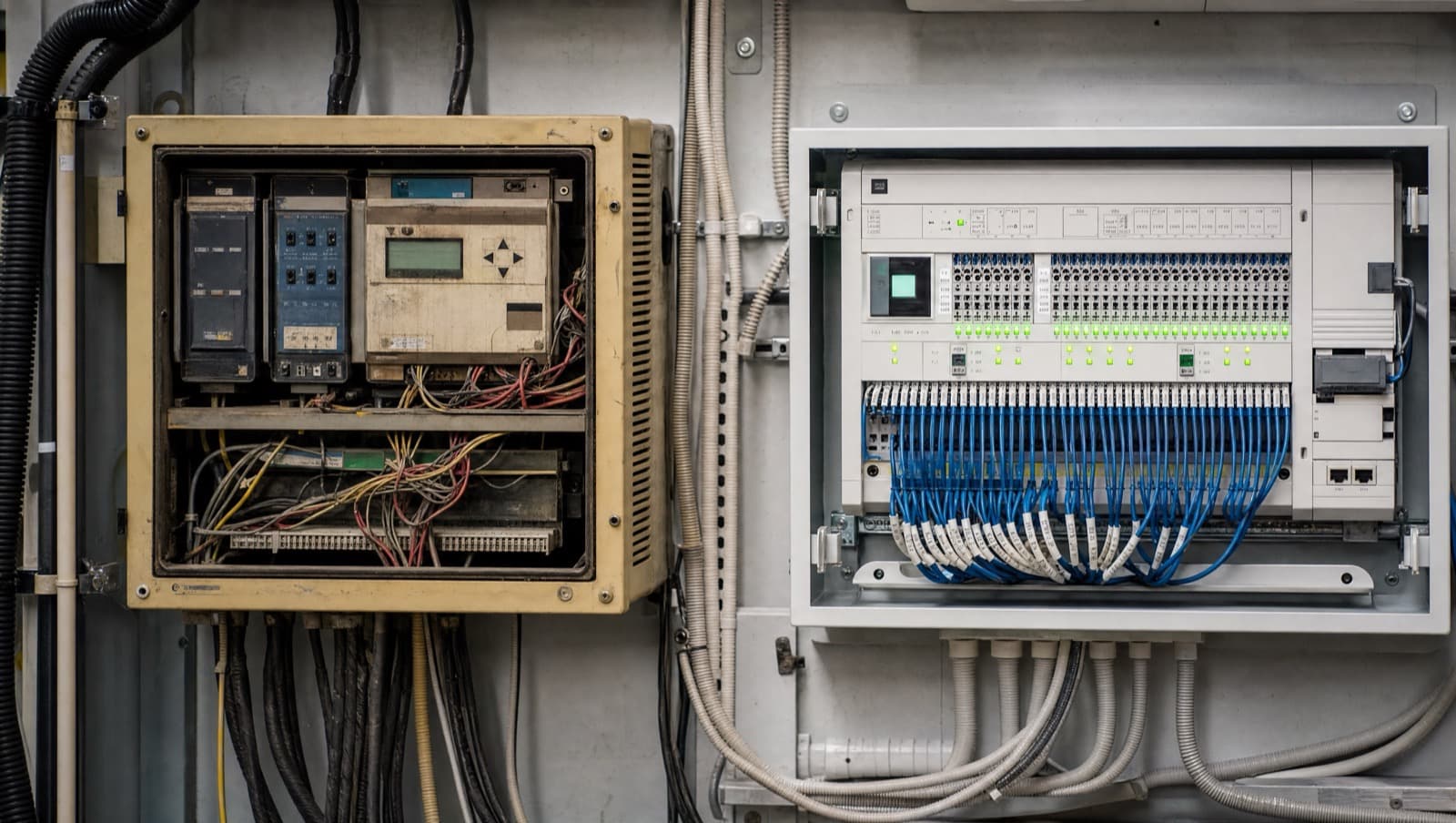
There are thousands of commercial buildings across London running BMS platforms that their maintenance contractors quietly dread. Trend 963 supervisory stations running on Windows XP machines hidden in comms rooms. Honeywell Excel 500 controllers that have not been reprogrammed since the building was handed over in 2003. Satchwell MicroNet systems where the only engineer who understood the configuration retired five years ago and took the knowledge with him. These are not hypothetical scenarios — they are real buildings that we are asked to survey every month, and the conversation always starts the same way: "We know the BMS is old, but we are not sure if we need an upgrade or just better maintenance."
The answer, almost without exception, is that the BMS needs upgrading — not because the hardware has failed catastrophically, but because the system is no longer capable of delivering what a modern London commercial building requires. The expectations have changed. Managing agents need remote access, trend data, energy reporting, and integration with smart building platforms. Tenants expect stable temperatures, good air quality, and verifiable sustainability credentials. The MEES trajectory confirmed in June 2026 points to EPC B by 2031 for larger buildings. And the insurance market is increasingly asking about BMS cybersecurity — a topic that legacy platforms cannot even address, because they were designed before IP connectivity existed.
Why does London's legacy BMS stock need upgrading now?
The timing pressure on BMS upgrades in London comes from three converging forces: regulatory compliance, commercial expectations, and the shrinking support ecosystem for legacy platforms.
MEES is the most immediate driver. Under the June 2026 interim response, private rented commercial buildings over 1,000 m² are expected to reach EPC B by 2031 — the proposed 2027 Band C deadline was dropped, but the direction of travel is settled. A significant proportion of London's commercial stock — particularly buildings constructed before 2010 — currently holds D or E ratings. A modern BMS with optimised control sequences, demand-controlled ventilation, and proper energy sub-metering is one of the most cost-effective routes to improving an EPC rating. CIBSE research and our own project data consistently show 15–30% energy performance improvements from BMS recommissioning and optimisation alone — enough to shift a borderline D to a solid C in many buildings. Our article on MEES and BMS upgrades covers this in detail.
Commercial expectations have shifted dramatically. Five years ago, a managing agent might accept a BMS that maintained temperatures and generated alarms. Today, the baseline expectation in Grade A London office space includes remote dashboard access, monthly energy performance reports, integration with tenant comfort apps, and demonstrable progress toward net zero carbon targets. A legacy BMS that cannot trend data, cannot export to cloud analytics platforms, and cannot integrate with occupancy sensors or smart lighting is a commercial liability — it affects the building's attractiveness to tenants and the achievable rental premium.
The support ecosystem is contracting. Trend discontinued the 963 platform years ago, and while third-party parts are still available, lead times are lengthening and prices are rising. Schneider Electric's support for Satchwell MicroNet is minimal. Honeywell's legacy Excel platforms are maintained by a shrinking pool of specialists. Every year that passes, the risk of an irreparable failure increases — and when it happens, the emergency replacement cost is three to five times what a planned upgrade would have been.
How much does a BMS upgrade cost in London?
London BMS upgrade costs reflect the same premium factors as new installations — labour rates, access constraints, and out-of-hours working — applied to a scope that is typically 40–60% less than a full replacement because existing field infrastructure is retained. Whether that reduced scope is the right call on a given building is a separate question — we set out when a BMS upgrade should be a retrofit and when it should be a replacement.
A single plant room controller upgrade in a London commercial building (Trend IQ4 replacing 963, retained field wiring, recommissioning): £8,000–£18,000. The range reflects access difficulty and whether the work can be done during normal hours.
A full-building BMS upgrade for a 5,000–10,000 m² London office — all controllers replaced, new supervisory platform, retained field devices, full recommissioning with energy performance verification: £50,000–£150,000. This is 30–50% less than a comparable new installation because the field infrastructure (sensors, actuators, cabling) is retained.
A phased upgrade across a multi-tenanted building — typically planned over two to three years, upgrading during tenant lease breaks or floor-by-floor during CAT A refurbishments: the total cost is similar, but the annual expenditure is manageable within a CAPEX budget. We design each phase to be independently functional, with BACnet gateways bridging the old and new systems during the transition period. For a comprehensive UK cost analysis, see our guide to BMS retrofit costs in the UK.
How do you upgrade a BMS without shutting the building down?
The biggest mistake building owners make with BMS upgrades in London is trying to do everything at once. A "big bang" upgrade — strip out the entire old system and install the new one in a single programme — works for empty buildings but is rarely practical for occupied London commercial stock. The alternative is phased migration, and the key to making it work is the gateway strategy.
A phased migration keeps the old supervisory system running while the new controllers are installed plant room by plant room or floor by floor. Each new Trend IQ4 or Distech ECLYPSE controller communicates with the new supervisor via BACnet IP, while a protocol gateway translates between the old serial network and the new IP network. This means the building operator has visibility of both old and new systems from a single interface throughout the migration. When all controllers have been replaced, the gateway is removed and the old supervisor is decommissioned.
The typical phased programme for a London multi-floor office:
Phase 1 (weeks 1–6): Central plant — boiler room, chiller plant, main AHU. This is the highest-impact phase because central plant controls affect the whole building. Work is typically done over two to three weekends, with the parallel system running during the week to verify stability.
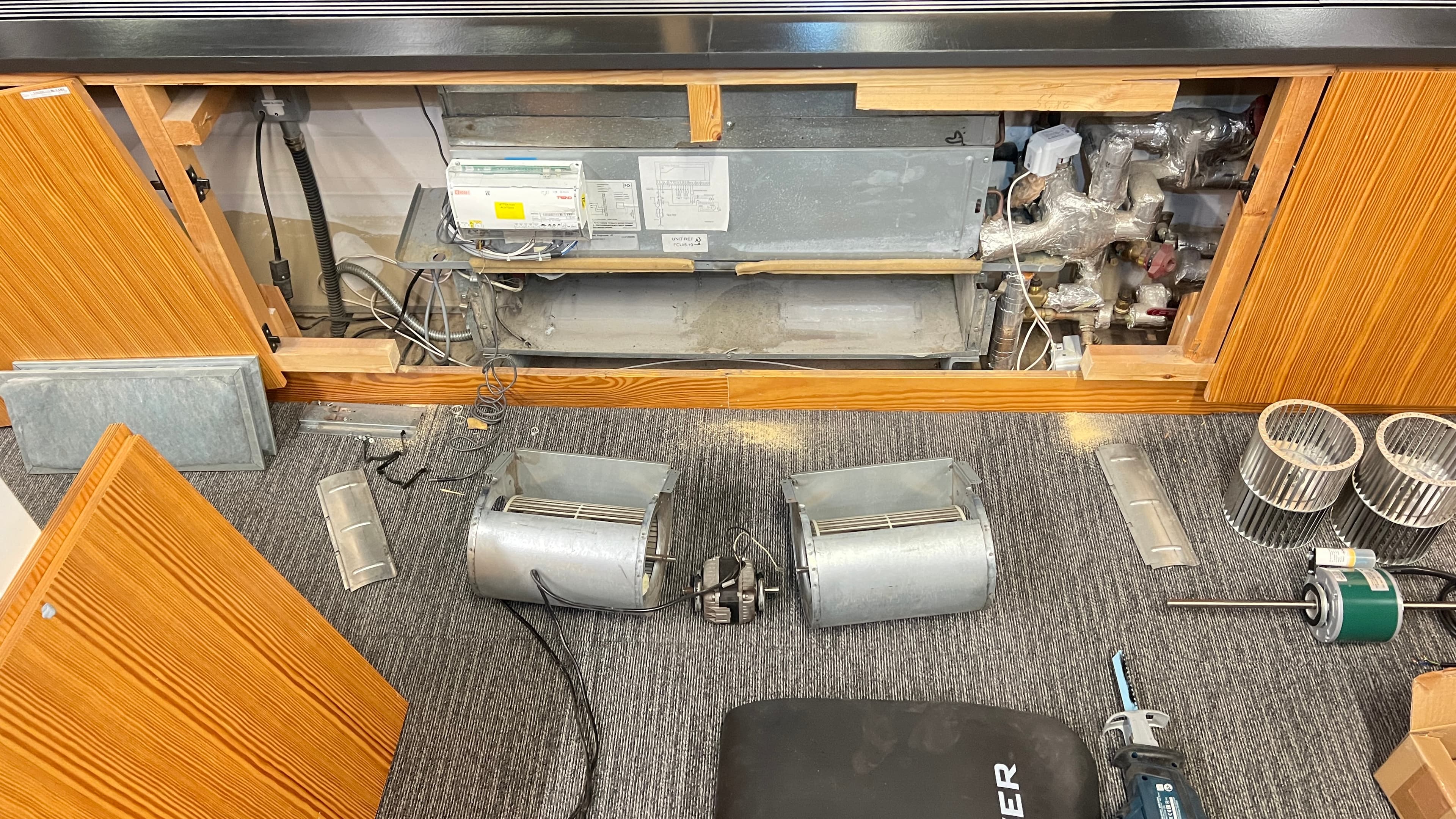
Phase 2 (weeks 8–16): Floor-by-floor FCU controls. Each floor is upgraded over a weekend, starting with any vacant floors for validation. The old and new FCU controllers coexist on different floors, with the gateway ensuring both appear on the supervisor.
Phase 3 (weeks 18–22): Metering, lighting integration, and supervisory optimisation. Once all field controllers are on the new platform, the supervisory software is configured for advanced functions — energy dashboards, BACnet schedule coordination, alarm management rationalisation, and integration with any third-party systems (fire, access, lighting).
Get a Free BMS Survey
We'll assess your controls and provide a detailed quotation with energy savings estimates.
Which standards apply to a London BMS upgrade?
BCO Guide to Specification (2023): The British Council for Offices specification for London commercial buildings requires BMS-integrated energy metering to sub-meter level per CIBSE TM39, trend logging with minimum 12-month retention, and remote access capability. Any BMS upgrade that does not deliver these capabilities is under-specified for the London commercial market.
BSRIA BG54/2023: Soft Landings applies to BMS upgrades as well as new installations. It requires a post-completion performance review at 1, 6, and 12 months after handover, with documented comparison between designed and actual energy performance. In London, managing agents increasingly make Soft Landings compliance a tender requirement for BMS upgrade contracts — meaning the contractor is accountable for the system's performance after handover, not just the installation quality.
For cybersecurity, the NCSC Cyber Assessment Framework (CAF) applies to any BMS with IP connectivity in buildings that fall within the scope of the Network and Information Systems (NIS) Regulations. This includes large commercial buildings classified as essential services infrastructure. The upgrade is the opportunity to implement proper network segregation, access control, and firmware update management — none of which exist on legacy serial-based systems.
What does a real portfolio BMS upgrade look like?
A major managing agent with a portfolio of six commercial buildings in the West End and Mayfair — totalling approximately 40,000 m² — engaged us to survey and upgrade the BMS across all six properties. Five of the six had Trend 963 systems installed between 2001 and 2008. The sixth had a Honeywell Excel 5000 system from 2005.
Rather than tendering each building individually, the managing agent wanted a portfolio approach — a single contractor, a consistent platform, and a phased programme that spread the capital expenditure across three financial years. We designed a migration programme that prioritised the buildings by MEES risk (the two with D ratings went first) and upgraded each building over a 10–14 week phased programme. The total portfolio investment was approximately £420,000, which sounds substantial until you compare it with the alternative: six separate tenders, six different contractors, inconsistent platforms, and reactive emergency replacements at £40,000–£60,000 each as the legacy systems failed.
The energy performance improvement across the portfolio averaged 24% in the first year — representing approximately £95,000 per year in reduced energy costs. The investment payback is under five years, and all six buildings now meet EPC C — comfortably clear of today’s Band E minimum and on the trajectory toward 2031’s Band B.
What does a good BMS look like after the upgrade?
The upgraded system should deliver everything the legacy system could not: stable temperatures with no manual intervention, meaningful alarms (not noise), remote access that actually works, energy trending and reporting to CIBSE TM39 standard, and a platform that any competent BMS contractor can maintain — not just the original installer. For more on what makes a BMS worth maintaining versus replacing, see our article on reactive versus planned BMS maintenance.
The managing agent should be able to access building performance data from their desk. The maintenance contractor should be able to diagnose faults remotely before dispatching an engineer. The building owner should have documented evidence of energy performance improvement for MEES compliance, EPC assessments, and sustainability reporting.
When should you upgrade an ageing BMS?
If your London commercial building has a BMS platform that is more than 15 years old, the upgrade decision is not really about the BMS — it is about the building's commercial viability. A building that cannot demonstrate energy performance, cannot provide tenant comfort data, and cannot keep pace with the MEES trajectory is a building that is losing value. The BMS upgrade is not just a maintenance expense — it is a capital investment that protects rental income and property value.
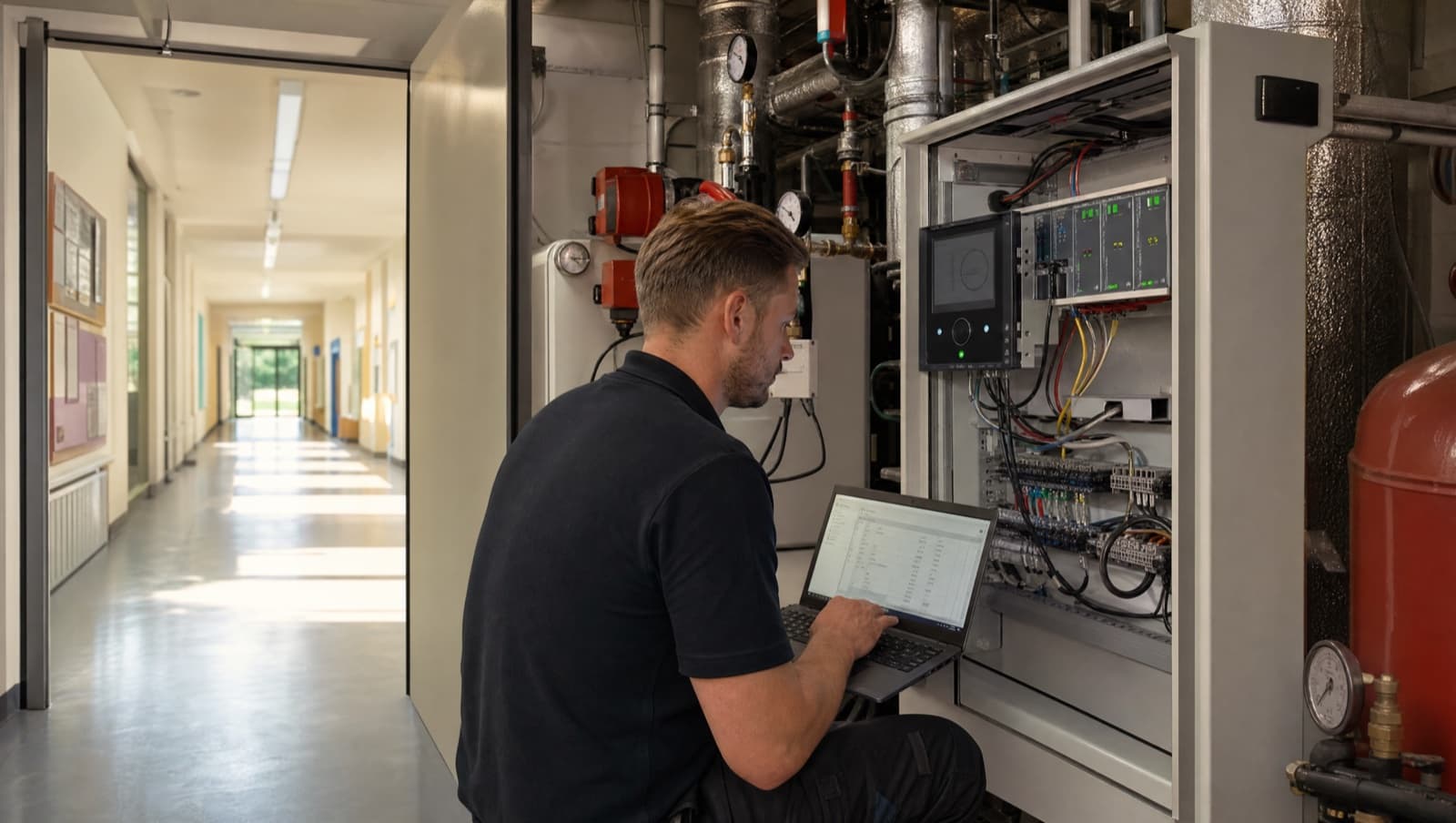
Alpha Controls provides BMS upgrade services across London — from single plant room controller replacements to multi-building portfolio migration programmes. We migrate Trend 963, Satchwell MicroNet, Honeywell Excel, and Johnson Controls legacy systems to modern BACnet-compliant platforms with minimal disruption to building operations. Request a free survey or call 01474 552200 to discuss your upgrade requirements.
Frequently Asked Questions
How much does a BMS upgrade cost in London?
A single plant room controller upgrade: £8,000–£18,000. A full-building upgrade for a 5,000–10,000 m² office: £50,000–£150,000. Phased programmes across multiple financial years are available for larger buildings or portfolios. London premiums of 30–50% over regional pricing reflect labour rates and access constraints.
Can you keep the building running during the upgrade?
Yes — phased migration with protocol gateways means the old and new systems coexist during the transition. Building services continue uninterrupted, and the operator has visibility of all systems from a single interface throughout. We have never had a building lose environmental control during an upgrade.
What happens to our existing maintenance contract during the upgrade?
We coordinate with your existing maintenance contractor during the transition. Once each phase is complete, the new system is covered under our maintenance terms or transitioned to your chosen contractor. The open BACnet protocol means you are not locked into any single maintenance provider.
Will the upgrade improve our EPC rating for MEES?
In most cases, yes. A modern BMS with optimised controls typically delivers 15–30% energy performance improvement, which can shift an EPC by one to two bands. We provide pre- and post-upgrade energy performance data to support the EPC reassessment. Five of our six buildings in a recent West End portfolio upgrade moved from D to C or better.
How long does a phased BMS upgrade take for a multi-floor London office?
A typical phased programme for a 10–15 floor building runs 18–24 weeks from mobilisation to final commissioning. Each floor is upgraded over a weekend, with central plant done first over two to three weekends. The parallel system ensures full building control throughout.
Alpha Controls Team
Specialist BMS installation, commissioning, and maintenance across London and the South East. SafeContractor Approved, BCIA Member.