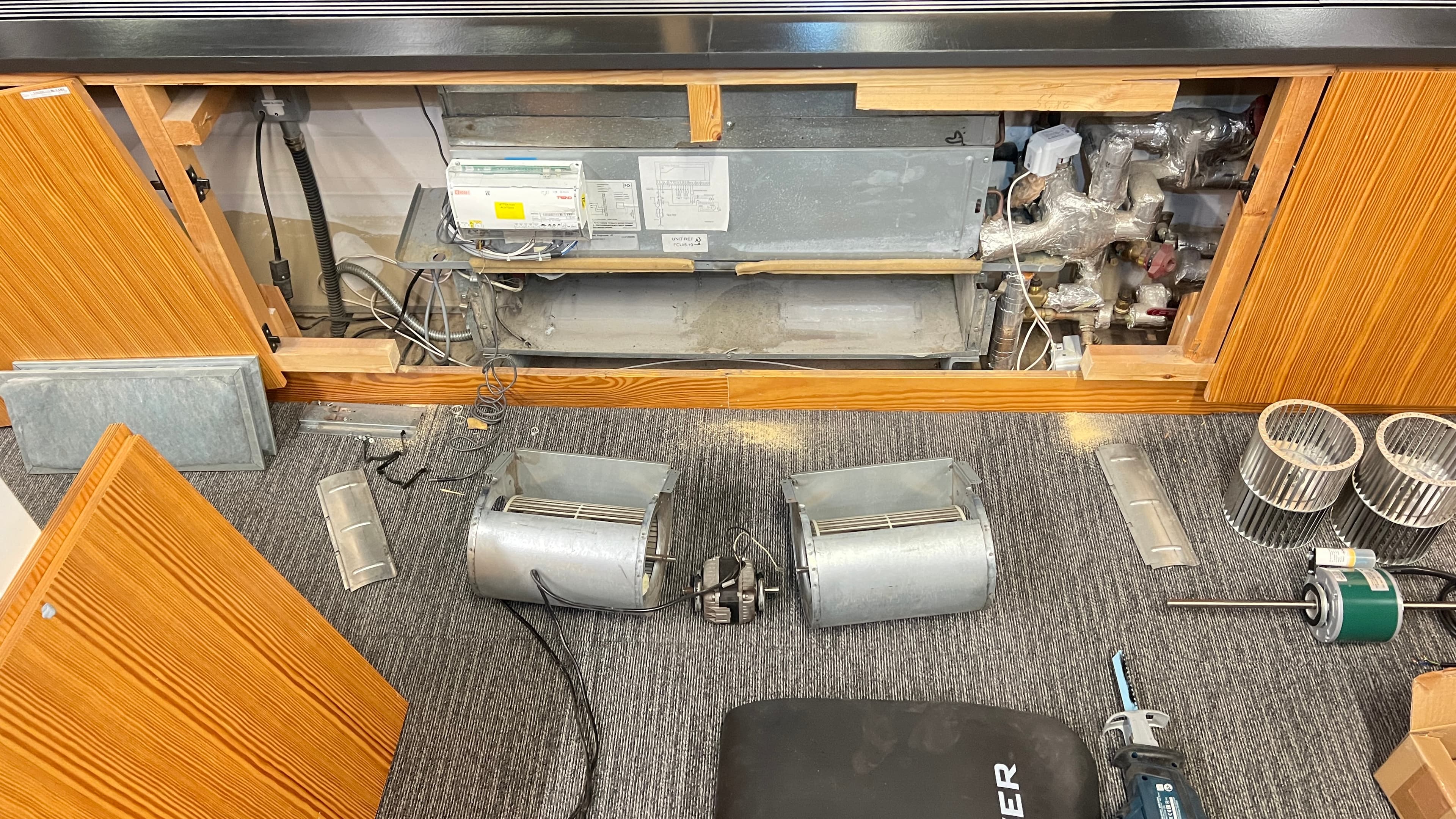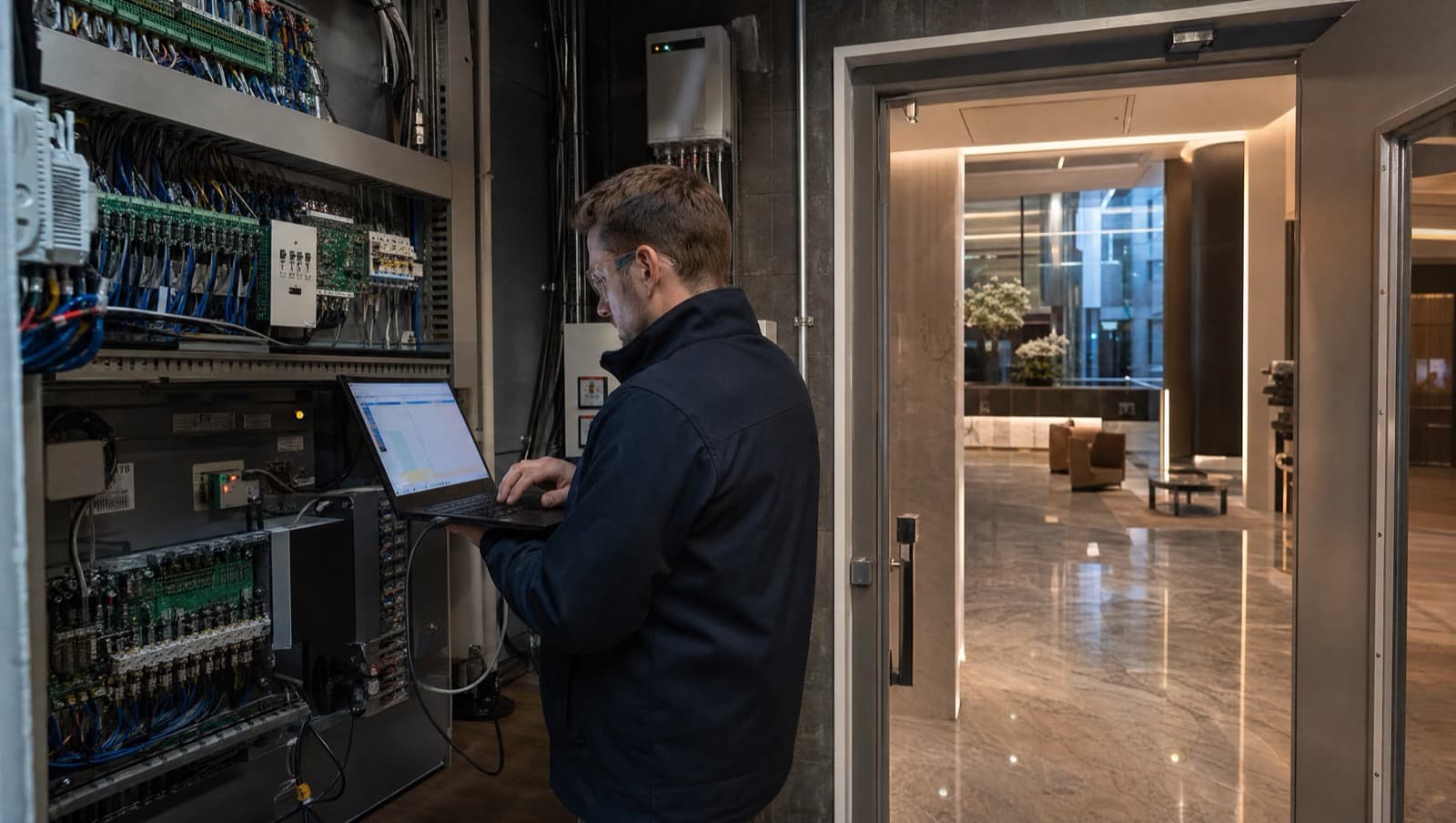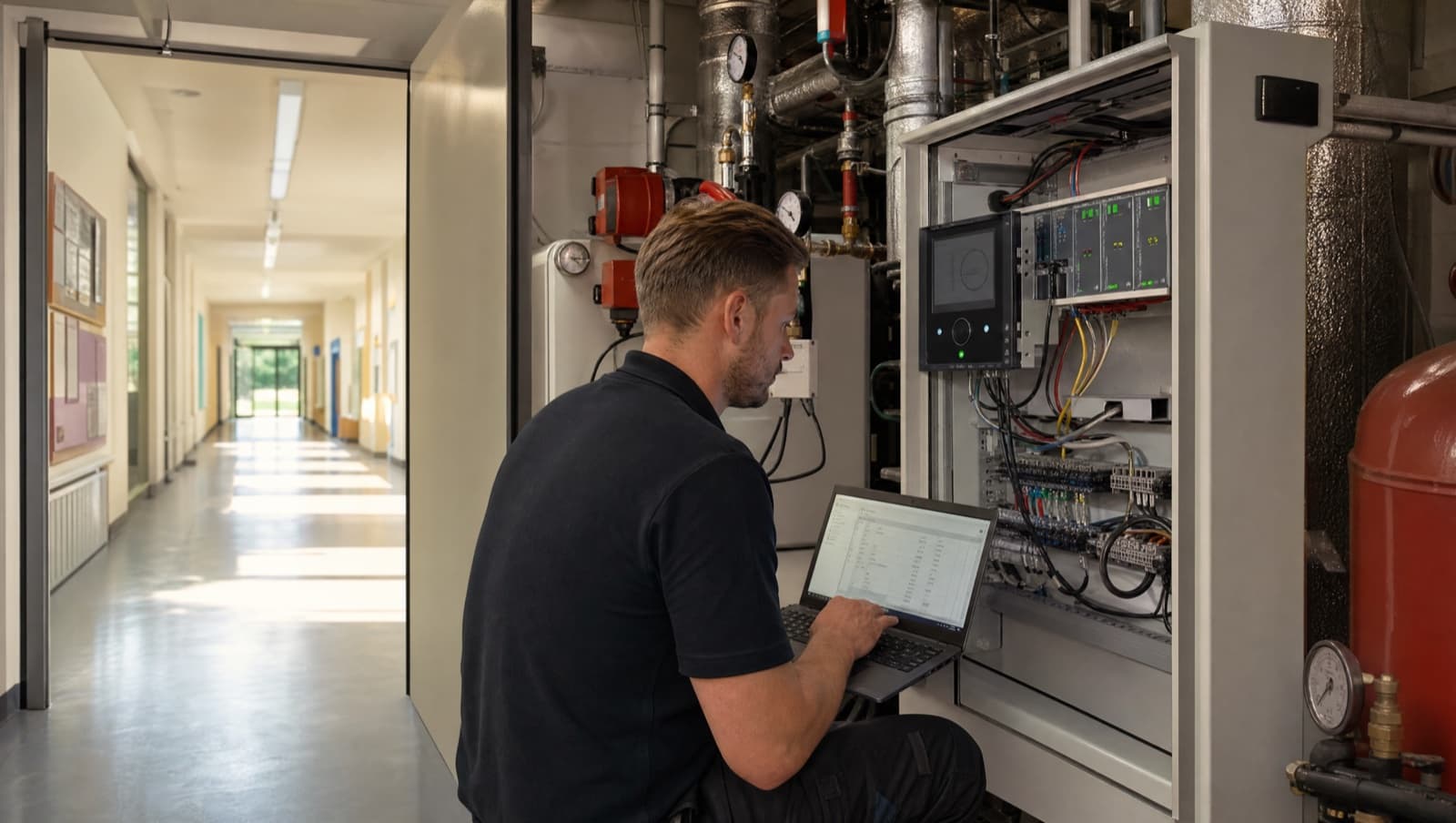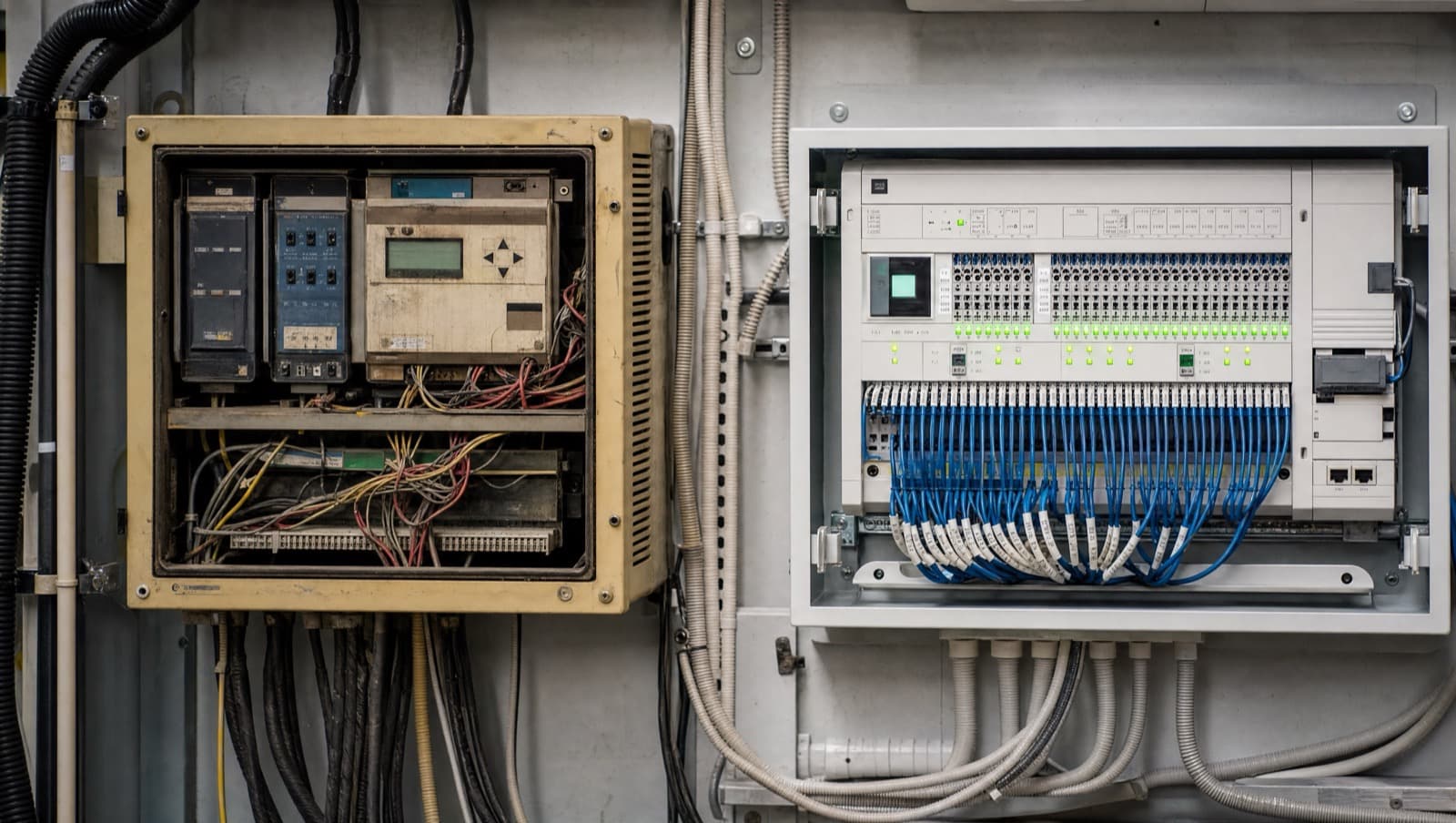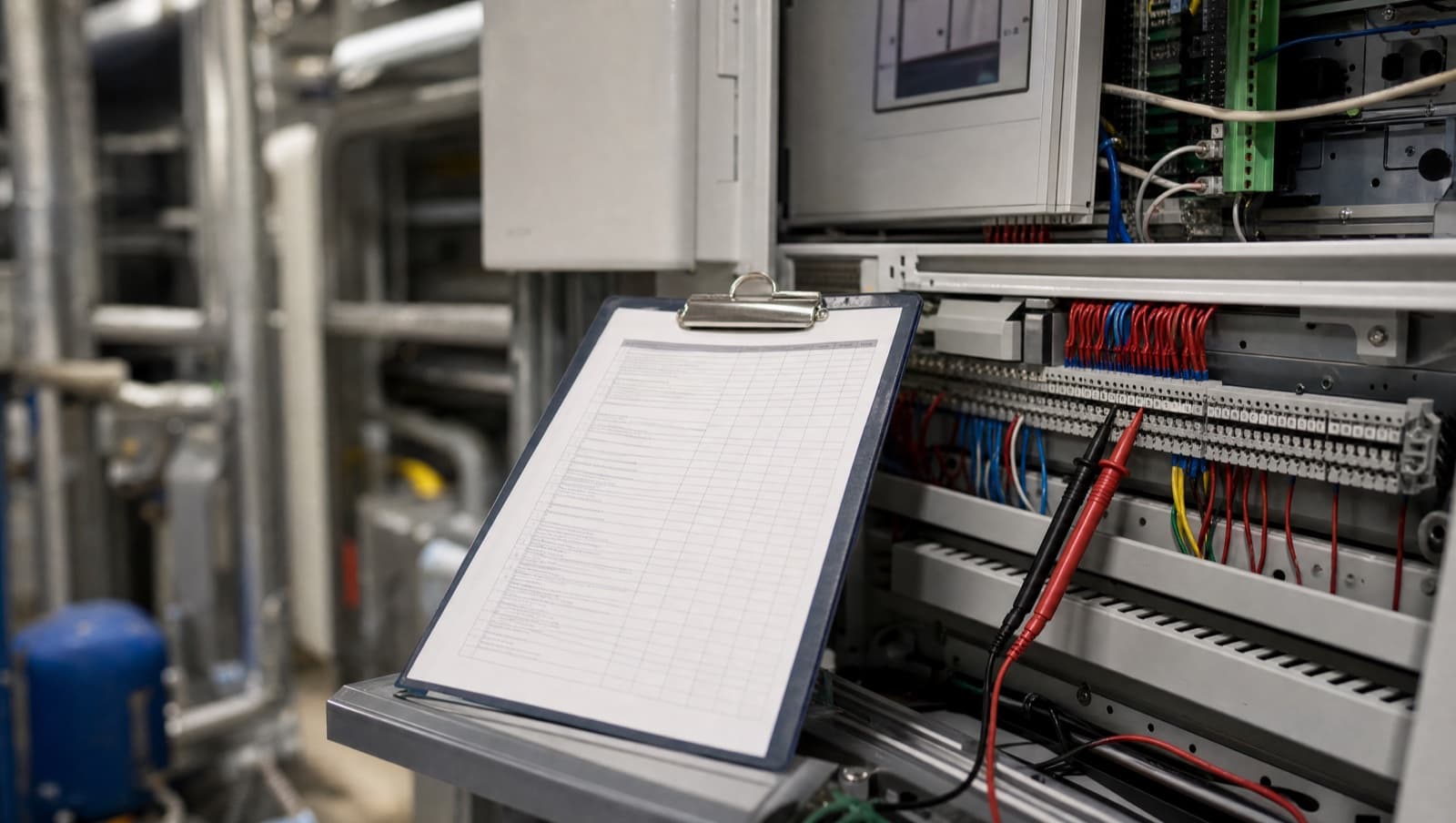

A BMS controller reaches end of life when the manufacturer withdraws spare boards, firmware support, and programming tools — typically 15 to 20 years after install. The unit may still run, but it cannot be repaired when it fails. Replacing it reactively after a failure costs 2-3x more than a planned upgrade.
A BMS controller does not announce its retirement. One morning the outstation serving your main boiler plant simply stops responding. The building goes cold. You call your BMS contractor and they tell you the processor board has failed — and the manufacturer stopped making replacement boards three years ago. The emergency upgrade that follows costs three times what a planned replacement would have cost, takes twice as long because the old controller has to be reverse-engineered before the new one can be programmed, and the building runs on manual control for weeks while it happens.
This is not a hypothetical scenario. Alpha Controls responds to emergency BMS failures caused by obsolete controller hardware every month. Every single one was preventable with a planned upgrade before the controller reached genuine end of life. This guide explains the warning signs, the migration options, and the realistic costs and timelines for replacing a BMS that has reached the end of its useful life. For specific guidance on Trend 963 controllers, see our dedicated article on Trend 963 end-of-life upgrades. For the IQ3 controller generation specifically, see our Trend IQ3 end-of-life guide.
How Long Does a BMS Controller Last?
BMS outstation controllers typically last 15 to 20 years before they become genuinely obsolete. That does not mean they fail at 15 years — many continue operating well beyond that. It means that spare parts, firmware support, and programming tools are withdrawn by the manufacturer, leaving you one hardware failure away from an emergency replacement. Sensors and actuators have shorter lives — typically 10 to 15 years for actuators, 7 to 12 years for temperature sensors, and 5 to 7 years for CO2 sensors. The BMS supervisor software may need upgrading every 5 to 10 years as operating system support changes.
The important distinction is between "still working" and "still supported." A controller that is still working but no longer supported is a risk, not an asset. It is a component that cannot be repaired when it fails, connected to a building that cannot be heated or cooled without it.
What Are the Warning Signs That a BMS Is Approaching End of Life?
The clearest warning signs are: your BMS contractor tells you that spare boards are no longer available from the manufacturer — this is the definitive end-of-life signal. The programming software for your controllers only runs on Windows XP or Windows 7, and the laptop that runs it is itself failing. Your BMS contractor is struggling to find engineers trained on your platform — the workforce has moved on to newer systems. Intermittent communication failures between outstations are becoming more frequent as ageing network cards deteriorate. The manufacturer has announced end-of-support for your controller range, even if your specific units are still working. You are paying premium prices for refurbished spare boards sourced from decommissioned buildings because new boards are no longer manufactured.
If two or more of these apply to your building, the upgrade conversation should happen now — not when the first board fails.
Which Controller Ranges Are at End of Life in 2026?
The most commonly encountered end-of-life controller ranges in UK commercial buildings are: Trend IQ1 and IQ2 series (replaced by IQ3, IQ4, and IQ5 — spares have been unavailable for years), Trend 963 (replaced by IQ4/IQ5 — see our Trend 963 upgrade guide), Honeywell Excel 500 and Excel 5000 (replaced by Niagara-based platforms), Siemens Unigyr and older Apogee (replaced by Desigo CC), Satchwell Sigma and MicroNet (brand absorbed into Schneider Electric), and TAC Xenta (now Schneider Electric SE8000 series). If your building has any of these controllers, they are either already at end of life or will reach it within the next few years.
Ready to discuss your building? Request a free BMS survey →
What Are the Migration Options for an End-of-Life BMS?
There are three main approaches to replacing an end-of-life BMS, each with different costs, timelines, and levels of disruption.
Option 1: Like-for-Like Platform Upgrade
Replace old controllers with the current generation from the same manufacturer. For example, Trend IQ2 to Trend IQ4, or Honeywell Excel to Honeywell Niagara. The advantage is that the engineering team already knows the platform, existing programming logic can often be migrated rather than rewritten from scratch, and the existing sensor and actuator wiring can typically be reused. The disadvantage is vendor lock-in — you remain dependent on a single manufacturer's pricing, support, and product roadmap.
Option 2: Open Protocol Migration
Replace legacy proprietary controllers with BACnet or Modbus-native controllers from any manufacturer. This breaks vendor lock-in and opens the field to competitive pricing on future additions and maintenance. The upfront cost is slightly higher because the control sequences must be programmed from scratch rather than migrated, but long-term maintenance costs are typically lower because any competent BMS contractor can service an open-protocol system. CIBSE Guide H recommends open protocols for new and upgraded BMS installations.
Option 3: Phased Hybrid Upgrade
Replace the most critical or most vulnerable controllers first while keeping the rest of the legacy system running. A BACnet or Modbus gateway bridges the new controllers to the old ones, allowing a single supervisor to monitor both. This spreads the capital cost over two to five years and maintains building control throughout the transition. Alpha Controls recommends this approach for most buildings because it balances cost, risk, and disruption. The key is to start with the controllers that serve the highest-risk plant — boilers, chillers, main AHUs — and leave secondary systems (car park ventilation, stairwell pressurisation) to later phases. End-of-life hardware forces the timing, not the strategy; for the strategy itself see the wider BMS upgrade decision: retrofit or replace.
How Much Does a BMS End-of-Life Upgrade Cost?
A full BMS replacement for a medium commercial building (10-20 outstation controllers, 500-1,000 I/O points) typically costs £80,000 to £200,000 depending on the complexity of the control sequences and whether existing wiring can be reused. A phased upgrade spreading the work over three years reduces the annual spend to £30,000 to £70,000 per phase. Emergency replacements — done reactively after a critical failure — cost 2-3x more than planned upgrades because of the additional reverse-engineering required and the premium pricing on urgent procurement and labour. For detailed cost breakdowns across different building sizes, see our BMS retrofit cost guide.
Can You Mix BMS Manufacturers in One Building?
Yes. BACnet and Modbus integration between manufacturers is mature and reliable in 2026. A building can run Trend controllers on the heating, Distech on the ventilation, and Siemens on the chiller plant — all visible on a single supervisor via BACnet/IP networking. This was not practical a decade ago, but open protocol support is now standard across all major manufacturers. Alpha Controls routinely integrates multi-vendor systems and has delivered projects combining Trend, Distech, Siemens, and Schneider controllers on the same network. For a detailed comparison of BMS communication protocols, see our article on BACnet vs Modbus for BMS.
How Do I Know If My BMS Controller Is End of Life?
Ask your BMS contractor whether spare processor boards are still available from the manufacturer. If the answer is no, the controller is at end of life. Other indicators: programming software only runs on obsolete operating systems, engineers trained on the platform are increasingly scarce, and the manufacturer has issued an end-of-support notice.
Can I Reuse Existing Wiring When Upgrading BMS Controllers?
In most cases, yes. Sensor and actuator wiring (typically 2-core or 4-core cable) is not controller-specific. As long as the cable is in good condition and correctly documented, it can be terminated on new controllers. This saves significant cost — rewiring is typically 30-40% of a full BMS installation cost.
How Long Does a BMS Controller Replacement Take?
Replacing a single outstation controller takes 2-5 days: one day for strip-out and installation, one to two days for termination and point-by-point commissioning, and one day for programming and testing. A full building replacement with 15 controllers takes 6-12 weeks depending on access constraints.
Should I Replace All Controllers at Once or Phase the Upgrade?
Phased upgrades are usually better for occupied buildings. Replace the controllers serving the highest-risk plant first (boilers, chillers, main AHUs), bridge new and old systems via BACnet/Modbus gateway, and tackle secondary systems in subsequent phases. This spreads cost and maintains building control throughout.
Alpha Controls specialises in BMS end-of-life upgrades across London, Kent, Essex, and the South East. We survey existing systems, specify the most cost-effective migration path, and deliver phased or full replacements with minimal disruption. For detailed guidance on planning a legacy system migration, see our guides to BMS upgrades in Kent and BMS upgrades in London. Request a free survey or call 01474 552200.