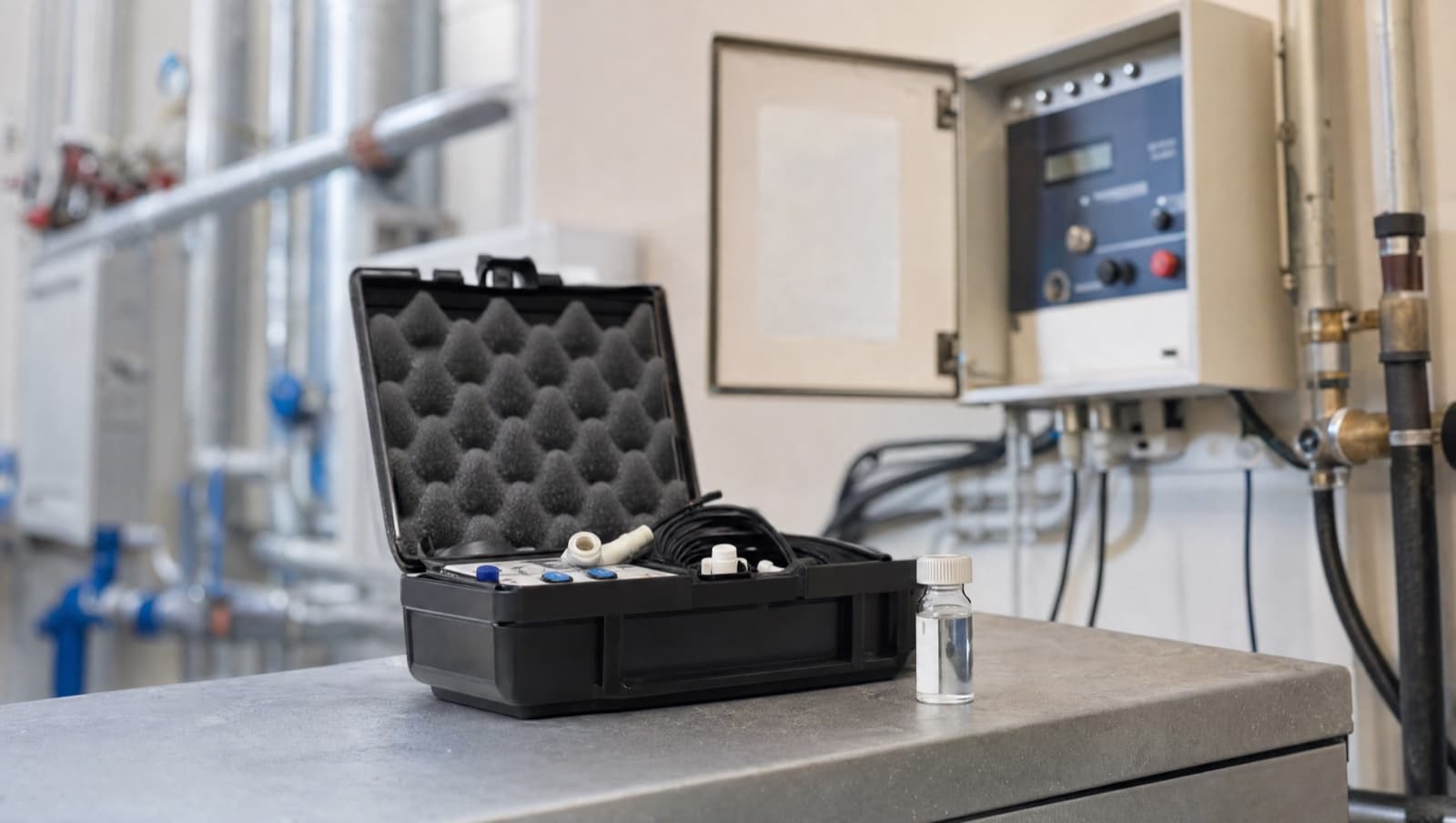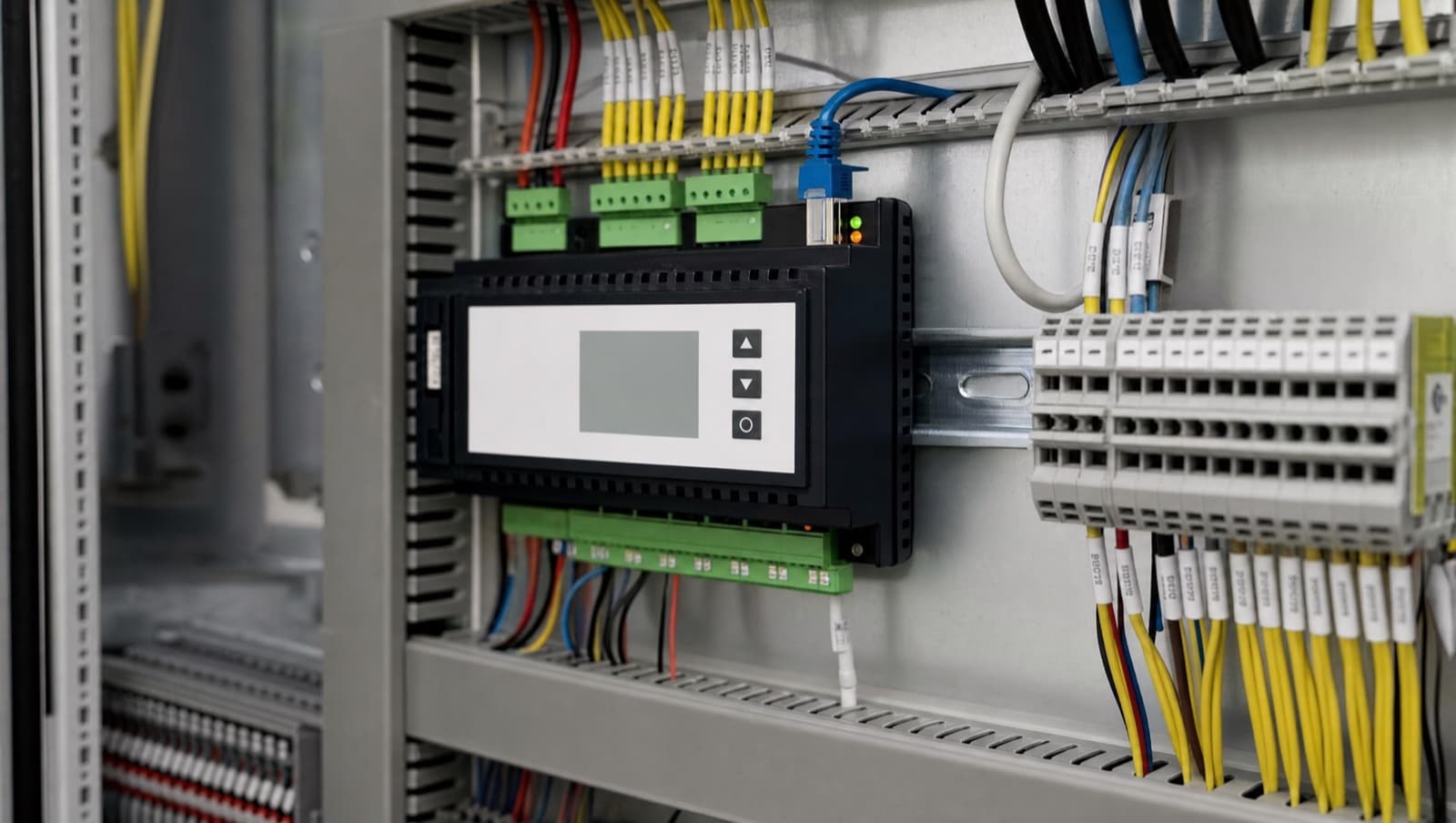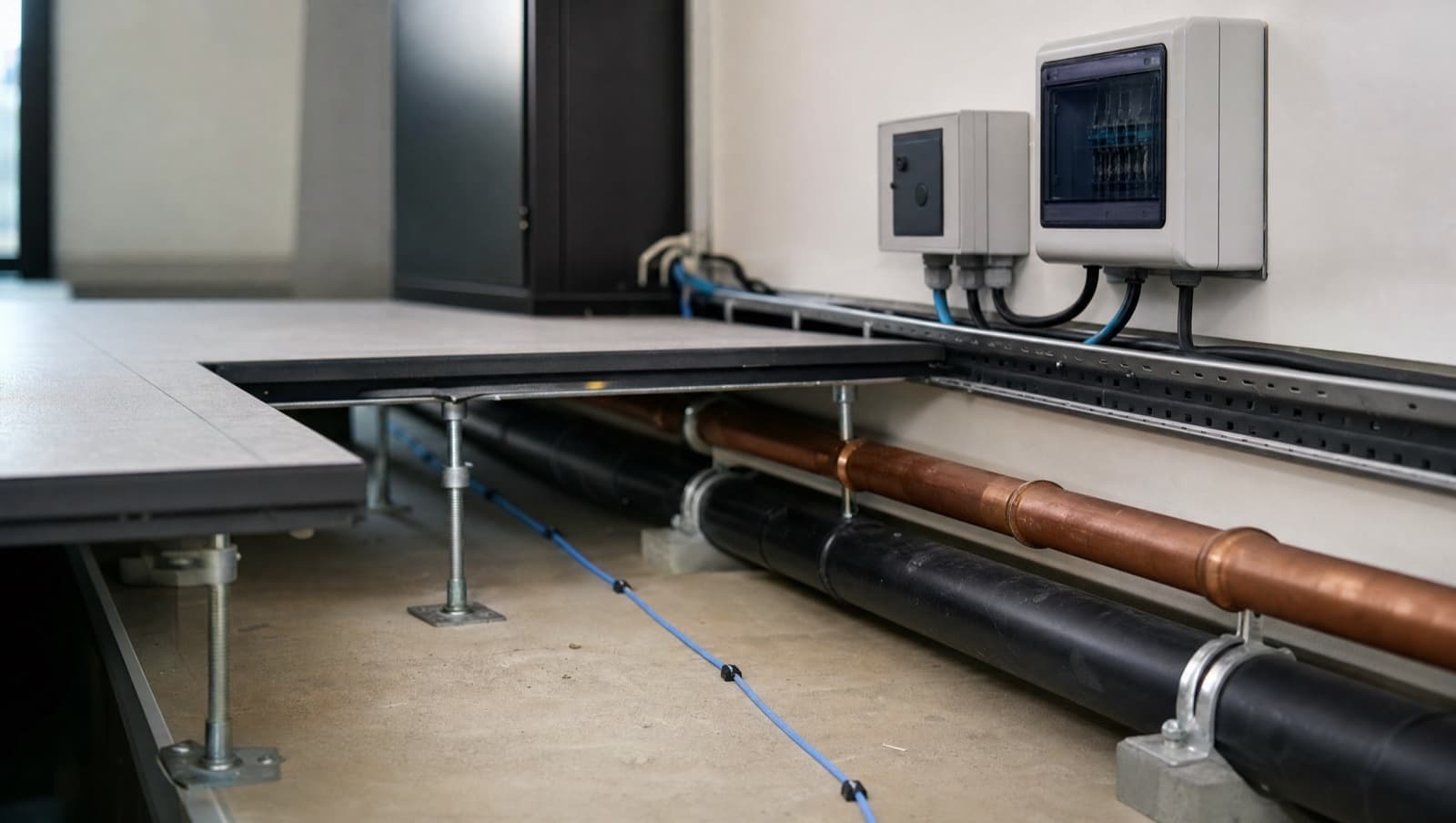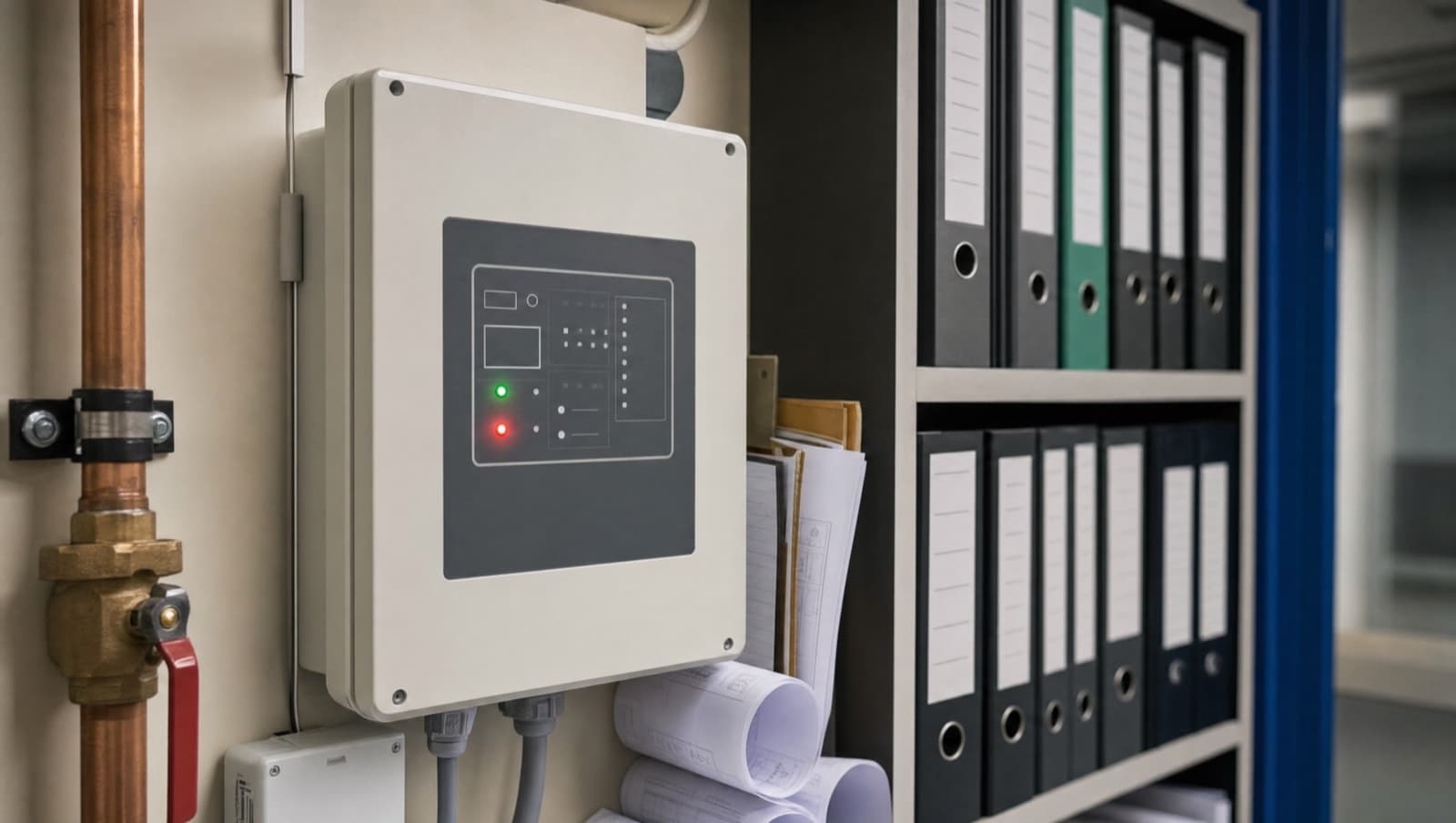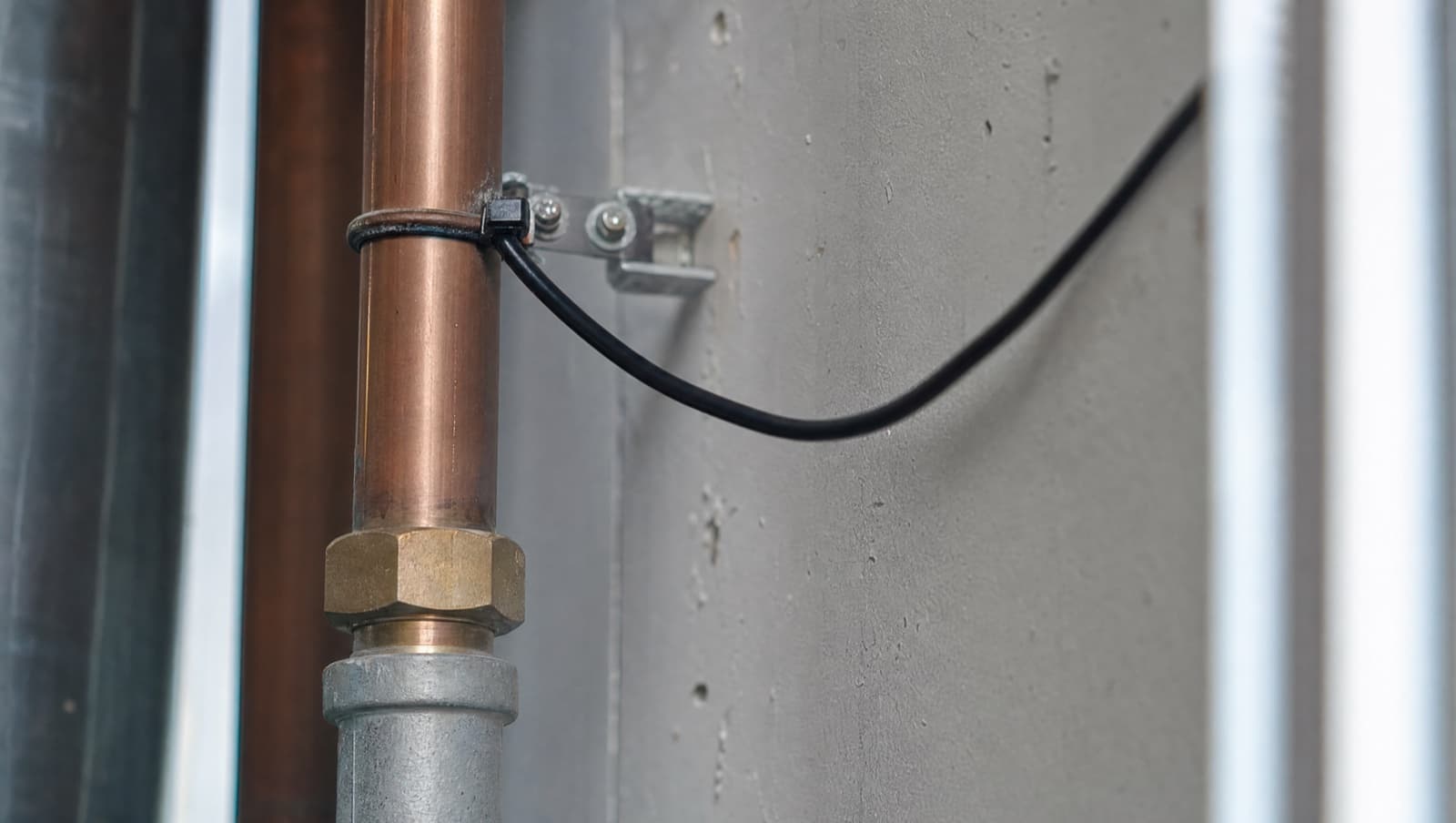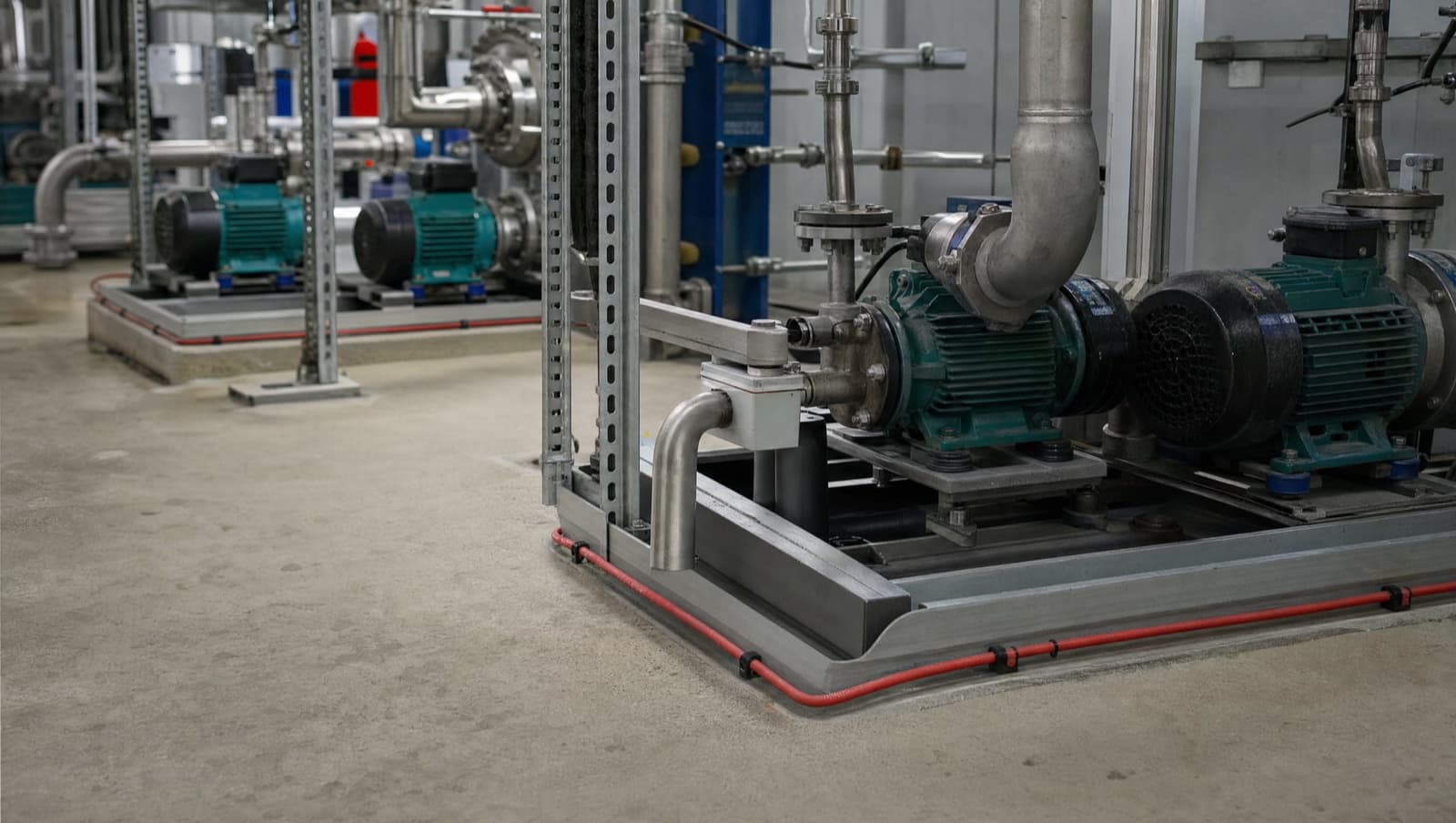

BREEAM Wat02 (Water Monitoring) and Wat03 (Water Leak Detection and Prevention) award water credits for systems that detect abnormal consumption and physical leaks with a response capability. Wat02 rewards mains metering that flags major water loss; Wat03 rewards leak detection in water-risk areas, with automatic shut-off via motorised valve strengthening the submission.
Every new commercial building chasing a BREEAM Excellent or Outstanding rating eventually hits the water credits, and that is where the specification gets vague. The design team knows they need leak detection for Wat02 and Wat03 but nobody on the project can say exactly what the assessor wants to see, what “response capability” actually means in practice, or why the leak detection system the plumbing contractor priced bears no resemblance to what the BREEAM assessor expects. The result is a familiar scramble six weeks before the assessment: a standalone leak detection panel has been installed, the sensors are in, but there is no BMS integration, no alarm logging, no documented response sequence, and no evidence pack that demonstrates the system does what the credits require.
This is not a technology problem. The leak detection products that achieve BREEAM compliance are well-established and widely available. The problem is a specification gap between what BREEAM actually requires and what gets installed, compounded by confusion between Wat02 and Wat03 — two credits that sound similar but reward fundamentally different things.
Alpha Controls installs BREEAM-compliant leak detection and provides the BMS integration evidence that strengthens the submission. Most leak detection installers hand over a standalone system with no BMS connection, which leaves the BREEAM evidence pack incomplete and the FM team with a system that detects water but does not communicate with anything else in the building.
What do BREEAM Wat02 and Wat03 actually require?
BREEAM New Construction 2024 (the current assessment manual for UK commercial projects) awards water credits under several issues within the Water category. Wat02 and Wat03 are the two that directly involve leak detection, but they target different outcomes.
Wat02 — Water Monitoring is about knowing where the water goes. The credit rewards systems that can detect abnormal water consumption patterns, including major leaks on the mains water supply. Wat02 does not require automatic shut-off. It requires monitoring capability — a system that can identify when water consumption deviates from the expected baseline, flag the anomaly, and alert the building operator. In practical terms, this means a water meter on the incoming mains that feeds data to a monitoring system (either the BMS or a dedicated water management platform), combined with leak detection on the mains supply pipework that can detect a major water loss event. The monitoring must cover the mains water supply as a minimum, and the system must be capable of generating alerts when consumption exceeds expected parameters.
Wat03 — Water Leak Detection and Prevention is about detecting leaks and having the capability to respond. This is the credit that most people think of when they hear “BREEAM leak detection.” Wat03 requires a leak detection system that monitors areas of significant water risk — plant rooms, risers, ceiling voids above sensitive areas, data centres — and has a response capability. The critical phrase is “response capability.” The BREEAM manual does not mandate automatic shut-off, but it recognises that automatic shut-off via a motorised valve adds significant value to the submission because it demonstrates a proactive prevention capability rather than just detection and manual response. A system that detects a leak and sends an alarm to the BMS, which then closes a motorised isolation valve on the relevant water supply, is a stronger submission than a system that detects a leak and sounds a local buzzer.
The distinction matters because many specifications conflate the two credits. Wat02 is fundamentally about metering and consumption monitoring with leak detection as a supporting function. Wat03 is specifically about leak detection as the primary function with response capability as the value-add. You need different evidence for each, and the products that support them can overlap but are not identical.
Why does BREEAM leak detection matter for FM, consultants, and building owners?
BREEAM credits translate directly into commercial value. A BREEAM Excellent rating can increase rental values by 3 to 5 percent, reduce void periods, and satisfy ESG reporting requirements that institutional investors and tenants increasingly demand. Losing water credits because the leak detection specification was incomplete or the evidence pack was poorly assembled is an avoidable and expensive failure — particularly on projects where the overall BREEAM target depends on picking up every available credit in the Water category to compensate for shortfalls elsewhere.
For facilities managers inheriting a BREEAM-rated building, the leak detection system needs to work beyond the assessment. A system that was installed purely to pass the BREEAM assessment — sensors in the right locations, panels commissioned, tick boxes filled — but was never integrated with the building management system creates an ongoing maintenance liability. The FM team has a system they cannot monitor from the BMS, alarms they cannot route to their helpdesk, and trend data they cannot access for compliance reporting. When the sensors degrade or the panel throws a fault, nobody knows until the next planned maintenance visit — which, based on what we see on site, is often never scheduled.
For consulting engineers writing the specification, the BREEAM pre-assessment report typically identifies Wat02 and Wat03 as targeted credits early in the design process. The specification needs to carry that intent through to the mechanical and controls packages with enough detail that the installing contractors know what the assessor will require as evidence. A one-line clause saying “provide leak detection system suitable for BREEAM Wat03” is not a specification. It is an invitation for the cheapest possible system that may or may not satisfy the assessment.
What usually goes wrong with BREEAM leak detection specs?
The most common failure is a specification that says “BREEAM-compliant leak detection” without defining what compliance actually means for that specific project. The leak detection contractor installs a standalone panel with sensing cables in the right locations, provides a commissioning certificate, and considers the job done. Six weeks later, the BREEAM assessor asks for evidence of alarm logging, response sequence documentation, and integration with the building's monitoring systems. None of that exists because the specification never required it and the BMS contractor's scope did not include leak detection integration.
The second failure is confusing Wat02 and Wat03 evidence requirements. We have seen projects where the design team assumed a flow meter on the incoming mains was sufficient for both credits. It is not. Wat02 requires water consumption monitoring that can detect major leaks through flow analysis. Wat03 requires physical leak detection (sensing cables or point sensors) in areas of water risk with a response capability. A flow meter satisfies part of Wat02 but none of Wat03. The two credits need different systems with different evidence, even though they are both in the Water category.
The third failure is installing leak detection with no BMS integration. The BREEAM manual does not explicitly mandate BMS integration — you can theoretically achieve Wat03 with a standalone panel and a documented manual response procedure. But in practice, assessors want to see that the system communicates with the building's central monitoring infrastructure, that alarms are logged with timestamps, that there is a documented sequence of operations (detect, alert, respond), and that the response can be evidenced. A BMS-integrated system that logs every alarm event, records the response action, and trends sensor health data over time provides all of this evidence natively. A standalone panel with a local buzzer provides none of it, and the project team ends up writing retrospective response procedures to paper over the gap.
A subtler problem is sensor placement that satisfies the BREEAM plan but not the BREEAM intent. Sensors installed along a plant room perimeter wall look correct on a drawing, but if the plant room floor slopes away from the wall towards a central drain, water from a pipe joint failure will reach the drain before it reaches the sensor. Sensor placement needs to consider the actual floor topology and the probable leak sources — pipe joints, valve glands, pump seals, flexible connections — not just the room boundary. This is a commissioning issue that the BREEAM assessor will not catch during a desktop review but that makes the system ineffective in practice.
Get a Free BMS Survey
We'll assess your controls and provide a detailed quotation.
Which standards and guidance govern BREEAM water credits?
The BREEAM New Construction 2024 manual is the primary reference. Under the Water category, Wat02 (Water Monitoring) awards up to two credits and requires water metering with the capability to detect major water loss events on the incoming mains supply, pulsed or digital output meters connected to a BMS or monitoring platform, and the ability to set consumption alarms against a baseline. Wat03 (Water Leak Detection and Prevention) awards up to two credits and requires leak detection systems in areas of significant water risk (plant rooms, risers, ceiling voids, data rooms), a documented response procedure, and optionally automatic shut-off via motorised valve for maximum credit. The manual specifies that the leak detection system must be “designed and installed to detect water leaks” and that “a management strategy to prevent damage from leaks” must be in place. The response procedure must be documented and available to the facilities management team at handover.
BS 8515:2009+A1:2013 covers rainwater harvesting systems and is relevant in the wider BREEAM water strategy context. While not directly about leak detection, BS 8515 establishes design principles for water systems in buildings including overflow management, system monitoring, and maintenance requirements that parallel the monitoring and response expectations in Wat02 and Wat03. On projects pursuing multiple water credits, the rainwater harvesting system specified under Wat01 and the leak detection system specified under Wat03 should be considered together as part of a coherent water management strategy rather than as isolated installations. BS 8515 requires that rainwater harvesting systems include overflow provisions, filter maintenance schedules, and system monitoring — principles that mirror what BREEAM expects of leak detection systems.
CIBSE Guide G: Public Health and Plumbing Engineering (2014) provides the engineering framework for water services in buildings, including guidance on pipe sizing, system design, and — critically — the risk assessment for water system failures that underpins the case for leak detection. The guide identifies pipe joint failures, valve gland leaks, and flexible connection failures as common water system faults in commercial buildings and recommends that “consideration should be given to leak detection systems in areas where water damage would be significant.” This is the engineering case for leak detection that supports the BREEAM requirement — it is not just an assessment tick box but a recognised engineering risk mitigation measure.
For the BMS integration protocol layer, BS EN ISO 16484-5 (the BACnet standard) and BS EN 61158 (covering Modbus) define how the leak detection panel communicates with the BMS. The protocol choice directly affects the quality of evidence available for the BREEAM submission: a Modbus or BACnet integration provides timestamped zone-level alarm logs and trend data, while a relay-only connection provides a single binary alarm with no detail.
What does a real BREEAM Excellent leak detection project look like?
Alpha Controls delivered the leak detection BMS integration on a 45,000-square-foot commercial office development targeting BREEAM Excellent in the South East. The project had Wat02 and Wat03 as targeted credits from the pre-assessment stage, but when Alpha Controls was engaged to commission the BMS, the leak detection system had already been installed by the plumbing contractor as a standalone panel with no communication link to the BMS.
The installed system was an Andel Multipoint panel with sensing cables in three plant rooms and the main riser cupboards — the right product in the right locations. But the panel was configured with relay outputs only, connected to nothing. The BREEAM assessor's preliminary review flagged that the evidence pack for Wat03 was incomplete: there was no alarm logging, no response sequence documentation, and no demonstration of how the system communicated leak events to the building operator.
We integrated the Andel panel into the Trend IQ4 BMS over Modbus RTU, mapping each zone's alarm status, cable health, and fault condition to individual BMS points. We configured the BMS to log all leak alarm events with timestamps and zone identification, set up email alarm routing to the FM provider, and documented the response sequence — from initial detection through BMS alarm notification to the FM team's response procedure including isolation of the relevant water supply. For the plant room serving the main AHU, we added a motorised isolation valve on the cold water feed, controlled by the BMS on confirmed leak alarm, which gave the project the automatic shut-off response capability that Wat03 rewards.
The evidence pack we provided to the BREEAM assessor included the system specification, installation drawings showing sensor locations relative to water risk sources, the BMS points schedule showing every monitored parameter, sample alarm log exports demonstrating timestamped zone-level event recording, the documented response sequence of operations, the motorised valve commissioning certificate, and the maintenance testing schedule for ongoing compliance. The project achieved both Wat02 and Wat03 credits. The BMS integration was specifically cited by the assessor as evidence of a “robust and monitored response capability” — language that would not have been possible with a standalone panel and a local buzzer.
If you are dealing with a similar integration challenge on an existing building, our guide to BMS retrofit costs in the UK covers what these kinds of upgrades typically involve commercially.
What does good BREEAM leak detection look like?
A BREEAM-compliant leak detection installation that achieves maximum credits and provides genuine operational value has several characteristics that distinguish it from a minimum-compliance installation.
The sensor placement is driven by a water risk assessment, not just a room schedule. Sensing cables run along the base of pipework manifolds, under pump sets, along riser pipe runs at each floor, and in ceiling voids above data rooms and electrical switch rooms. Point sensors sit at low points where water will collect — sump pits, drain channels, below valve assemblies. The placement considers floor falls, drainage paths, and the most probable leak sources rather than simply the room perimeter.
The leak detection panel communicates with the BMS over a proper protocol — Modbus RTU, Modbus TCP, or BACnet MS/TP — providing zone-level alarm data, cable health diagnostics, and fault status. Each zone has a meaningful description in the BMS (“Plant Room B — Manifold East — Leak Status”) rather than a generic digital input tag. The BMS logs every alarm event with a timestamp, zone identifier, and alarm state (active, acknowledged, cleared), creating the audit trail that BREEAM assessors require and FM teams rely on.
The response sequence is documented and programmed. On confirmed leak alarm, the BMS generates an email or SMS notification to the FM provider, escalates to the building manager if not acknowledged within a defined period, and — where automatic shut-off is specified — closes the relevant motorised isolation valve. The response sequence is documented as a cause-and-effect matrix that the BREEAM assessor can review and the FM team can follow.
The evidence pack is assembled proactively, not retrospectively. It includes the design specification, installation drawings, points schedule, commissioning certificates for sensors and valves, sample BMS alarm logs, the response sequence documentation, and the planned maintenance schedule. This pack is part of the handover documentation, not an afterthought created under pressure when the assessor requests it.
Which manufacturers design leak detection products for BREEAM compliance?
Several manufacturers position their products specifically for BREEAM water credit compliance, and understanding what each offers helps with specification.
Waterguard's Series 7 system is designed explicitly for BREEAM Wat03 compliance, combining flow monitoring (for Wat02 consumption analysis) with leak detection and automatic shut-off valve control. The system monitors flow rate on the incoming mains and can detect abnormal consumption patterns that indicate a major leak, while separately monitoring leak detection sensors in plant rooms and risers. The integrated approach means one product addresses elements of both Wat02 and Wat03.
Andel's FlowGuardian combines flow monitoring with motorised valve shut-off and integrates with their Multipoint leak detection panels. The FlowGuardian monitors mains water flow and can isolate supply on detection of abnormal flow rates (Wat02 contribution) while the Multipoint panels handle zone-level leak detection in plant rooms and risers (Wat03). Both communicate over Modbus RTU, making BMS integration straightforward.
Aqualeak markets a specific BREEAM-compliant range with pre-configured alarm outputs and documentation templates designed to simplify the evidence pack assembly. Their systems support Modbus integration and are designed for plant room leak detection applications.
CMR Electrical's leak detection systems, particularly the LD32 controller, support Modbus RTU and TCP and are commonly specified on commercial projects pursuing BREEAM. CMR provides BREEAM-specific documentation including compliance statements and evidence pack templates.
The common thread is that all of these products support digital communication protocols (Modbus at minimum) for BMS integration. A product that offers only relay outputs should not be specified for a BREEAM project unless the specification explicitly addresses how the alarm logging and response evidence will be generated without BMS integration — which in practice means it will not be generated at all.
When should you act on a BREEAM leak detection spec?
If you are at RIBA Stage 2 or 3 on a project targeting BREEAM Excellent or Outstanding, the leak detection specification for Wat02 and Wat03 should be defined now. The specification needs to include sensor locations based on a water risk assessment, the communication protocol for BMS integration, the response sequence including any automatic shut-off valves, and the evidence requirements for the assessment. Leaving this to RIBA Stage 5 or to the installing contractor guarantees a specification gap.
If you are at commissioning stage and the leak detection is installed but not integrated with the BMS, address it immediately. The BMS integration can typically be completed in two to three days of engineering time if the panel already has a Modbus or BACnet communication port — which most panels do as standard. The cost of adding BMS integration at commissioning is a fraction of the cost of losing water credits or failing to achieve the target BREEAM rating.
If you are an FM provider taking over a BREEAM-rated building, check whether the leak detection system is actually integrated with the BMS or whether it was installed as a standalone system to pass the assessment. If it is standalone, the system is detecting leaks but telling nobody, and the ongoing compliance evidence that the BREEAM rating assumed is not being generated. An integration upgrade is the priority — our guide to commissioning leak detection systems covers what that involves.
If the BREEAM pre-assessment has flagged Wat02 and Wat03 as at-risk credits, speak to a controls contractor who understands both the leak detection products and the BMS integration layer. The gap between what gets installed and what gets assessed is almost always a controls integration gap, not a sensor coverage gap.
How do you close the gap between installation and assessment?
BREEAM Wat02 and Wat03 reward water monitoring and leak detection with response capability. The credits are achievable on virtually every commercial new build, but only when the specification addresses the full chain from sensor to BMS to alarm to response — not just the sensor installation. The evidence that satisfies the assessor (alarm logs, response sequences, maintenance schedules, integration documentation) comes from the BMS integration layer, which is exactly the piece that gets missed when the leak detection is treated as a plumbing package rather than a controls integration project.
Alpha Controls installs BREEAM-compliant leak detection and delivers the BMS integration that completes the evidence pack. If you need help specifying leak detection for a BREEAM project, upgrading an existing installation for assessment compliance, or assembling the evidence pack for your assessor, get in touch or request a quote.
BREEAM leak detection FAQ
Can I achieve BREEAM Wat03 without automatic shut-off valves? Yes. The BREEAM manual does not mandate automatic shut-off. You can achieve Wat03 credits with a detection-and-alert system backed by a documented manual response procedure. However, automatic shut-off via motorised valve significantly strengthens the submission and demonstrates a prevention capability that assessors recognise as best practice. On projects targeting Excellent or Outstanding, automatic shut-off is strongly recommended.
Does BREEAM require the leak detection to be connected to the BMS? The manual requires a monitoring and response capability but does not explicitly mandate BMS integration. In practice, BMS integration is the most effective way to demonstrate alarm logging, alarm routing, and response sequence documentation — all of which assessors expect to see. A standalone system with no BMS connection makes the evidence pack significantly harder to assemble and weaker in content.
What is the difference between Wat02 and Wat03? Wat02 (Water Monitoring) rewards systems that monitor water consumption and can detect major water loss events — primarily through flow metering on the mains supply. Wat03 (Water Leak Detection and Prevention) rewards physical leak detection systems (sensing cables, point sensors) in areas of water risk with a response capability. They target different outcomes: Wat02 is about consumption awareness, Wat03 is about physical leak detection and prevention.
Which BREEAM version applies to my project? Projects registering for BREEAM assessment from 2024 onwards use BREEAM New Construction 2024 (BREEAM NC v7). Projects registered under earlier versions (2018, 2014) use the requirements of the version they registered under. The water credit structure is similar across versions, but the specific requirements and evidence expectations differ in detail. Check your BREEAM pre-assessment report for the applicable version.
How much does BREEAM-compliant leak detection cost compared to a basic system? The sensors and cables are the same regardless of BREEAM compliance — the additional cost is in the BMS integration (Modbus or BACnet commissioning, typically one to two days of BMS engineering time), motorised shut-off valves if specified (one valve per isolation zone plus BMS control wiring), and the evidence documentation. On a typical commercial building, the uplift from a basic relay-only installation to a BREEAM-compliant BMS-integrated system with one or two shut-off valves is in the region of two to five thousand pounds — a negligible cost relative to the value of the BREEAM rating. Our guide to BMS installation costs in the UK provides broader context on controls project pricing.
Alpha Controls designs, installs and commissions BMS-integrated water leak detection across London, Kent and the South East. Full scope, sensor types and BMS integration detail on our leak detection and trace heating service page.
Alpha Controls
Specialist BMS installation, commissioning, and maintenance across London and the South East. SafeContractor Approved, BCIA Member.