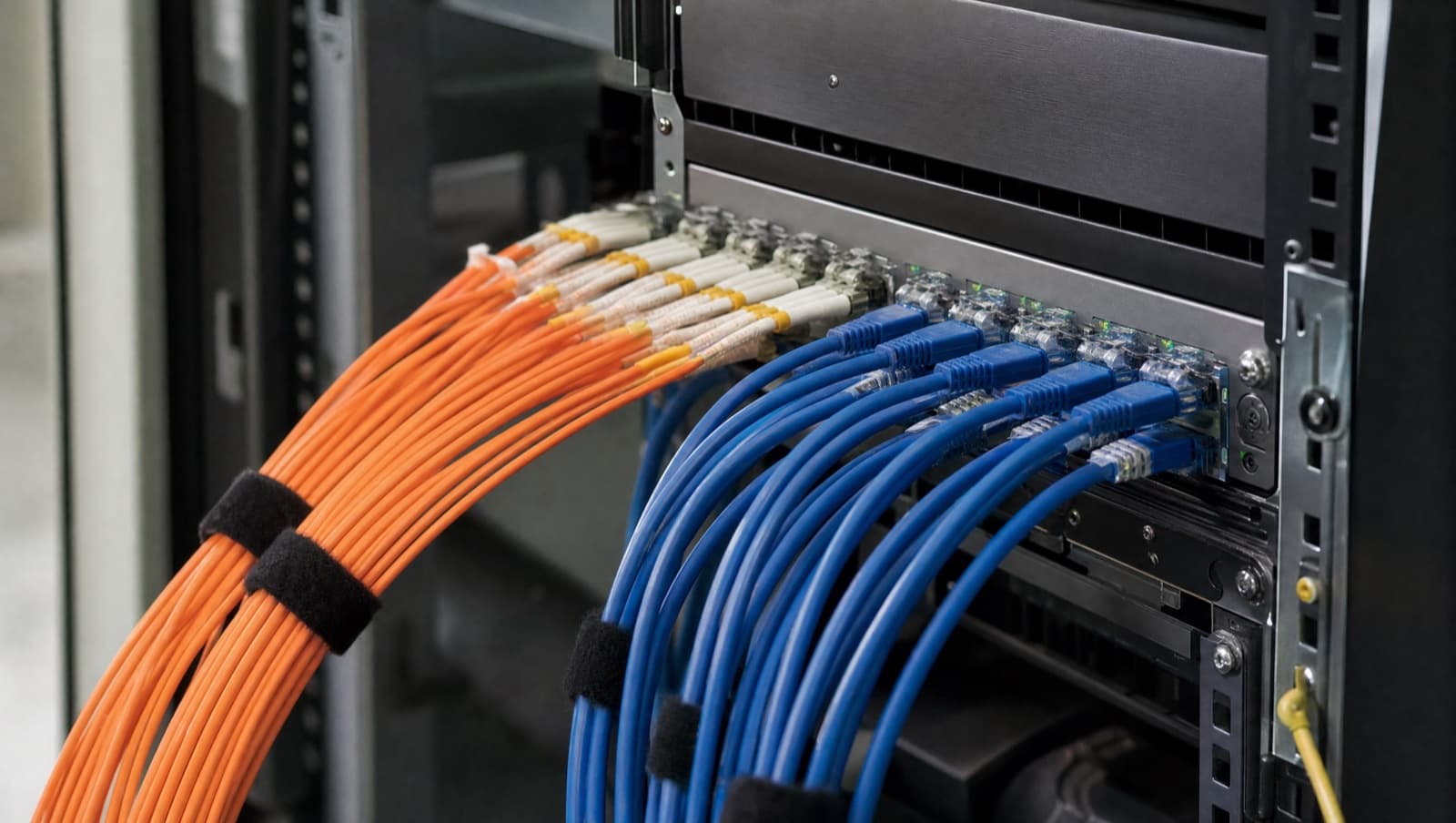

Sub-metering installs dedicated meters downstream of the utility's fiscal meter to measure consumption by tenant, floor, system, or plant item. In commercial buildings it replaces floor-area service-charge apportionment with actual metered billing, supports ESOS, DEC and Part L compliance, and gives FM teams granular data to benchmark and cut energy waste.
What is sub-metering, and how does it differ from check metering?
Sub-metering means installing secondary meters downstream of the utility company's fiscal meter — the main incoming meter the energy supplier bills against. Sub-meters measure consumption more granularly: by tenant, by floor, by system (lighting, HVAC, small power), or by individual plant like chillers and boilers.
The key distinction is between sub-metering and check metering. A sub-meter used for tenant billing must meet accuracy standards under the Measuring Instruments Regulations 2016 (which implements EU Directive 2014/32/EU in UK law). For electricity, that means MID-approved meters with accuracy class B or better. For heat metering, the Heat Network (Metering and Billing) Regulations 2014 require MID-approved heat meters on qualifying heat networks — and from April 2022 the regulations were extended to require individual dwelling-level meters or heat cost allocators in new heat networks.
Check metering, by contrast, is internal monitoring — measuring consumption for energy management, benchmarking, or identifying waste, but not billing anyone. Check meters don't need MID approval, which means cheaper hardware and simpler installation. Most BMS-integrated energy monitoring uses check meters for exactly this reason.
Why does sub-metering matter in a multi-tenanted building?
In a multi-tenanted building without sub-metering, energy costs are typically recovered through the service charge, apportioned by floor area. A tenant occupying 15% of the net lettable area pays 15% of the energy bill, regardless of whether they run their lights 24/7 or switch everything off at 6pm. This cross-subsidy penalises efficient tenants, rewards wasteful ones, and removes any incentive for individual tenants to reduce consumption.
Sub-metering fixes this by connecting consumption to cost. When a tenant can see their after-hours server room is costing £800 a month in electricity, they have a financial reason to address it. When an FM team can see Building A's chiller consumes 40% more energy per cooling degree day than Building B's, they have a data point to investigate. Without sub-metering, these insights simply don't exist.
CIBSE TM39: Building Energy Metering provides the technical framework for energy metering in commercial buildings. TM39 sets out a structured approach — defining what should be metered, to what accuracy, and how data should be collected, stored, and reported. For multi-tenanted buildings, TM39 recommends separate metering of each tenant's electricity consumption as a minimum, with additional metering of major plant items (chillers, boilers, AHUs) and common area circuits to enable meaningful energy performance analysis.
What compliance rules require sub-metering data?
The Energy Savings Opportunity Scheme (ESOS) requires large UK enterprises to conduct energy audits every four years — and those audits are far more meaningful when sub-metering data exists. Display Energy Certificates (DECs), mandatory for public buildings over 250m², require annual energy consumption data that sub-metering makes far easier to compile accurately.
Part L of the Building Regulations (Approved Document L, Volume 2: Buildings other than dwellings) now requires that new non-domestic buildings are provided with energy metering enabling at least 90% of estimated annual energy consumption to be assigned to end-use categories — heating, cooling, ventilation, lighting, small power, and domestic hot water. If you're subject to ESOS, MEES, or Part L, sub-metering data is increasingly expected as part of your evidence base rather than an optional extra.
Get a Free BMS Survey
We'll assess your controls and provide a detailed quotation.
How is electricity sub-metering installed, and what does it cost?
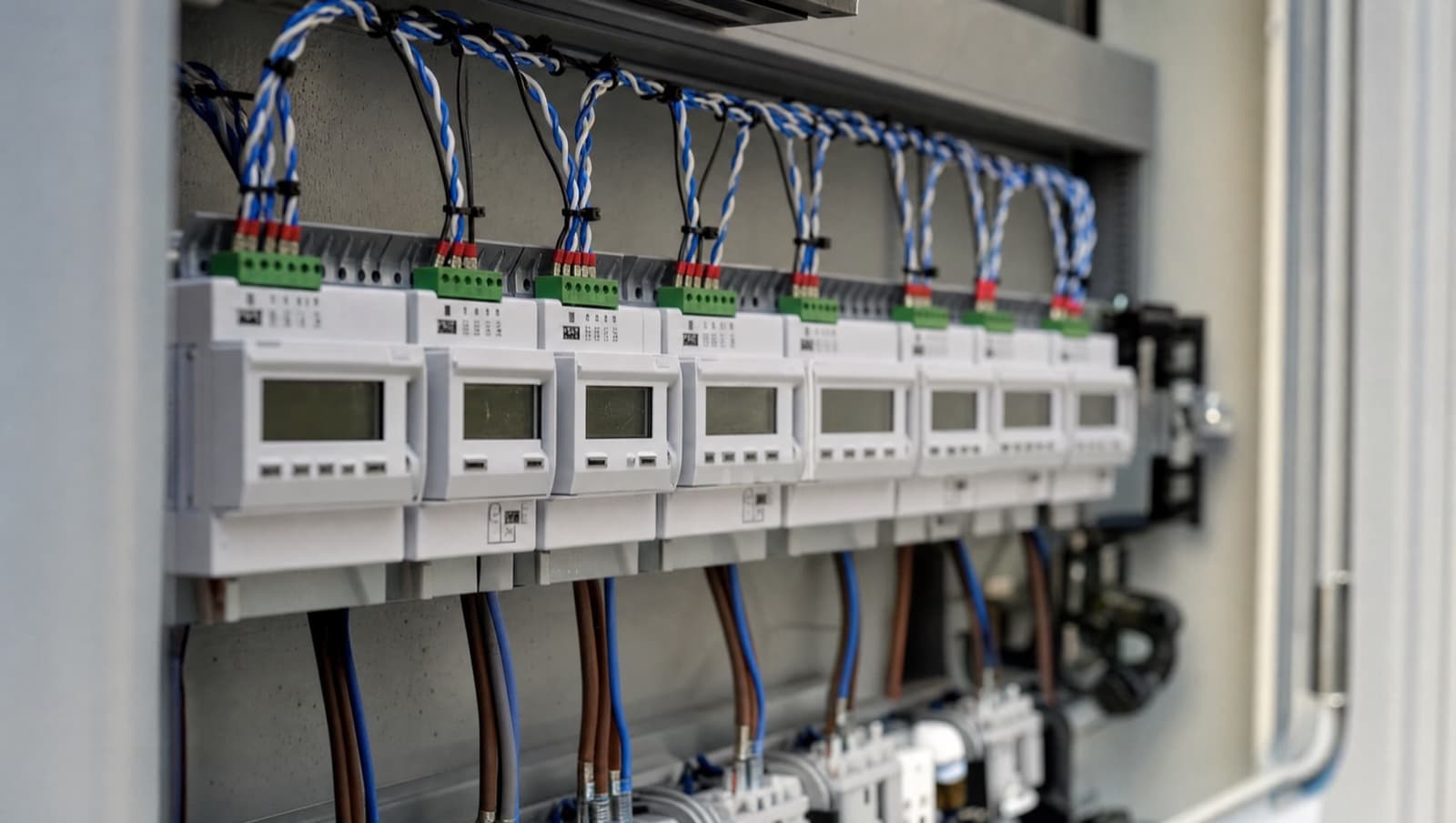
Most commercial sub-metering starts with electricity, because it's the simplest to install and delivers the most immediately useful data. A typical multi-tenanted office has a main electrical intake with a fiscal meter, feeding a series of distribution boards. Sub-meters are installed on the outgoing circuits serving each tenant's area — usually at distribution board level, using current transformer (CT) clamp meters that wrap around the cable without breaking the circuit.
Modern CT meters communicate via Modbus RTU or BACnet, feeding data directly into the BMS or a dedicated energy monitoring platform. Pulse-output meters are cheaper but only give cumulative readings — you need a BMS or data logger to timestamp and trend the pulses into usable consumption profiles. For tenant billing, pulse-output meters are less suitable because they don't provide real-time demand data and are more susceptible to missed pulses during communication failures.
Cost varies significantly with the building's electrical infrastructure. Where distribution boards are well-organised and tenant circuits already segregated, installing CT meters at the board is relatively straightforward — typically £300–£600 per meter point including the CT set, meter, commissioning, and BMS integration. Where tenant circuits are mixed across boards, the electrical rework to segregate circuits before metering can push costs to £1,500–£3,000 per meter point. This is why metering strategy needs to be considered at fit-out stage, not retrofitted as an afterthought.
How does heat and cooling sub-metering work?
Heat metering is more complex than electricity metering because you're measuring thermal energy — which requires flow measurement, supply and return temperature measurement, and a calculator to compute energy from the three inputs. A heat meter typically consists of a flow sensor (usually ultrasonic for accuracy and low maintenance), matched temperature sensors on the supply and return pipework, and an integrator that calculates kWh from flow rate and temperature differential.
For buildings with centralised heating — boiler plant or a heat network serving multiple tenants via a common LTHW circuit — heat sub-meters are installed on the branch serving each tenant or floor. The Heat Network (Metering and Billing) Regulations 2014 make this mandatory for qualifying heat networks, specifying that meters must be MID-approved and that billing must be based on actual metered consumption, not estimated or area-based apportionment.
Cooling sub-metering follows the same principle on the chilled water circuit. In four-pipe systems where heating and cooling circuits are separate, each tenant gets a heat meter on the LTHW branch and a cooling meter on the CHW branch. In two-pipe systems with changeover, a single meter can measure both, but the calculator must distinguish heating and cooling modes based on flow direction or a changeover signal from the BMS.
Gas sub-metering is less common in commercial buildings because most gas consumption goes through centralised boiler plant rather than distributed tenant systems. Where it is required — for example, in mixed-use buildings with commercial kitchens — individual gas meters must comply with the Gas (Meters) Regulations 1983 and be installed by a Gas Safe registered engineer.
Tenant sub-metering and billing: what landlords need to know
If you recharge energy to tenants, sub-metering stops being an energy-management exercise and becomes a billing system, with the evidential burden that implies. The meter must be approved under the Measuring Instruments Regulations 2016, the UK's retained implementation of the MID framework, its readings need to be auditable rather than merely visible on a graphic, and you need a defensible position on what happens when a meter fails mid-quarter. Most disputes are not about the tariff — they are about a gap in the data and an estimate nobody can substantiate.
Heat is the case landlords most often get caught by. Where a building runs a communal heating or cooling system serving multiple occupiers, the Heat Network (Metering and Billing) Regulations 2014 apply: heat suppliers must notify the regulator and, where it is technically possible and cost-effective, install meters and bill final customers on actual consumption rather than floor area. A building with communal LTHW and no heat meters is not simply inefficient, it may be non-compliant, and the obligation sits with the heat supplier — which in a multi-let building usually means the landlord.
The BMS earns its keep here by making the billing data defensible rather than merely available. Half-hourly logging with a proper archive gives you a reading history you can stand behind, gaps are visible as gaps rather than silently interpolated, and a meter that stops incrementing raises an alarm in days rather than surfacing at the quarterly reconciliation. If you are recharging energy without that, you are billing on trust.
What usually goes wrong with sub-metering installations?
The most common failure mode in sub-metering isn't hardware — it's strategy. Meters get installed without a clear plan for what data they'll produce, who will read them, how often, and what will be done with it. The result is hundreds of meter points generating data nobody looks at, feeding a BMS or energy platform nobody has configured properly, producing reports nobody reads.
CT clamps installed on the wrong phase — or worse, the wrong circuit — are more common than anyone in the industry likes to admit. We've audited buildings where tenant meters were reading common area lighting circuits, and common area meters were reading tenant small power. The only way to catch this is physical verification during commissioning: compare the meter reading against the actual connected load by switching circuits off and confirming the meter responds. If your sub-metering contractor doesn't include this step, the data is unreliable from day one.
Heat meters with incorrectly installed temperature sensors are another frequent problem. Sensors need to be installed in pockets that ensure proper thermal contact with the water — surface-mounted sensors wrapped in insulation are not accurate enough for billing. Flow sensor orientation matters too: ultrasonic flow meters need the correct upstream and downstream straight pipe lengths to ensure laminar flow at the measurement point. CIBSE Commissioning Code M sets out that metering equipment should be commissioned as part of the overall building services commissioning process, with documented verification of meter accuracy against a reference standard.
How does integrating sub-metering with the BMS add value?
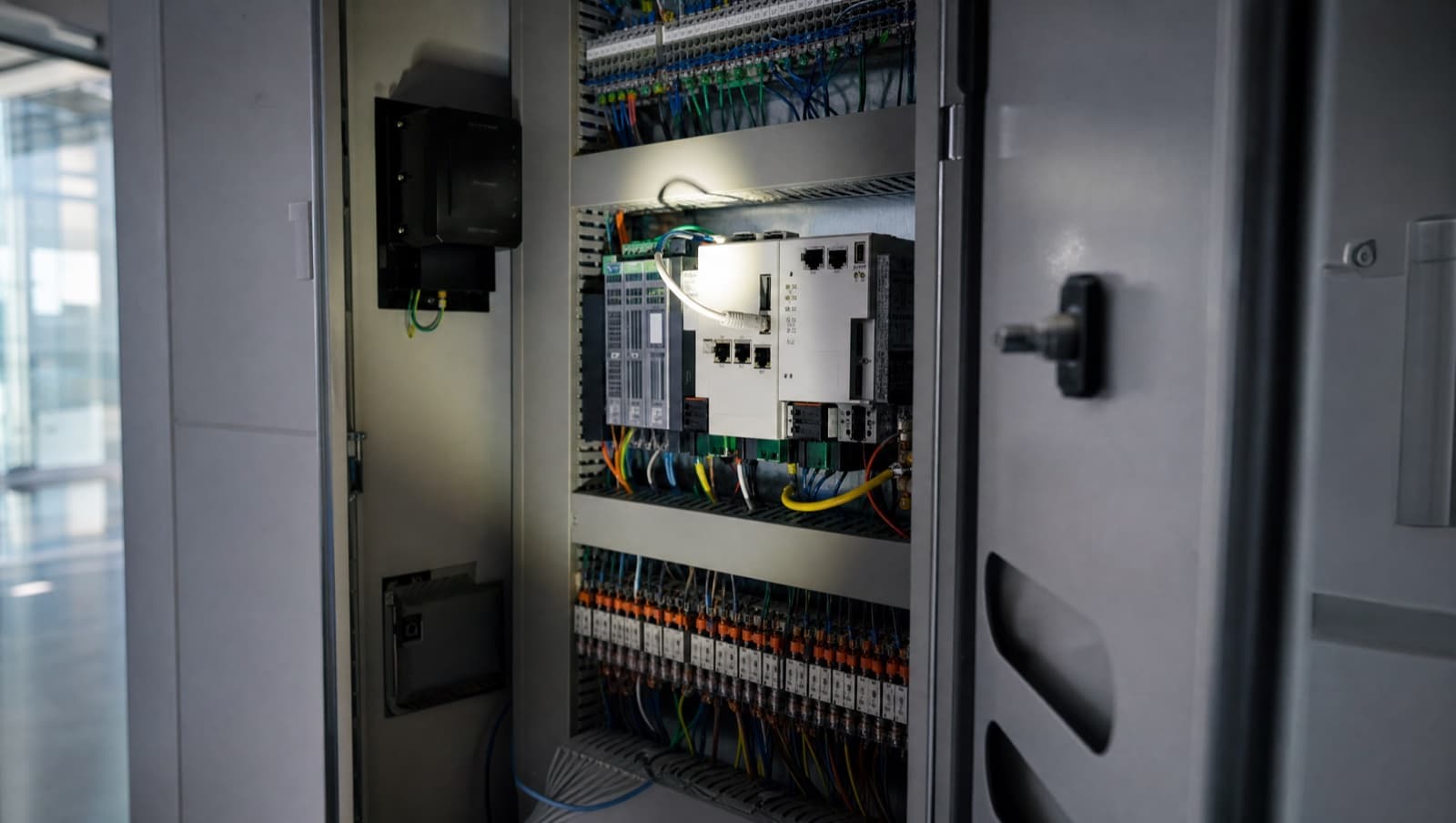
The real value of sub-metering emerges when meter data is integrated into the building management system rather than sitting in a standalone monitoring platform. BMS integration means energy data is available alongside all the other operational data — temperatures, setpoints, plant status, occupancy — enabling correlations standalone energy monitoring can't provide.
For example, when the BMS holds both sub-meter data and zone temperature data, it can calculate specific energy consumption per degree day for each tenant zone. That normalised metric strips out weather effects and gives a genuine efficiency comparison between zones — something raw kWh figures alone can't provide. When a zone's specific energy consumption starts rising, the BMS can flag it as an anomaly before it shows up on the energy bill.
Integration typically uses Modbus RTU (RS-485) or BACnet MS/TP for wired meters, with gateways converting to BACnet/IP for integration with the BMS head-end. Wireless sub-meters using LoRaWAN or Zigbee are increasingly common for retrofit situations where running new cabling is impractical, but they introduce battery management and signal reliability considerations wired meters don't have.
On sites where we've implemented integrated sub-metering as part of a wider BMS project — including multi-tenanted commercial offices in London and across the South East — combining metering data with BMS control data has consistently identified energy waste that neither system would have found alone. Common findings include out-of-hours plant operation serving unoccupied tenant zones (visible only when you overlay meter consumption against BMS occupancy schedules), simultaneous heating and cooling on adjacent zones, and base load consumption significantly higher than the connected standby load suggests — indicating equipment left running that shouldn't be.
When is the right time to install sub-metering?
If you're managing a multi-tenanted building and recovering energy costs through the service charge without sub-metering, you're leaving money on the table and creating a tenant satisfaction problem that worsens every year as energy prices increase. If you're subject to ESOS, MEES, or Part L compliance requirements, sub-metering data is increasingly expected as part of your evidence base rather than an optional extra.
The practical trigger is usually a lease event — a new tenant fit-out, a major refurbishment, or a service charge dispute that forces the issue. But the cost of retrofitting sub-metering is always lower during planned works than as a standalone project, so the best time to act is when you're already opening up distribution boards or modifying pipework for another reason.
If you're not sure where to start, a metering strategy review is the first step — mapping the building's electrical and mechanical distribution against the tenant demise plan to identify what can be metered with existing infrastructure and what needs modification. Alpha Controls delivers sub-metering installations integrated with BMS systems across London and the South East. Get in touch for a metering strategy review or request a quote for your building.
Alpha Controls Team
Specialist BMS installation, commissioning, and maintenance across London and the South East. SafeContractor Approved, BCIA Member.