
BMS-integrated water metering connects water meters to the building management system via pulse output, Modbus, or M-Bus, enabling consumption monitoring, sub-metering by end use, and automatic leak detection through overnight flow analysis. A single pulsed incoming meter costs £300-£600 and can catch a leak within 24 hours of it starting.
How much does an undetected water leak actually cost?
Take a real scenario: a commercial office building in London gets a £38,000 quarterly water bill — roughly double the same period last year. The water company confirms the meter reading is correct, so somewhere in the building water is being consumed at twice the normal rate. With one incoming utility revenue meter in the pavement and no sub-meters, there is no data to say whether the excess is coming from toilets, the cooling tower, irrigation, the kitchen, or a buried pipe nobody can see.
A leak detection company spends two days with acoustic listening equipment and correlators and finds a leaking buried cold water main under the car park, cracked by a winter freeze-thaw cycle. It has been running 24 hours a day at roughly 2 litres per minute — 2,880 litres per day, 86,400 litres per month. At commercial rates that is around £1,200 per month in wasted water and another £1,200 per month in sewage charges (sewage is typically a percentage of metered water consumption). Including the survey, excavation, repair, and wasted water, the undetected leak costs over £15,000.
A BMS-integrated water meter with overnight flow analysis would have caught this within 24 hours. At 2am, a commercial office building should have zero water flow — any flow during unoccupied hours is either a leak or a running cistern, and both need attention. The BMS raises an alarm, the FM team investigates, and the leak is fixed before it runs for months. The meter that would have prevented the £15,000 loss costs approximately £800.
What types of water meter can connect to a BMS?
There are three main interfaces for connecting water meters to a BMS: pulse output, Modbus, and M-Bus. The choice depends on the meter type, the required accuracy, the available BMS infrastructure, and the budget.
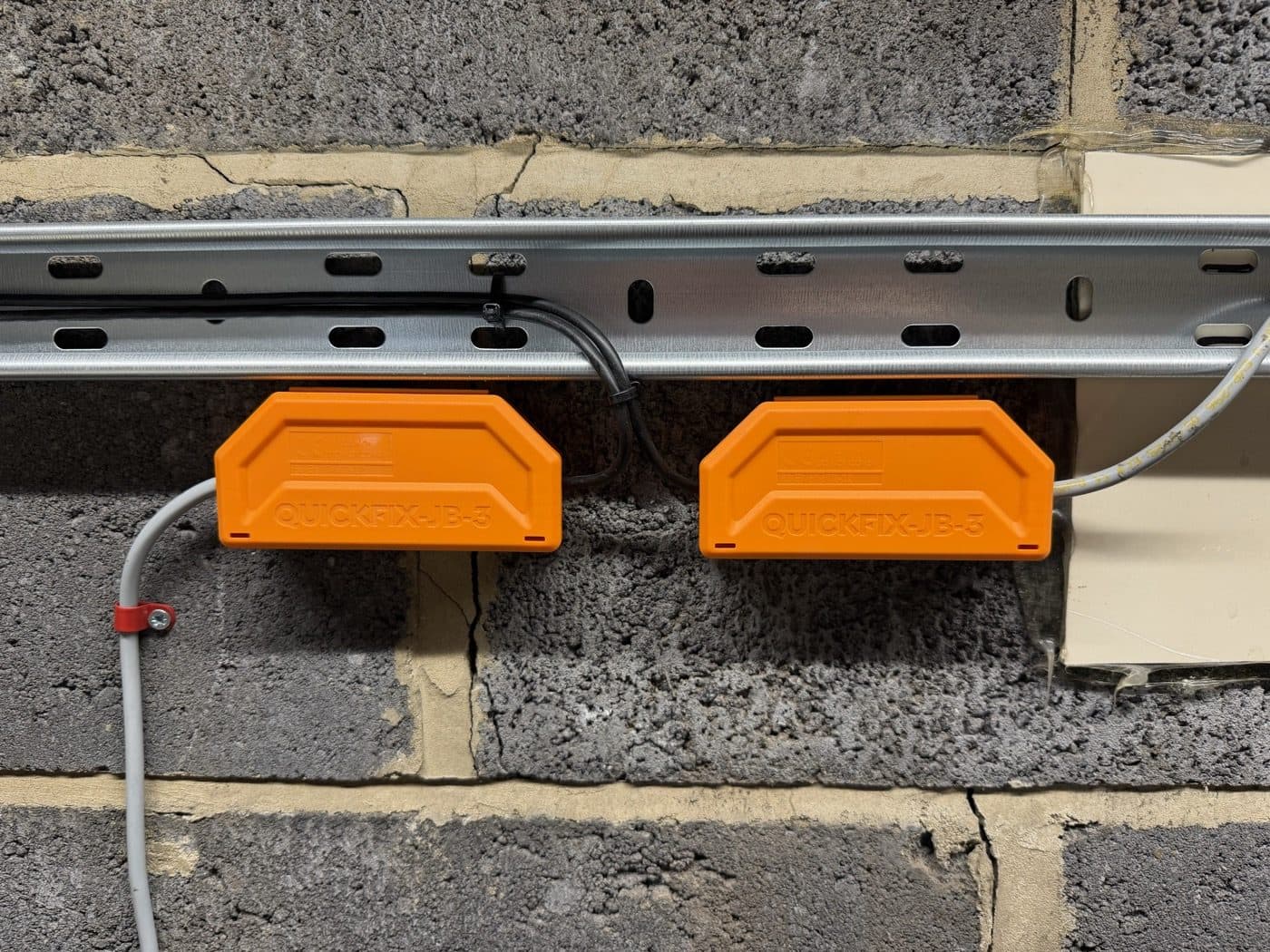
Pulse output meters. The simplest and most common BMS interface. A reed switch or Hall effect sensor inside the meter generates one electrical pulse for every fixed volume of water that passes through — typically 1 pulse per litre, 1 pulse per 10 litres, or 1 pulse per 100 litres, depending on the meter size and configuration. The pulse output connects to a digital input on the BMS controller, which counts pulses over time to calculate flow rate and totalised volume. Pulse output meters are cheap (£100-£300 for the meter, plus a pulse output module if not built in), universally compatible with all BMS platforms, and simple to install and commission. The limitation is that pulse output only provides volume data — there is no instantaneous flow rate, no diagnostic information, and no reverse flow detection.
Most existing water meters in commercial buildings can be retrofitted with a pulse output module. The major meter manufacturers — Elster (now Honeywell), Itron, Sensus, and Zenner — all offer clip-on pulse generators for their standard meter ranges. This means you can add BMS monitoring to existing meters without replacing the meter itself, which avoids the need to drain down the system and break into the pipework.
Modbus meters. Electronic water meters with Modbus RTU or Modbus TCP communication provide richer data than pulse output. In addition to totalised volume, a Modbus meter typically provides instantaneous flow rate, flow velocity, forward and reverse flow totals, alarm status (empty pipe, low battery, tampering), and in some cases water temperature. The BMS polls the meter's Modbus registers at regular intervals, providing continuous flow data for trending and analysis. Modbus meters are more expensive (£400-£1,000) and require RS-485 or Ethernet wiring rather than a simple two-core cable, but the additional data is valuable on larger installations where detailed consumption analysis is required. For a comparison of Modbus and BACnet communication protocols in BMS installations, see our article on BACnet vs Modbus for BMS integration.
M-Bus meters. M-Bus (Meter Bus, EN 13757) is a European standard specifically designed for utility meter communication. M-Bus meters use a two-wire bus that can connect up to 250 meters on a single cable run, making it ideal for sub-metering installations with many meters in different locations. The BMS connects to the M-Bus network via an M-Bus to Modbus or M-Bus to BACnet gateway. M-Bus is the most common interface for sub-metering in new-build commercial buildings because it minimises wiring — one two-wire bus serves all water, gas, heat, and electricity meters on a floor or riser. M-Bus meters cost £300-£600 each, plus the gateway (£500-£1,500).
Where should you put sub-meters in a commercial building?
A single incoming water meter tells you how much water the building consumes in total. It does not tell you where the water is being used, which areas are consuming more than expected, or whether a specific system has a leak. Sub-metering divides the building's total consumption into measurable categories, allowing the FM team to manage water use actively rather than reactively. The recommended sub-metering strategy for a typical commercial building includes:
Mains incoming. The primary water meter at the building's point of entry. This may be the water company's revenue meter (which typically has a pulse output available for BMS connection) or a separate check meter installed by the building owner downstream of the revenue meter. The BMS totalises and trends this meter to establish the building's baseline consumption.
Cooling tower make-up. Cooling towers consume significant volumes of water through evaporation, drift, and blowdown. A typical 500 kW cooling tower evaporates 0.7-1.0 litres per minute per 100 kW of cooling — that is 3.5 to 5.0 litres per minute for a 500 kW tower, or up to 7,200 litres per day during full-load operation. A sub-meter on the cooling tower make-up line allows the BMS to track make-up water consumption, calculate the concentration ratio (cycles of concentration), and detect excessive blowdown or water treatment faults. If cooling tower make-up consumption suddenly doubles, it may indicate a stuck blowdown valve, a failed float valve, or a leak in the condenser water pipework.
Domestic hot water. A sub-meter on the cold water feed to the hot water plant (calorifiers, plate heat exchangers, or point-of-use heaters) measures the building's hot water consumption. This data, combined with hot water temperature and return temperature from the BMS, allows calculation of the energy used for water heating — often one of the largest gas consumption items in a commercial building.
Irrigation. External irrigation systems — for landscaping, green roofs, or sports pitches — can consume large volumes of water, especially during summer. A sub-meter on the irrigation supply allows the BMS to track irrigation consumption separately from building consumption, ensuring that irrigation water is not incorrectly attributed to the building's operational use. Some water companies offer a reduced sewage charge for metered irrigation water, since it does not enter the foul drainage system.
Toilet and washroom supply. On larger buildings, a sub-meter on the WC and washroom supply allows benchmarking against industry standards and identification of running cisterns or urinal flush faults. A commercial office building should consume approximately 6-8 litres per person per day for WC flushing. If the metered consumption is significantly higher, there are cistern faults.
Tenant sub-metering. In multi-tenanted buildings, individual tenant water sub-meters allow consumption to be billed per tenant rather than apportioned by floor area. This incentivises water conservation and enables the building owner to identify which tenants are consuming disproportionately.
Get a Free BMS Survey
We'll assess your controls and provide a detailed quotation with energy savings estimates.
How does a BMS detect a water leak automatically?
The simplest and most effective BMS-based leak detection method is overnight flow analysis. The BMS monitors the incoming water meter flow rate during unoccupied hours — typically midnight to 5am on a weekday, or all day on a weekend for a Monday-to-Friday office. During these periods, water consumption should be zero or near-zero (a small flow from security staff using toilets, or from cooling tower make-up on 24/7 chiller systems, is expected).
If the BMS detects continuous flow above a threshold — say, 5 litres per hour — during unoccupied hours, it generates a leak detection alarm. The threshold is calibrated to the building's normal overnight profile: a building with 24/7 cooling towers will have a higher overnight baseline than a building with no overnight water use. The key is that the threshold represents abnormal consumption, not any consumption.
The BMS logs the minimum overnight flow rate every night and trends it over time. A sudden increase from the normal baseline indicates a new leak or fault. A gradual increase over weeks indicates a slowly developing leak. Both patterns are visible in the BMS trend data long before they show up on the quarterly water bill.
More sophisticated leak detection uses sub-meter data to localise the source. If the incoming meter shows overnight flow but the cooling tower meter, DHW meter, and irrigation meter all show zero, the leak is on the domestic cold water distribution. If the cooling tower meter shows abnormal overnight flow, the issue is in the condenser water system. This localisation saves days of leak detection survey time and reduces the cost of finding and fixing the problem. For a detailed comparison of BMS-integrated leak detection versus standalone systems, see our article on commercial leak detection: BMS-integrated vs standalone.
What are the UK water consumption benchmarks for commercial buildings?
BMS-integrated water metering enables consumption benchmarking — comparing the building's actual water consumption against industry standards to identify waste and target improvements. The key benchmarks for UK commercial buildings are:
CIBSE Guide F (2012): Provides water consumption benchmarks for various building types. A standard air-conditioned office should consume 6-10 litres per person per day for domestic use (WC flushing, hand washing, drinking), plus additional consumption for cooling tower make-up. Total water consumption for a typical air-conditioned office is 10-20 litres per person per day.
NHS Estates: Healthcare buildings have specific benchmarks based on bed numbers and department types. Acute hospitals typically consume 300-500 litres per bed per day. The BMS sub-metering data allows comparison against these benchmarks at department level.
DfE (Department for Education): Schools should consume 3-5 litres per pupil per day for domestic use. Schools consuming significantly more than this have toilet or urinal faults, leaks, or excessive use. The BMS provides the data to identify which buildings or blocks within a school campus are the highest consumers.
The BMS can generate automated benchmarking reports — daily, weekly, monthly — that compare actual consumption against the benchmark for the building type, normalised by occupancy. This transforms water management from a reactive response to quarterly bills into an active, data-driven process.
Which BREEAM water credits does BMS metering help achieve?
BREEAM provides credits for water-efficient buildings across three categories: Wat01 (Water consumption), Wat02 (Water monitoring), and Wat03 (Water leak detection and prevention).
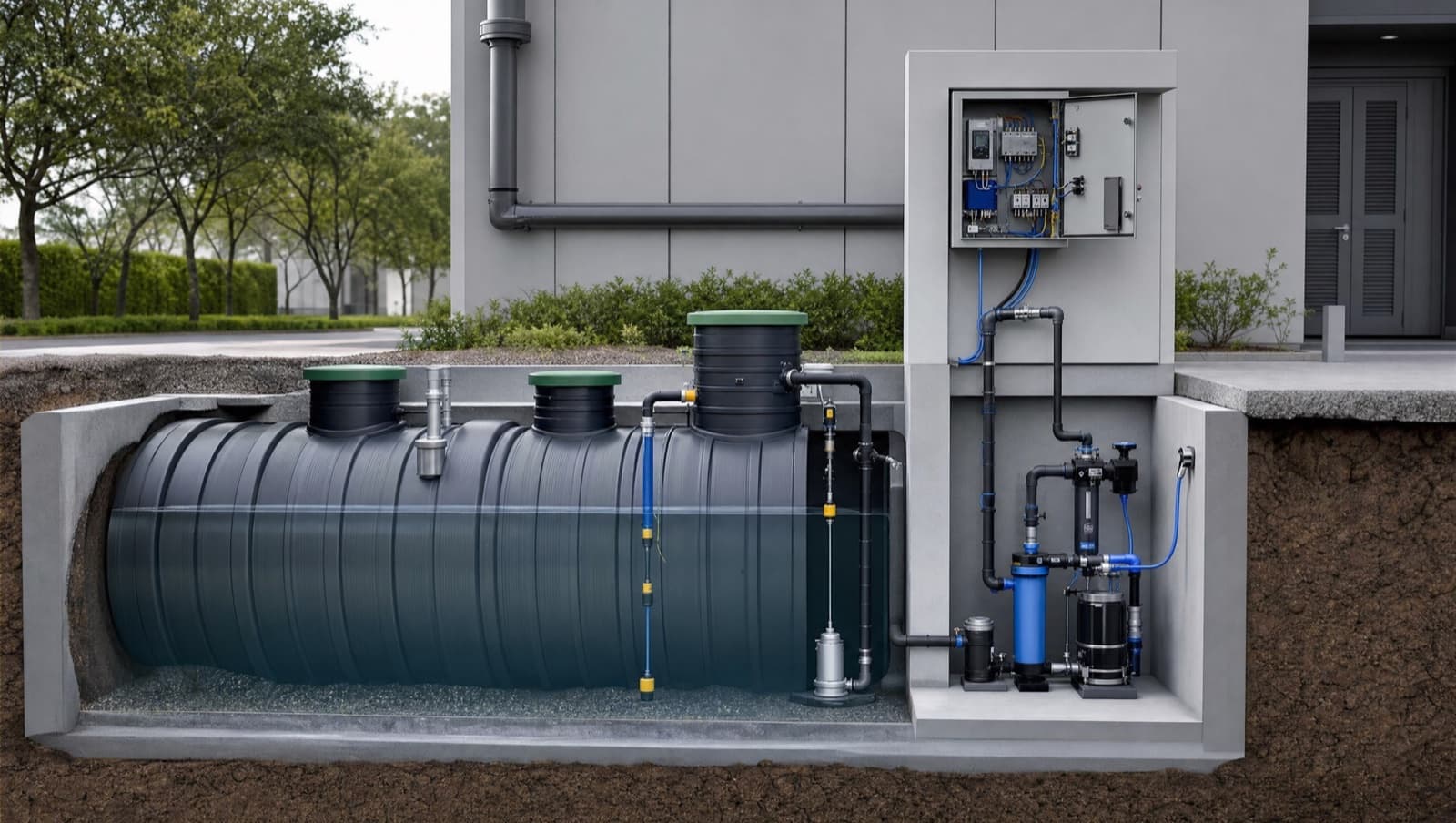
Wat01 — Water consumption. Credits are awarded for reducing potable water consumption below a baseline figure calculated from the building type, occupancy, and water-using equipment. Water-efficient fittings (low-flow taps, dual-flush WCs, waterless urinals) and water recycling systems (rainwater harvesting, greywater recycling) contribute to the reduction. The BMS metering data provides post-occupancy evidence that the predicted water savings are being achieved. For buildings with rainwater harvesting or greywater recycling, the BMS data is essential — see our article on rainwater harvesting and greywater recycling BMS controls.
Wat02 — Water monitoring. One credit is available for installing a water monitoring system that covers the incoming mains supply and allows detection of major leaks. To achieve this credit, the BMS must include a pulsed water meter on the mains incoming supply, connected to a BMS or continuous monitoring device capable of identifying abnormal consumption. The system must alert the building occupier to a major water leak. This is exactly the overnight flow analysis capability of a pulsed mains meter feeding the BMS.
Wat03 — Water leak detection and prevention. One credit is available for specifying a water leak detection system. This can be a flow-based system (as in Wat02, with enhanced sensitivity) or a physical leak detection system with moisture sensors at high-risk locations (plant rooms, risers, ceiling voids above sensitive areas). The BMS integrates leak detection sensors — typically simple moisture contacts connected to BMS digital inputs — and generates alarms when water is detected where it should not be.
The combined Wat01 + Wat02 + Wat03 credits require a comprehensive water metering and monitoring strategy that is most practically delivered through the BMS. Standalone water monitoring systems exist, but they add another platform for the FM team to manage and typically do not integrate with the building's other systems. BMS-integrated water metering provides the same functionality within the platform the FM team already uses for HVAC, lighting, and energy management.
Is water metering through the BMS the same as energy metering?
Water metering and energy metering through the BMS follow identical principles — both use pulse output, Modbus, or M-Bus meters; both require sub-metering to understand where consumption occurs; both enable automatic anomaly detection through trending and threshold alarming; and both support BREEAM credits (Ene01-05 for energy, Wat01-03 for water). If your building already has BMS-integrated energy metering, adding water metering uses the same infrastructure, the same BMS controllers, and the same trending and alarming software. For a detailed guide to energy metering and sub-metering through the BMS, see our article on energy metering, sub-metering, and data-driven savings.
How much does BMS-integrated water metering cost?
The cost of BMS-integrated water metering depends on the number of meters, the meter type, and the existing BMS infrastructure.
Single incoming meter with pulse output: £300-£600, covering a clip-on pulse generator for the existing revenue meter (if compatible), two-core cable to the nearest BMS controller, BMS software configuration, and alarm setup. This is the minimum useful installation — it provides total consumption monitoring and overnight leak detection.
Sub-metering package (4-6 meters): £2,500-£5,000, covering individual water meters on major consumers (cooling tower, DHW, irrigation, WC supply), wiring to BMS controllers, and software configuration. This provides consumption breakdown by end use and localised leak detection.
Comprehensive M-Bus sub-metering (10+ meters): £6,000-£12,000, covering M-Bus water meters on all major consumers and tenant supplies, M-Bus gateway, wiring, and BMS integration. This provides full consumption visibility, tenant billing data, and BREEAM credit evidence.
These costs are modest compared with the potential savings. A building spending £80,000 per year on water that achieves a 15% reduction through active monitoring and leak detection saves £12,000 per year — payback on even a comprehensive sub-metering installation in under a year. And a single undetected leak can easily cost more than the entire metering installation.
What problems does water metering usually uncover?
When Alpha Controls installs water metering on buildings that have not previously had BMS-integrated monitoring, we consistently find:
Higher overnight consumption than expected. Running cisterns, leaking float valves, stuck urinal flush controllers, and buried pipe leaks are almost universal in buildings more than 10 years old. The overnight flow data reveals problems that have been running — and costing money — for months or years.
Cooling tower make-up higher than design. Cooling towers that are blowing down too frequently (water treatment issue) or have leaking float valves (mechanical issue) consume significantly more water than the design calculation predicted. Sub-metering the cooling tower make-up line immediately reveals this.
Irrigation consuming more than building operations. On sites with large landscaped areas, irrigation can account for 30-50% of total water consumption during summer months. Without a separate irrigation meter, this consumption is invisible and is included in the sewage charge calculation — even though irrigation water does not enter the sewer. Separating irrigation consumption and applying to the water company for a sewage abatement saves money immediately.
No correlation between occupancy and consumption. If water consumption is the same on weekends as weekdays in a Monday-to-Friday office, there is a baseload consumption that is unrelated to occupancy — leaks, equipment faults, or systems running when they should be off. The BMS data makes this pattern immediately visible.
What is the first step to start monitoring water through the BMS?
If your building does not have BMS-integrated water metering, the starting point is simple: connect the incoming water meter to the BMS with a pulse output. This single connection — costing £300-£600 — gives you total consumption monitoring, overnight leak detection, and the data foundation for water management. If the data reveals problems (and it almost always does), sub-metering individual systems provides the localisation to fix them.
Alpha Controls provides water metering and sub-metering BMS integration across London, Kent, Essex, Surrey, and the South East. We work with all major water meter manufacturers and integrate with Trend, Distech, and Siemens BMS platforms. Request a free survey or call us on 01474 552200 to discuss your water metering integration.
Alpha Controls Team
Specialist BMS installation, commissioning, and maintenance across London and the South East. SafeContractor Approved, BCIA Member.