
BMS controls for a rainwater harvesting or greywater recycling system handle four things: tank level monitoring, pump control, mains backup switching, and UV treatment verification. Without that integration, the system silently reverts to mains water when a fault occurs, the BREEAM water savings are lost, and the client pays for water they should not be using.
The building is a new-build commercial office in Kent, targeting BREEAM Excellent. The design includes a 15,000-litre underground rainwater harvesting tank collecting roof runoff, with the harvested water used for WC flushing across all six floors. The M&E specification says the system must integrate with the BMS for tank level monitoring, pump control, mains backup switching, and UV treatment verification. The BREEAM assessor needs evidence that the system is metered, monitored, and that consumption data can demonstrate the water savings claimed in the Wat01 credit calculation.
Six months after practical completion, the rainwater system is not connected to the BMS. The standalone rainwater controller is running the pumps and the mains backup valve independently. The UV treatment unit is showing a lamp failure warning on its local panel, but nobody has noticed because the panel is in a basement plant room that gets visited once a month. The WC flushing system has been running on mains water for the past three months because the mains backup solenoid valve opened when the UV fault occurred — a safety interlock — and nobody has reset it. The building is consuming mains water for every flush on every floor, the BREEAM water savings are not being achieved, and the client is paying for water they should not be using.
This is not an unusual scenario. Rainwater harvesting and greywater recycling systems are increasingly specified on commercial buildings to meet BREEAM water credits, planning conditions, and corporate sustainability targets. But without proper BMS integration, these systems silently fail and revert to mains water, negating the environmental and cost benefits they were installed to deliver.
How does a rainwater harvesting system work and what does the BMS control?
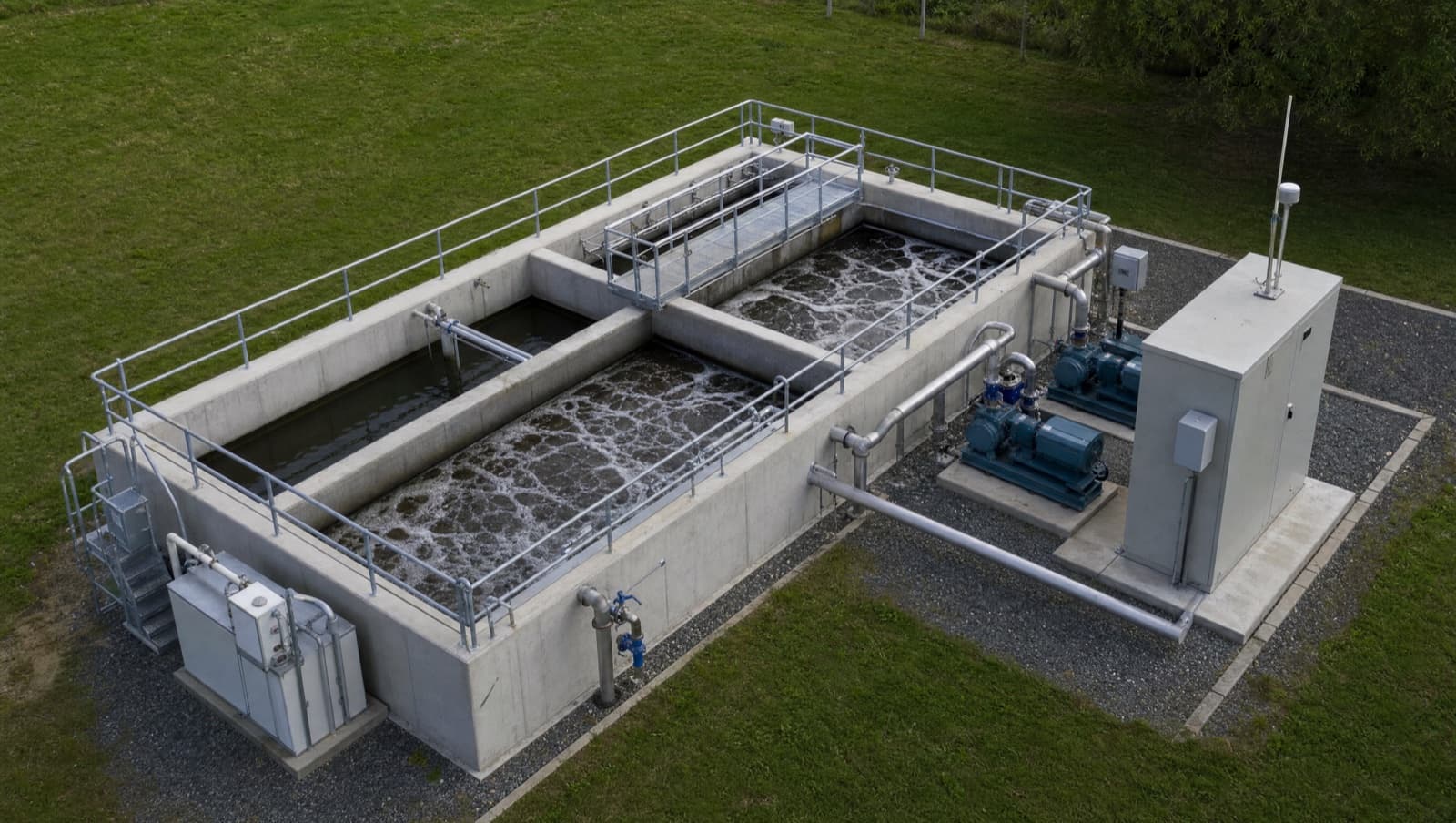
A commercial rainwater harvesting system collects rainfall from the building's roof, filters it to remove leaves and debris, stores it in an underground or basement tank, and distributes it via a pressurised pumped system to non-potable outlets — typically WC cisterns, urinal flushing, and irrigation. The stored water is treated before distribution, usually by UV disinfection, to control bacterial growth. A mains backup system provides potable water to the non-potable distribution network when the rainwater tank is empty, ensuring continuous supply regardless of rainfall.
The BMS integration points are:
Tank level monitoring. A continuous level sensor (submersible pressure transducer, ultrasonic, or guided wave radar) measures the water level in the storage tank. The BMS displays this as a percentage or volume, trends it over time, and uses it for pump control and mains backup switching. Low-level alarm triggers mains backup. High-level alarm indicates an overflow risk — the first-flush diverter or inlet filter may be blocked, or the rainfall is exceeding the tank's capacity. The level trend over weeks and months reveals the system's actual yield versus the design calculation, which is valuable data for the BREEAM assessor and for the client's sustainability reporting.
Pump control. A booster pump (or duty/standby pair on larger installations) pressurises the harvested water distribution network. The BMS monitors pump status, pressure, and faults. On simple installations, the standalone rainwater controller handles pump start/stop based on pressure switch signals. On BMS-integrated installations, the BMS takes over pump control, providing better diagnostics, trend data, and coordination with mains backup switching. For more on how the BMS integrates with water booster pumps, see our article on booster set BMS integration and pressure control.
UV treatment verification. The UV disinfection unit treats stored rainwater before distribution to prevent bacterial contamination. The BMS monitors UV lamp status (on/off/fault), UV intensity (measured by an internal UV sensor — intensity degrades as the lamp ages), and lamp runtime hours. When UV intensity drops below the validated dose threshold, the BMS should either alarm and allow the operator to respond, or automatically switch to mains backup to prevent untreated water reaching the distribution system. The lamp failure scenario — where the system silently reverts to mains without anyone knowing — is avoided because the BMS generates an immediate alarm.
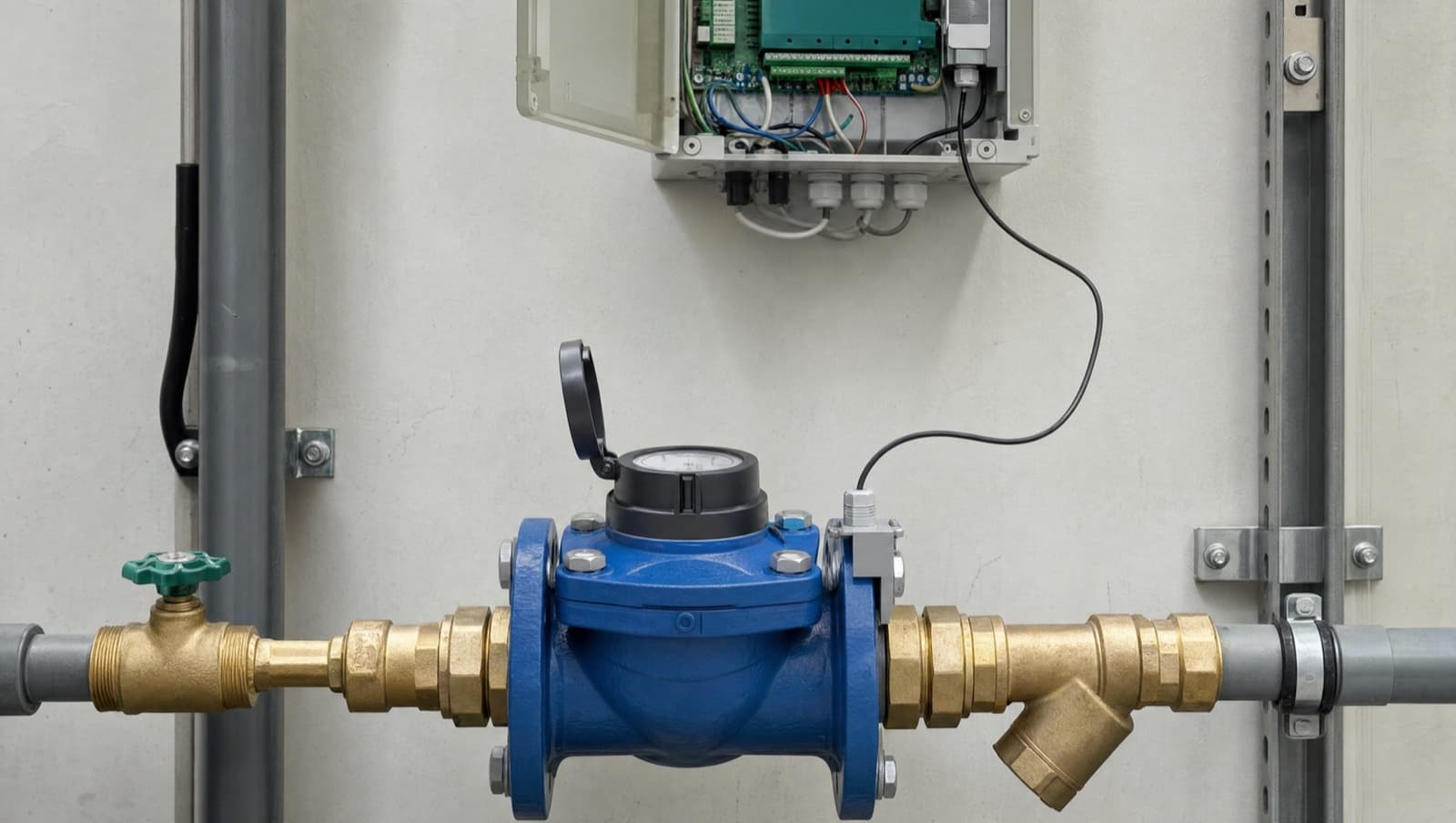
Mains backup switching. When the rainwater tank is empty or UV treatment has failed, a solenoid valve opens to allow mains water into the non-potable distribution network. This valve must include a Type AB or AA air gap to prevent cross-contamination between the mains supply and the non-potable system — a requirement of the Water Supply (Water Fittings) Regulations 1999. The BMS monitors the mains backup valve position and generates an alarm when it opens, because mains backup operation means the building is consuming mains water instead of harvested water. A building that spends 60% of the year on mains backup is not achieving its water savings target, and the BMS data makes this visible.
Water quality monitoring. On larger or more sophisticated installations, the BMS monitors pH, turbidity, and temperature of the stored water. Elevated turbidity indicates contamination of the stored water — possibly from a failed first-flush diverter or contaminated roof runoff. Temperature monitoring is relevant because warm stored water (above 20 degrees C) promotes bacterial growth, particularly Legionella, and may require additional treatment or more frequent testing.
How is greywater recycling different from rainwater harvesting?
Greywater recycling collects lightly contaminated wastewater — from showers, baths, hand basins, and laundry — treats it to a suitable standard, and reuses it for WC flushing and irrigation. The treatment process is more intensive than rainwater treatment because greywater contains soap, skin cells, hair, and organic matter that must be removed before reuse.
A typical commercial greywater recycling system includes a collection tank, coarse filtration, biological treatment (membrane bioreactor or sequencing batch reactor), fine filtration, UV disinfection, and a treated water storage tank. The BMS integration is similar to rainwater harvesting but with additional monitoring requirements:
Biological treatment monitoring. The membrane bioreactor (MBR) or biological treatment stage requires aeration control (similar to sewage treatment — see our article on BMS for sewage treatment plants), membrane differential pressure monitoring (to detect fouling), and treated water quality monitoring (turbidity and residual chlorine or UV dose).
Greywater quality monitoring. The incoming greywater quality can vary significantly depending on the source. Shower and basin water is relatively clean. Laundry water contains detergent and lint. Kitchen greywater (not usually collected for recycling) contains fats and food waste. The BMS monitors incoming greywater quality and can reject excessively contaminated batches to protect the biological treatment process.
Treated water quality. BS 8525-1:2010 (Greywater systems — Code of practice) specifies that treated greywater for WC flushing must meet defined quality standards including turbidity below 10 NTU, intestinal enterococci below 250 CFU/100ml, and a free chlorine residual of 0.5-2.0 mg/l (if chlorine dosing is used). The BMS monitors these parameters continuously where online instruments are installed, and logs the results for compliance records.
What do BS 8515 and BS 8525 require for BMS integration?
BS 8515:2009+A1:2013 (Rainwater harvesting systems — Code of practice) and BS 8525-1:2010 (Greywater systems — Code of practice) are the principal design and installation standards for water reuse systems in the UK. Both standards specify requirements for BMS integration, monitoring, and maintenance that are frequently overlooked during installation.
BS 8515 requires that rainwater harvesting systems include visible signage on all non-potable outlets, backflow prevention on mains backup connections, first-flush diversion to prevent contaminated initial runoff entering the storage tank, and regular maintenance including UV lamp replacement, filter cleaning, and tank inspection. The BMS provides the monitoring data that supports the maintenance regime — lamp hours, filter differential pressure, and tank level trends — and the alarm capability that ensures failures are detected promptly.
BS 8525 imposes stricter requirements because greywater presents a higher contamination risk than rainwater. The standard requires regular water quality testing, documented maintenance records, and a management plan that defines responsibilities and procedures. The BMS provides the continuous monitoring, data logging, and alarm management that makes compliance with BS 8525 practical for building operators who do not have dedicated water treatment staff.
Ready to discuss your building? Request a free BMS survey →
How does water reuse contribute to BREEAM water credits?
BREEAM Wat01 (Water consumption) awards credits for reducing potable water consumption below a benchmark figure. Rainwater harvesting and greywater recycling contribute directly to Wat01 credits by replacing mains water with recycled water for WC flushing, urinal flushing, and irrigation. The number of credits depends on the percentage reduction in potable water consumption — up to 5 credits for a 55% or greater reduction in the 2018 scheme.
To claim Wat01 credits, the BREEAM assessor requires evidence that the water reuse system is installed, commissioned, and metered. The metering requirement is critical — the assessor needs to see a water meter on the rainwater or greywater supply that demonstrates actual water savings, not just a design calculation. The BMS provides this data by logging flow from the water reuse system's distribution meter and comparing it with mains water consumption. Without BMS integration, the metering data must be collected manually, which rarely happens consistently after the BREEAM assessment is complete.
Wat02 (Water monitoring) awards a credit for installing a water monitoring system that enables the building operator to detect leaks and manage water consumption. A BMS-integrated water reuse system with metering on both the recycled water supply and the mains backup contributes directly to this credit. Wat03 (Water leak detection) awards a credit for installing leak detection on the mains water supply — the BMS can provide this by monitoring overnight flow rates and alarming on any flow during unoccupied hours. For a comprehensive guide to water metering and leak detection through the BMS, see our article on water meter and sub-metering BMS integration.
What is the payback on a rainwater harvesting or greywater system?
The financial case for rainwater harvesting depends on four variables: roof catchment area, local rainfall, water tariff, and sewage tariff. In London and the South East, combined water and sewage charges for commercial buildings are typically £4.00 to £6.00 per cubic metre. A commercial building with a 2,000 m2 roof area in Kent (average annual rainfall approximately 600mm) can expect to harvest around 720 cubic metres per year after losses (assuming 60% collection efficiency). At £5.00/m3, that is £3,600 per year in water savings.
The installed cost of a commercial rainwater harvesting system with BMS integration ranges from £25,000 to £60,000 depending on tank size, building complexity, and the extent of the non-potable distribution network. Simple payback is typically 8-15 years for rainwater harvesting alone. However, when the system is required for BREEAM credits — and BREEAM Excellent or Outstanding is a planning condition on many commercial developments — the payback calculation is secondary to the compliance requirement.
Greywater recycling has better payback in buildings with high shower use — hotels, sports facilities, student accommodation — where greywater volumes are large and consistent. A 200-bed hotel with greywater recycling can save 50-80 cubic metres of mains water per day, with annual savings of £70,000 to £100,000 at commercial water tariffs. The installed cost of a greywater recycling system for a building of this size is typically £80,000 to £150,000, giving payback in 1-3 years.
Why integrate water reuse with the building's overall water metering?
A water reuse system should not exist in isolation from the building's overall water management strategy. The BMS should integrate water reuse metering with the building's mains water metering and sub-metering to provide a complete picture of water consumption, recycling, and waste.
The key meters are: mains incoming (total potable water entering the building), rainwater/greywater supply (recycled water delivered to non-potable outlets), mains backup (potable water used when recycled water is unavailable), and individual sub-meters on major consumers (cooling towers, irrigation, domestic hot water, kitchen). The BMS calculates total water consumption, recycled water as a percentage of total use, and mains water saved by the recycling system. This data supports BREEAM credits, sustainability reporting, and operational management.
What common water reuse failures does the BMS catch?
UV lamp failure. UV lamps degrade over time and eventually fail. Without BMS monitoring, the failure goes unnoticed until a routine maintenance visit. The system either distributes untreated water (a health risk) or switches to mains backup (losing the water savings). The BMS alarms on UV intensity drop and lamp failure, ensuring timely replacement.
Mains backup stuck open. The mains backup solenoid valve opens when the rainwater tank is empty and should close when the tank refills. If the valve sticks open or the control logic is faulty, the building runs on mains water indefinitely while the rainwater tank overflows to the drain. The BMS detects this by monitoring both the tank level (rising or full) and the mains backup valve position (open when it should be closed).
First-flush diverter blocked. The first-flush device diverts the initial contaminated runoff from the roof away from the storage tank. If it blocks, contaminated water enters the tank, increasing turbidity and bacterial risk. The BMS monitors stored water turbidity and alarms on elevated readings.
Pump failure. If the rainwater pump fails and there is no standby, the system immediately switches to mains backup. Without BMS alarming, this can go unnoticed for months — the building has water, so nobody complains, but it is all mains water.
What should you do if your water reuse system is not connected to the BMS?
If your building has a rainwater harvesting or greywater recycling system that is not connected to the BMS — or if the system was installed for BREEAM but you are not sure it is still working — a BMS integration survey will identify the current status and the integration scope required. The most common finding is that the system is mechanically functional but not monitored, and has silently reverted to mains backup at some point due to a minor fault that was never detected.
Alpha Controls provides water reuse system BMS integration across London, Kent, Essex, Surrey, and the South East. We work with all major rainwater and greywater system manufacturers and integrate with Trend, Distech, and Siemens BMS platforms. Request a free survey or call us on 01474 552200 to discuss your water reuse system integration.