
A BMS consultation and energy audit is a structured engineering assessment of a building's mechanical and electrical infrastructure, its existing control strategy, and how energy is being used, carried out before any installation. It produces a specification the project can be built from, driving panel design, wiring, commissioning, and the controls strategy that follows.
Most BMS projects that go wrong don't fail at installation. They fail before anyone picks up a screwdriver. A vague spec, a site survey done from a desk, or a controls strategy copied from the last job — that's where the problems start. By the time the panel's on the wall and the sensors are wired, the damage is already baked in. Get this phase wrong and you're paying for it in change orders, retrofit headaches, and a building that never performs the way the client expected.
What does a BMS consultation actually involve?
A BMS consultation is a structured assessment of a building's mechanical and electrical infrastructure, its current control strategy (if one exists), and its operational requirements. It's not a sales pitch. It's an engineering exercise that produces a specification the project can actually be built from.
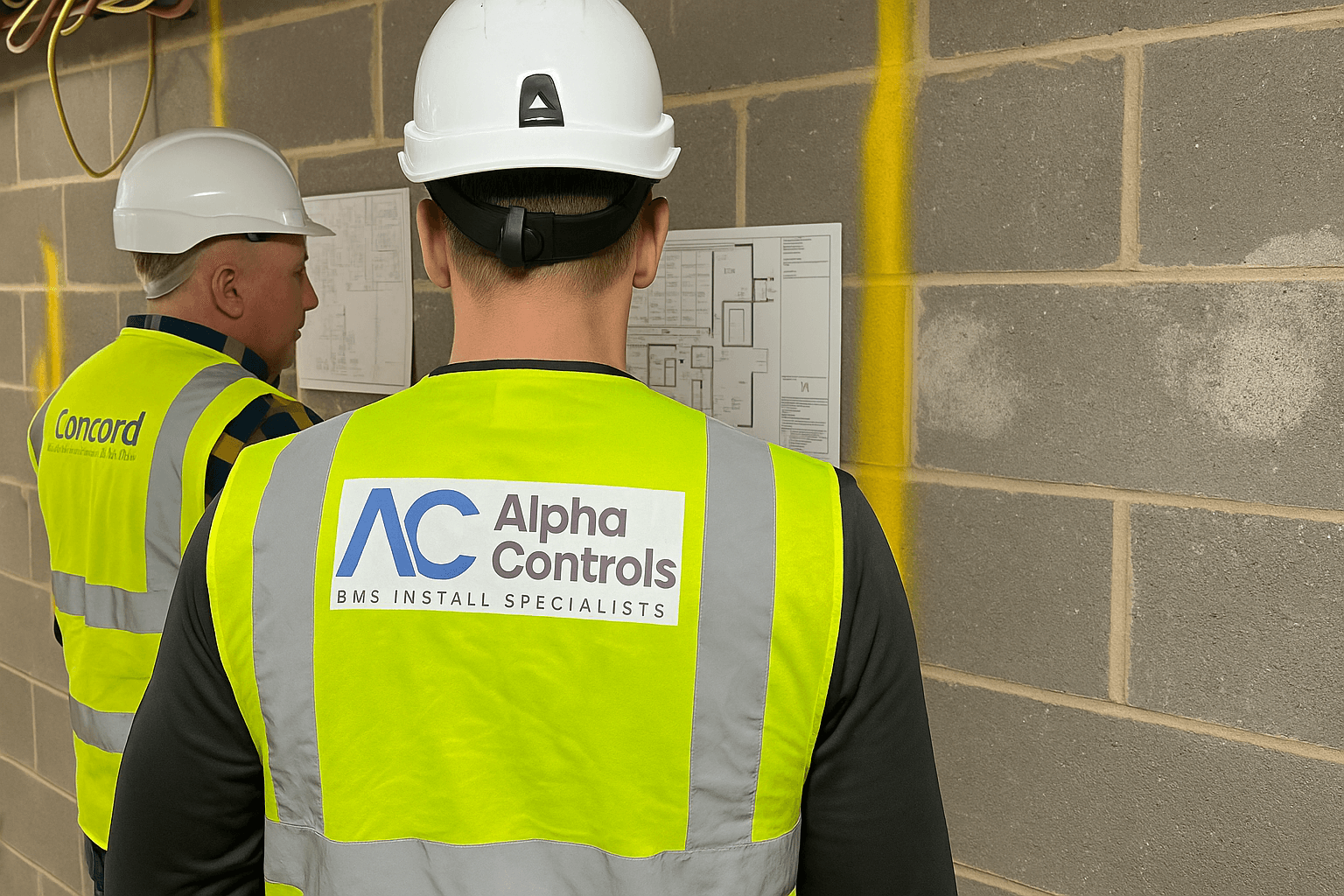
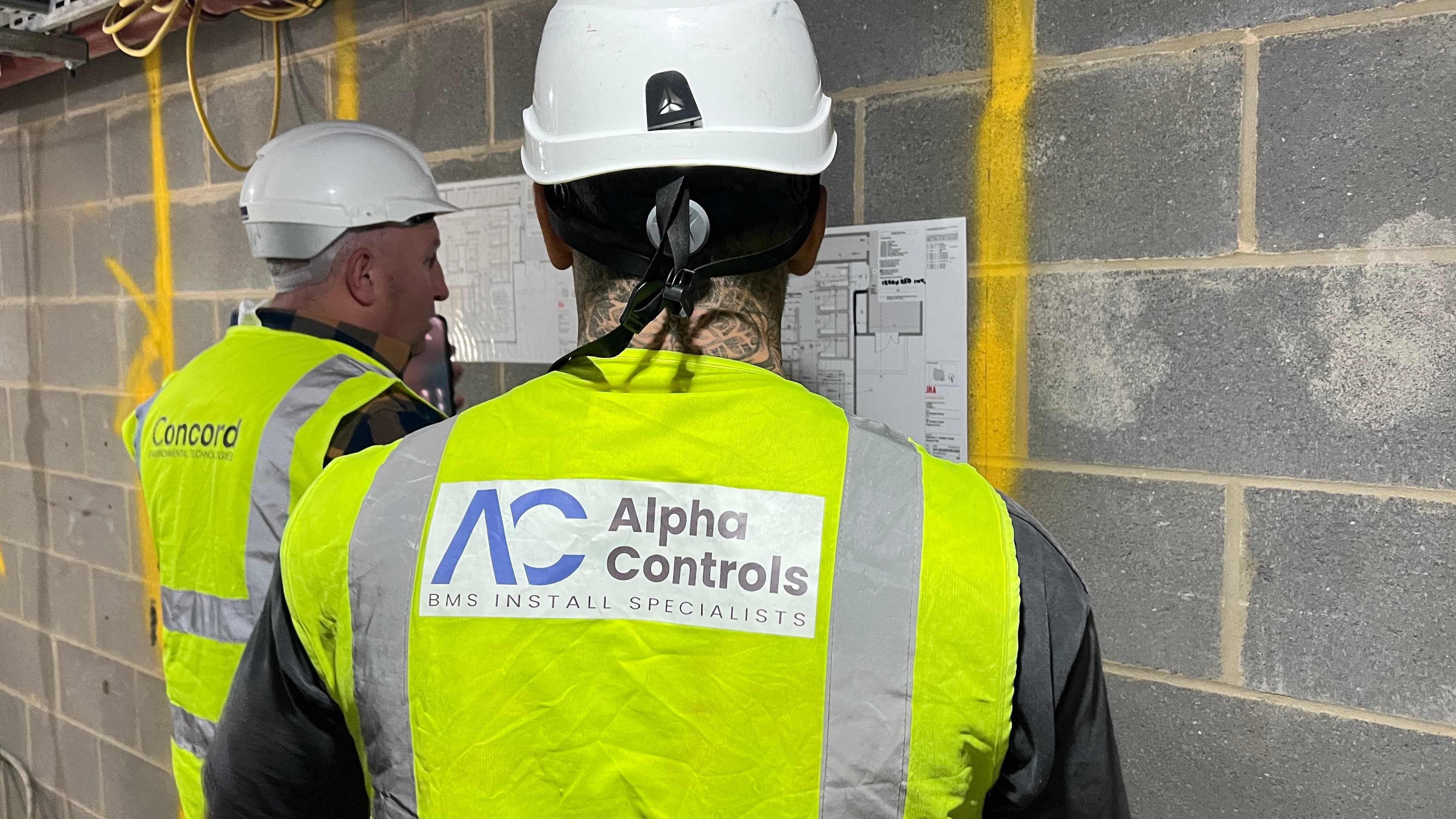
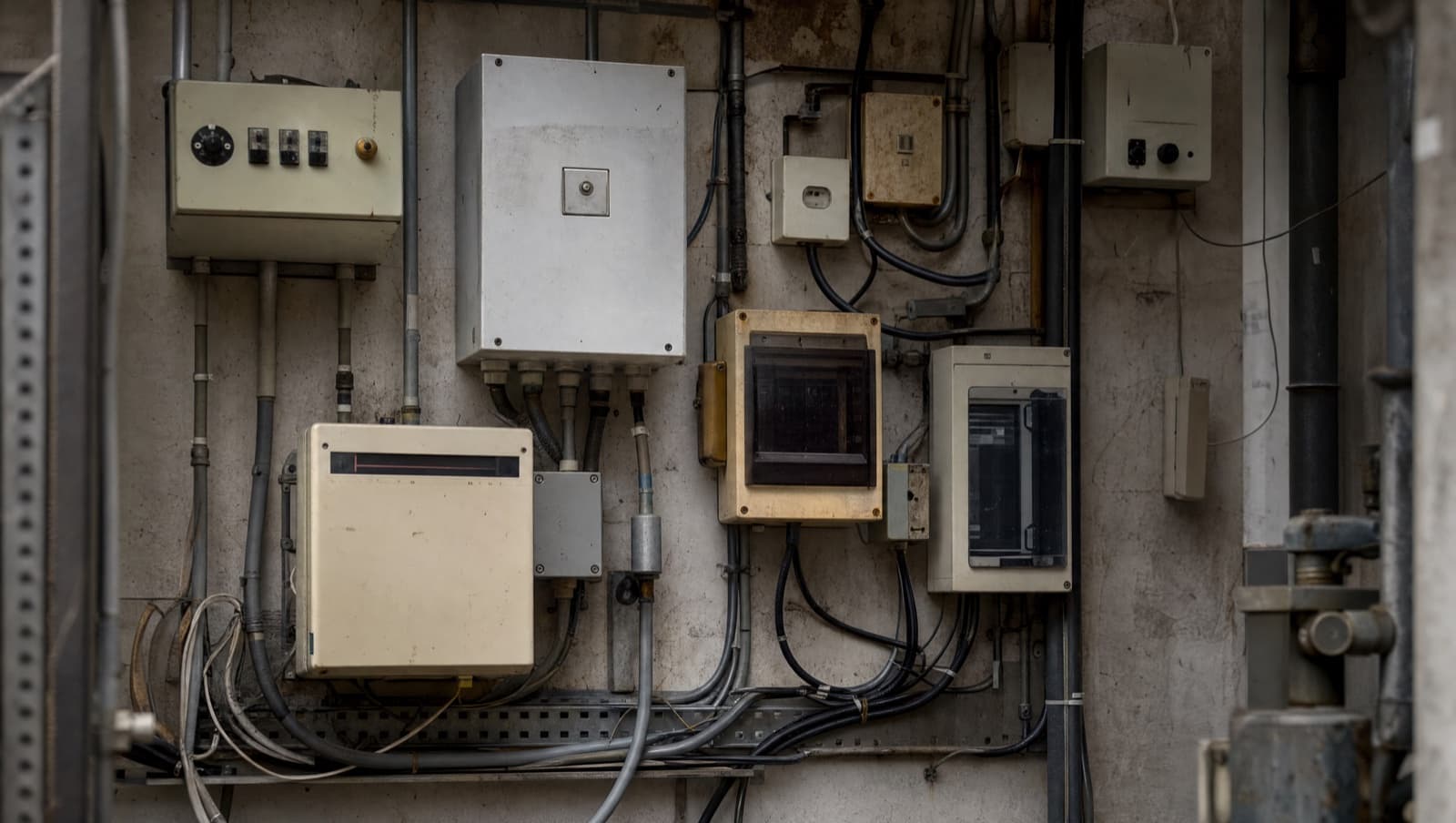
At Alpha Controls, a consultation typically starts with a physical site survey. That means walking every plant room, riser, ceiling void, and occupied space that the BMS will touch. We're checking existing controller hardware — is it Trend IQ1 or IQ2 gear that's end-of-life? Honeywell Excel 500 with no spare parts? Siemens Unigyr that hasn't had a strategy update since 2009? We document every field device, every panel, every network run. If there's existing points schedules or cause-and-effect documentation, we review those too, but we never assume they're accurate. Nine times out of ten, they don't match what's actually wired.
The mechanical side matters just as much. We need to understand the HVAC topology — is it a two-pipe fan coil system with change-over? Four-pipe with independent heating and cooling? Is there an AHU providing tempered fresh air, or is ventilation handled at the local level? Are the boilers and chillers on a common header, or is the hydraulic arrangement more complex? These details drive the control strategy, and if the consultant doesn't ask these questions, you end up with a specification that looks fine on paper but falls apart when it meets real pipework.
Why does the energy audit sit alongside the controls survey?
An energy audit isn't separate from BMS consultation — it's embedded in it. When a building is surveyed, it's not just a question of what equipment exists; it's about assessing how it's being used, whether the existing schedules make sense, and where energy is being wasted.
CIBSE Guide F (2012) provides the benchmark methodology for energy surveys in non-domestic buildings, classifying audits from Level 1 (walk-through) up to Level 3 (investment-grade). For most BMS consultation work, a Level 2 audit is appropriate — detailed enough to quantify savings and justify controller upgrades, without requiring sub-metering infrastructure that may not exist yet. The guide notes that controls-related interventions typically deliver 10–20% energy savings in commercial buildings, which is significant when you consider that a mid-size office block might be spending north of £150,000 a year on gas and electricity.
The energy audit component is about identifying low-hanging fruit and structural inefficiencies. Time schedules running seven days when the building is only occupied five. Boilers and chillers operating simultaneously because there's no interlock or the interlock isn't working. Heating setpoints at 22°C when the design condition was 21°C — that single degree can add 8% to heating energy consumption. Night setback strategies that don't exist, or optimum start algorithms that were never commissioned properly.
Approved Document L of the Building Regulations (2021 edition) now requires that new and refurbished non-domestic buildings have controls capable of zone-level time and temperature management, optimum start/stop, and weather compensation where applicable. If a building is undergoing a significant refurbishment, the controls must be upgraded to meet current Part L standards. This is where the consultation phase becomes commercially critical — it identifies not just what the client wants, but what the regulations now require.
What usually goes wrong at this stage?
The most common failure is a consultation that never actually visits the site. Specifications get written from floor plans and M&E schematics alone, with no physical verification. The drawing says there are 120 fan coil units. The site has 134, because the fit-out added 14 more that never made it onto the as-built drawings. That's 14 units with no control points in the BMS specification, which means either a costly variation order mid-project or — worse — 14 FCUs running on local thermostats with no central oversight.
Another common problem is consultants specifying generic controllers without understanding the field device requirements. Not every valve actuator speaks the same protocol. Not every sensor has the same output range. If the specification says "provide BMS controller" without stating whether it needs to handle 0–10V, 4–20mA, resistance, or digital inputs, the installer is left guessing. And guessing means rework.
Energy audits can also produce impressive-looking reports full of graphs and benchmarks, but with no actionable controls strategy attached. A report that tells you the building uses 185 kWh/m² is interesting. A controls specification that tells you exactly which zones need independent scheduling, which AHUs need demand-controlled ventilation, and which boiler circuits need weather compensation — that's useful. The audit should drive the specification, not sit in a drawer.
Get a Free BMS Survey
We'll assess your controls and provide a detailed quotation.
How do you specify the right BMS controller hardware?
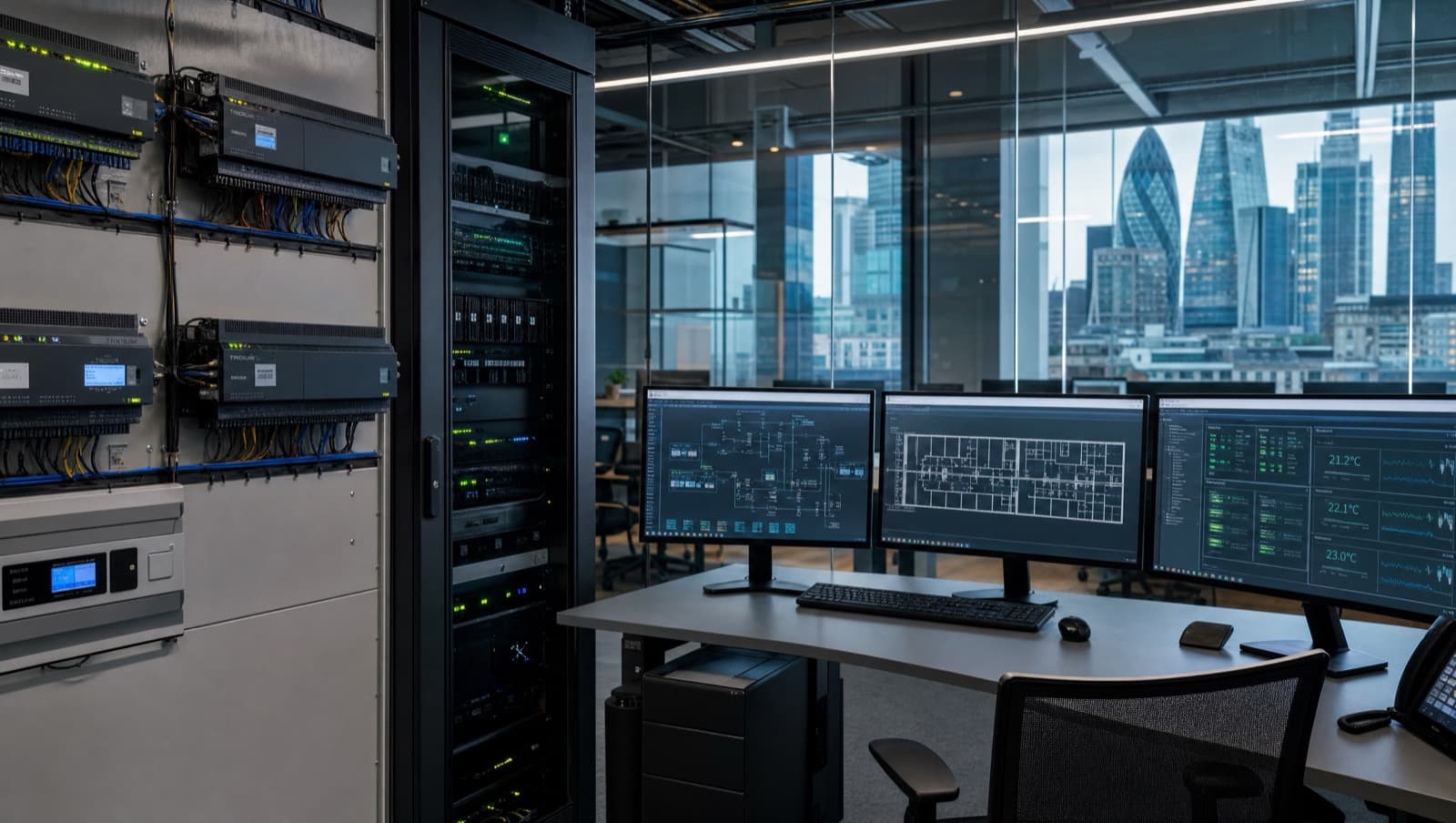
Controller specification is where the consultation phase becomes genuinely technical. At Alpha Controls, we predominantly specify and install Trend Controls hardware — specifically the IQ4E series for new projects. The IQ4E is a freely programmable controller with native BACnet/IP capability, built-in web server, and enough I/O flexibility to handle most commercial HVAC applications without external expansion modules.
But the choice of controller isn't just about brand preference. It's about matching the hardware to the application. An IQ4E with 16 universal inputs and 8 digital outputs might be perfect for an AHU application, but oversized for a simple two-pipe FCU that only needs a temperature sensor input, a valve output, and a fan speed output. For FCU applications, the Trend IQ422 or the newer IQ4E/8UI variants provide a more proportionate solution.
The specification also needs to address network architecture. CIBSE Guide H (2009) covers BMS design principles and recommends that the network topology is defined at specification stage, not left to the installer. That means deciding whether the controllers will communicate over BACnet/IP on the building's IT network, or on a dedicated BMS VLAN, or over BACnet MS/TP on a shielded twisted-pair trunk. Each approach has cost, performance, and cybersecurity implications, and all of them need to be nailed down before the project goes to tender.
BS EN ISO 16484-5, the international standard for BACnet, defines the object types and services that controllers must support for interoperability. When specifying Trend IQ4E controllers, the BACnet Implementation Conformance Statement (PICS) document should be referenced, so the client and the consultant know exactly what protocol services are supported. This matters enormously in multi-vendor environments where Trend controllers might need to integrate with third-party plant — Distech ECLYPSE units, Schneider SE8000 room controllers, or Belimo actuators with BACnet outputs.
What does getting the consultation right look like on a real project?
On a recent 16-floor office refurbishment project for Pinsent Masons in the City of London, the consultation phase was critical. The existing BMS was a legacy Trend IQ2 system — still partially functional, but with controllers that were 20 years old and no longer supported. The client needed a full controls upgrade across roughly 300 fan coil units, multiple AHUs, and a central plant serving the entire building.
The site survey took three days. Every floor had subtle differences — some floors had four-pipe FCUs, others had been refit with two-pipe units during a previous refurbishment. The riser infrastructure was constrained, with limited space for new network cabling. And because this was a live, occupied building, all work had to be scheduled for weekends and out-of-hours, which meant the specification needed to account for phased installation with temporary standalone control during the transition.
The consultation produced a detailed points schedule for every controlled item, a network architecture drawing showing BACnet/IP trunks with Trend IQ4E controllers at every floor, and a phased installation programme that allowed the building to remain fully operational throughout. Without that level of detail at the front end, the project would have been plagued by variations, delays, and a client who didn't know what they were getting until it was too late.
What does a good BMS consultation deliver?
A good BMS consultation delivers a specification that an installer can price accurately and build from confidently. It includes a complete points schedule with every input, output, and network point defined. It includes a control strategy narrative — not just "control heating" but "modulate LTHW valve to maintain space temperature at 21°C ±1K, with morning boost to 23°C for the first 30 minutes of occupied period, reverting to 16°C night setback at end of scheduled occupancy." That level of detail eliminates ambiguity.
It also includes a clear energy baseline, with the audit findings translated into specific controls interventions and projected savings. If the consultation recommends adding weather compensation to the boiler circuit, it should quantify the expected saving — CIBSE Guide H suggests weather compensation alone can reduce gas consumption by 5–15% depending on the building fabric and existing control strategy.
And critically, a good consultation identifies risks early. Asbestos in ceiling voids that will need an R&D survey before FCU controllers can be installed. IT network policies that prohibit BACnet traffic on the corporate LAN. Listed building constraints that restrict where external sensors can be mounted. These are the things that cause delays and cost overruns if they're discovered at installation stage rather than consultation stage.
When should you book a BMS consultation?
If you're planning a refurbishment, a plant replacement, or any project that involves HVAC controls, the consultation needs to happen before anything else goes to tender. Trying to retro-fit a proper controls specification into a project that's already been priced and programmed is expensive, disruptive, and almost always results in compromises that the building lives with for the next 15 years.
If your existing BMS is on legacy hardware — Trend IQ1, IQ2, or early IQ3 controllers, Honeywell Excel 5000 series, Siemens Unigyr — the consultation is also the right time to assess whether a like-for-like replacement makes sense, or whether a full platform migration is more cost-effective. In many cases, the wiring infrastructure is still perfectly good, and the upgrade is primarily controller and software. That assessment can only be made on site, not from a drawing.
Start with the right foundation
Every BMS project is only as good as its specification, and every specification is only as good as the consultation that produced it. If you're considering a BMS installation or retrofit, starting with a thorough consultation and energy audit is the single best investment you can make in the project's success.
Alpha Controls provides BMS consultation and energy audit services across London, Kent, and the South East. If you'd like to discuss your building's requirements, get in touch or request a quote — we'll start with a conversation about what you actually need, not what we want to sell you.
Darren Pettit
Specialist BMS installation, commissioning, and maintenance across London and the South East. SafeContractor Approved, BCIA Member.